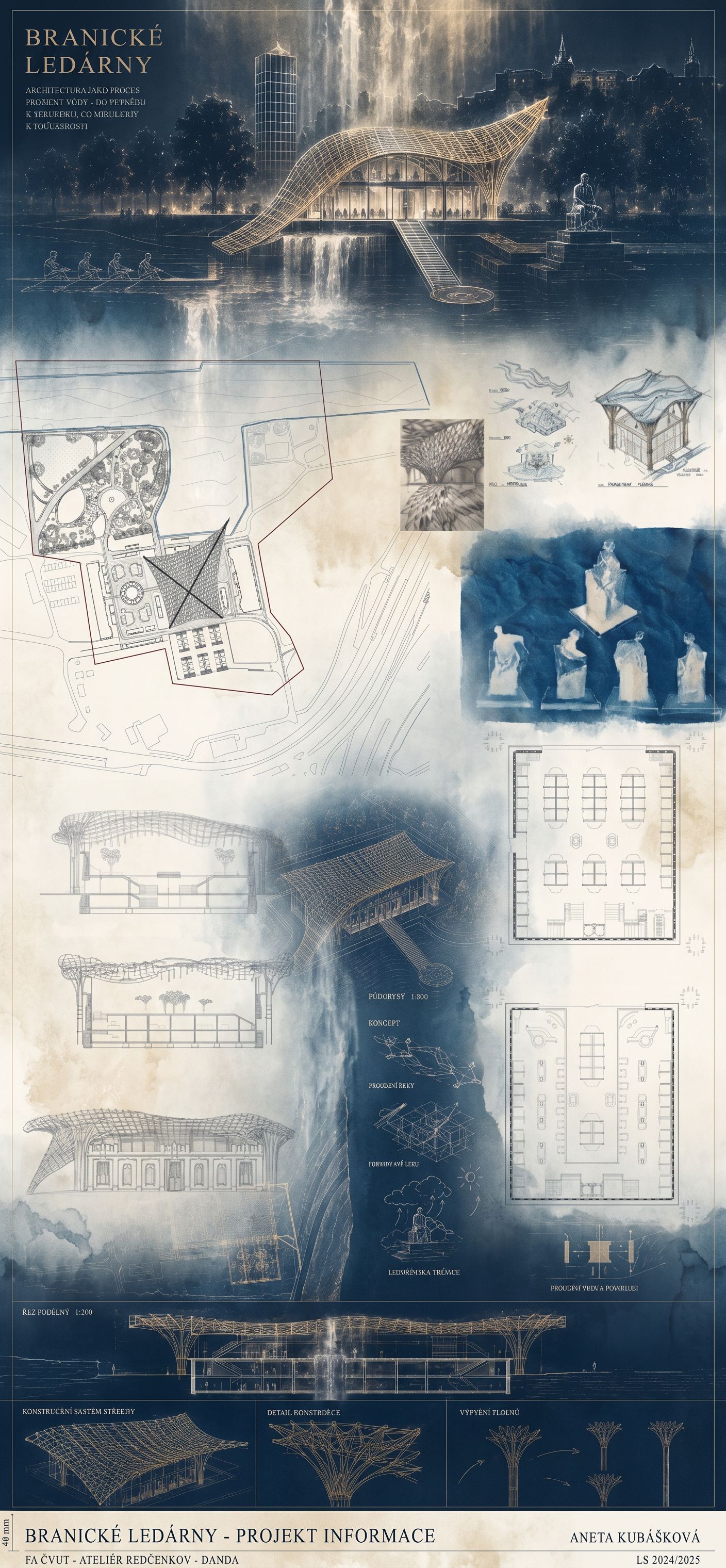
Create a vertically oriented architectural presentation board in the exact proportions of 700 × 1500 mm with a 40 mm footer strip at the bottom reserved for project information. Preserve ALL uploaded drawings, plans, sections, elevations, axonometric views, diagrams, sculpture studies and visualizations exactly as they are — do not redesign the architecture, do not alter geometry, proportions, scale, dimensions, linework, perspective, roof shape, structure, column positions, circulation, or relationships between drawings. Every drawing must remain accurate to the original project and consistent with all the other representations of the building. Do not invent new architectural forms. The task is purely compositional, atmospheric, and graphic. The board should feel like a highly curated architectural artifact — somewhere between a cyanotype blueprint, a conceptual exhibition poster, and a poetic architectural narrative. The overall mood should be atmospheric, cinematic, artistic, edgy, slightly experimental, sophisticated, and emotionally powerful while still remaining precise and readable. The composition should feel intentional and fluid rather than rigidly grid-based. Use a cohesive visual language across the entire board so that all drawings feel unified despite their different types. Apply subtle cyanotype aesthetics: deep desaturated blue tones, washed watercolor textures, soft paper grain, faded edges, delicate white linework, mist, water stains, subtle imperfections, and layered translucent overlays. Combine these with warm natural tones — muted beige, soft grey, pale gold, foggy white, wet concrete colors, washed paper tones — so the palette feels natural and architectural rather than overly saturated blue. The atmosphere should evoke water, ice, fog, rain, memory, erosion, and transformation. The main hero visualization should dominate the upper portion of the board and seamlessly transition downward into the rest of the composition. Integrate flowing water, mist, rain, or cascading vertical atmospheric effects that visually connect the large rendering with the drawings below. The flowing roof of the building should visually merge with water and landscape. Use subtle vertical transitions inspired by waterfalls, ink bleeding, cyanotype washing, and dissolving paper textures. The board should feel interconnected by movement and flow. Organize the remaining drawings carefully and elegantly around the main visualization: site plan and situation large and readable, plans clean and precise, sections spanning horizontally with breathing space, concept diagrams grouped narratively, sculpture studies presented as a poetic transformation sequence, axonometric and structural details integrated naturally into the composition. Maintain precise readability of technical drawings. Do not distort plans or sections. Do not crop important information. Respect architectural hierarchy and scale relationships between drawings. Keep the composition balanced between artistic atmosphere and technical clarity. Avoid heavy graphic frames or obvious presentation-school layouts. Instead use layered composition, overlaps, soft transitions, floating fragments, subtle depth, and controlled negative space. Some drawings may slightly overlap or dissolve into textured backgrounds, but all important content must remain legible. Typography should be minimal, elegant, understated, and architectural. Use small uppercase labels, delicate annotations, thin line hierarchy, and restrained graphic accents. The board should feel contemporary, gallery-like, refined, experimental, and emotionally immersive. The final result should look like a premium competition board or an architectural exhibition poster — artistic and provocative, yet technically believable and deeply connected to the project’s concept of water, ice, transformation, and river landscape., keep exact camera angle
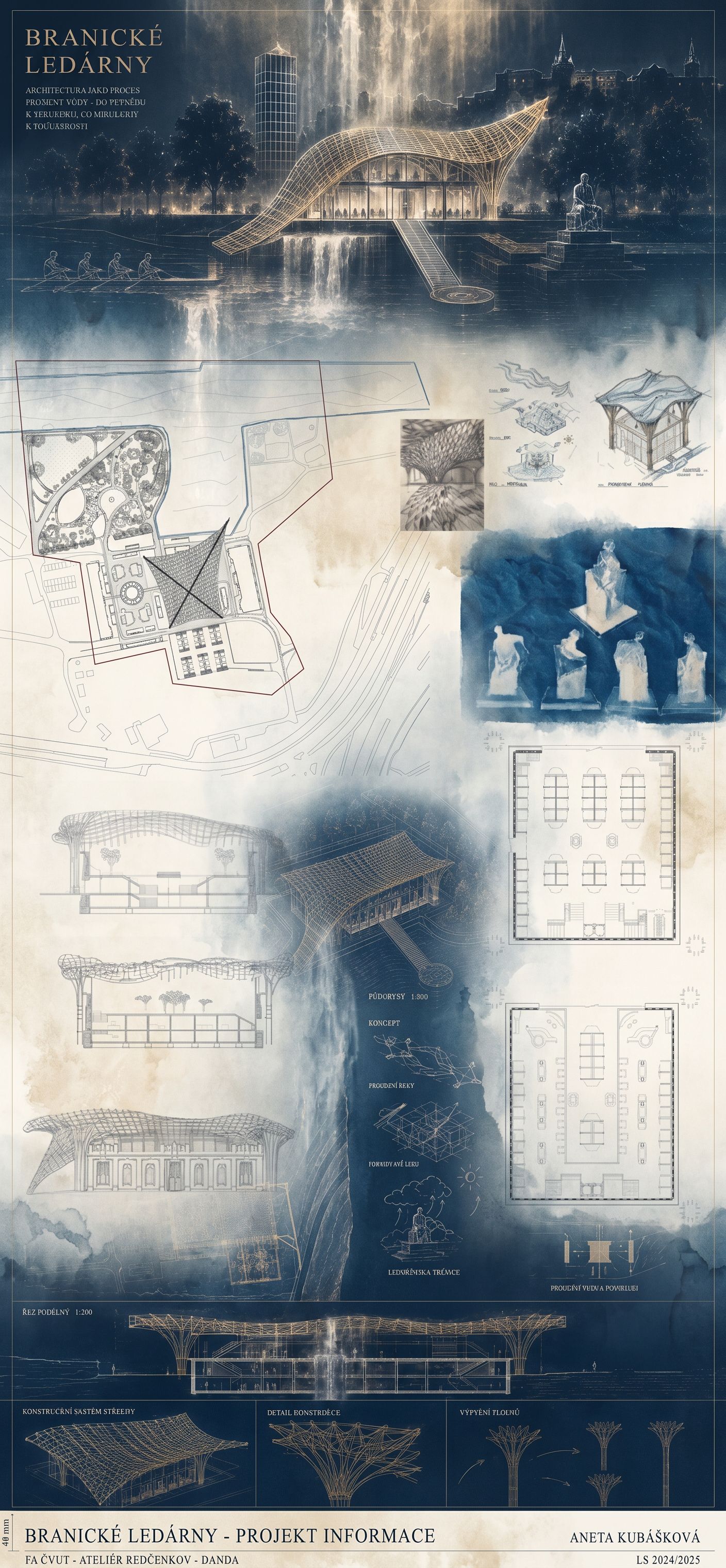
PromptCreate a vertically oriented architectural presentation board in the exact proportions of 700 × 1500 mm with a 40 mm footer strip at the bottom reserved for project information. Preserve ALL uploaded drawings, plans, sections, elevations, axonometric views, diagrams, sculpture studies and visualizations exactly as they are — do not redesign the architecture, do not alter geometry, proportions, scale, dimensions, linework, perspective, roof shape, structure, column positions, circulation, or relationships between drawings. Every drawing must remain accurate to the original project and consistent with all the other representations of the building. Do not invent new architectural forms. The task is purely compositional, atmospheric, and graphic. The board should feel like a highly curated architectural artifact — somewhere between a cyanotype blueprint, a conceptual exhibition poster, and a poetic architectural narrative. The overall mood should be atmospheric, cinematic, artistic, edgy, slightly experimental, sophisticated, and emotionally powerful while still remaining precise and readable. The composition should feel intentional and fluid rather than rigidly grid-based. Use a cohesive visual language across the entire board so that all drawings feel unified despite their different types. Apply subtle cyanotype aesthetics: deep desaturated blue tones, washed watercolor textures, soft paper grain, faded edges, delicate white linework, mist, water stains, subtle imperfections, and layered translucent overlays. Combine these with warm natural tones — muted beige, soft grey, pale gold, foggy white, wet concrete colors, washed paper tones — so the palette feels natural and architectural rather than overly saturated blue. The atmosphere should evoke water, ice, fog, rain, memory, erosion, and transformation. The main hero visualization should dominate the upper portion of the board and seamlessly transition downward into the rest of the composition. Integrate flowing water, mist, rain, or cascading vertical atmospheric effects that visually connect the large rendering with the drawings below. The flowing roof of the building should visually merge with water and landscape. Use subtle vertical transitions inspired by waterfalls, ink bleeding, cyanotype washing, and dissolving paper textures. The board should feel interconnected by movement and flow. Organize the remaining drawings carefully and elegantly around the main visualization: site plan and situation large and readable, plans clean and precise, sections spanning horizontally with breathing space, concept diagrams grouped narratively, sculpture studies presented as a poetic transformation sequence, axonometric and structural details integrated naturally into the composition. Maintain precise readability of technical drawings. Do not distort plans or sections. Do not crop important information. Respect architectural hierarchy and scale relationships between drawings. Keep the composition balanced between artistic atmosphere and technical clarity. Avoid heavy graphic frames or obvious presentation-school layouts. Instead use layered composition, overlaps, soft transitions, floating fragments, subtle depth, and controlled negative space. Some drawings may slightly overlap or dissolve into textured backgrounds, but all important content must remain legible. Typography should be minimal, elegant, understated, and architectural. Use small uppercase labels, delicate annotations, thin line hierarchy, and restrained graphic accents. The board should feel contemporary, gallery-like, refined, experimental, and emotionally immersive. The final result should look like a premium competition board or an architectural exhibition poster — artistic and provocative, yet technically believable and deeply connected to the project’s concept of water, ice, transformation, and river landscape., keep exact camera angle
Date11 May 2026
Share