
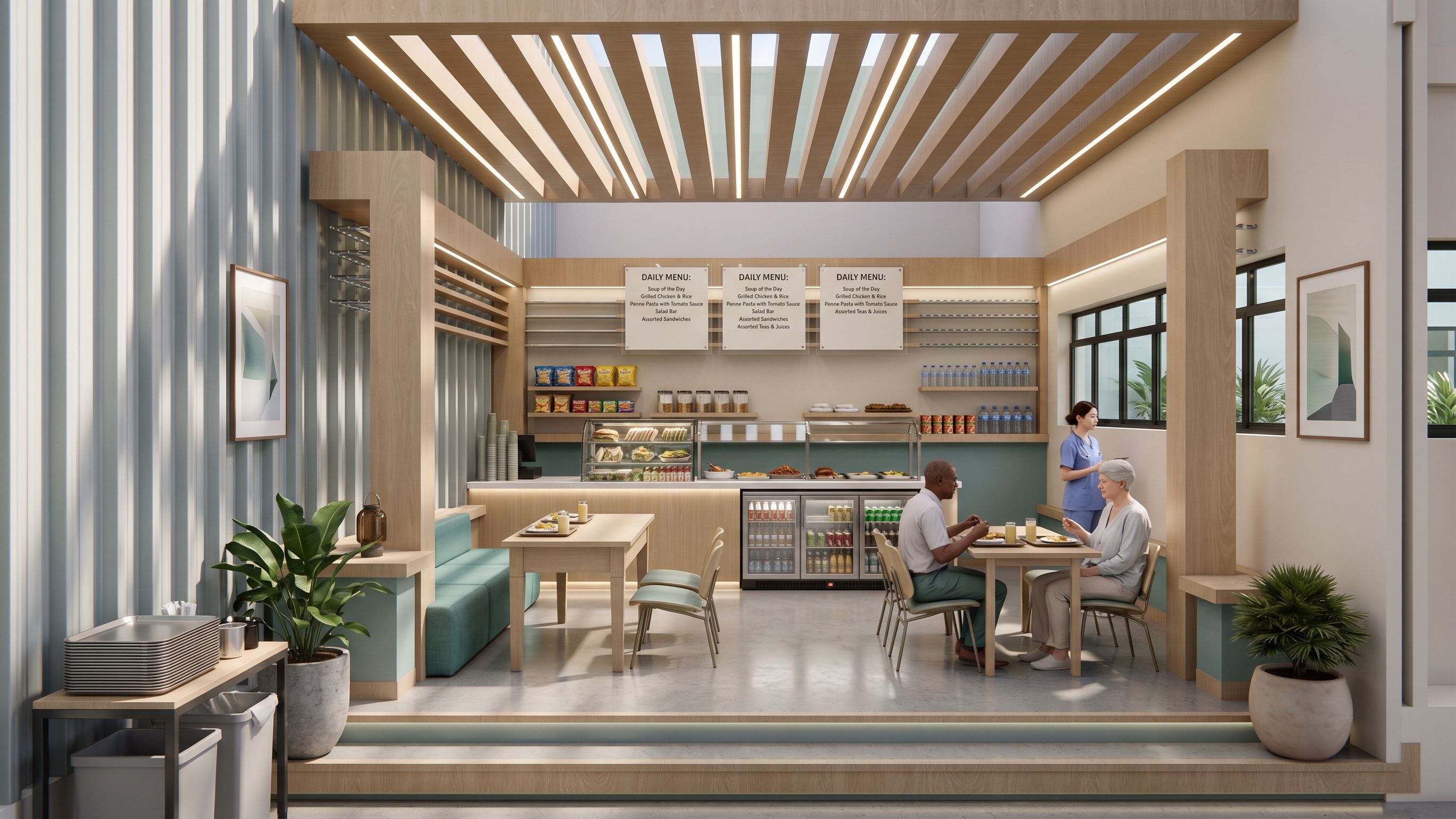
Enhance and complete this interior render of a hospital canteen within a dialysis center. Maintain the existing layout and design direction, but intelligently fill in missing details and refine the space to a fully resolved, realistic environment. Develop the canteen as a clean, functional, and welcoming hospital food service area. Introduce appropriate elements such as a serving counter, display shelves, menu boards, refrigerators, tray stations, and simple seating tables and chairs, ensuring everything aligns with a healthcare setting. Use realistic, hygienic materials: easy-to-clean surfaces, laminate or solid countertops, subtle textures, and durable finishes. Keep the design simple, practical, and not overly decorative. Apply physically accurate lighting—balanced combination of natural daylight and soft neutral artificial lighting ~4000K. Ensure realistic shadows, reflections, and ambient occlusion. Refine color tones to a calm and appetizing yet clinical palette: warm neutrals, soft whites, light wood accents, and subtle color highlights. Avoid overly saturated or dramatic tones. Add believable hospital-appropriate details such as signage, food display items, trays, and minimal human activity patients and staff, integrated naturally into the scene without overcrowding. Enhance material realism, depth, and texture detail while maintaining a clean and hygienic appearance. Ensure the final render looks like a real hospital canteen—simple, efficient, inviting, and photorealistic. Do not drastically alter the architecture—only complete and refine the design with realistic, context-appropriate details., keep exact camera angle
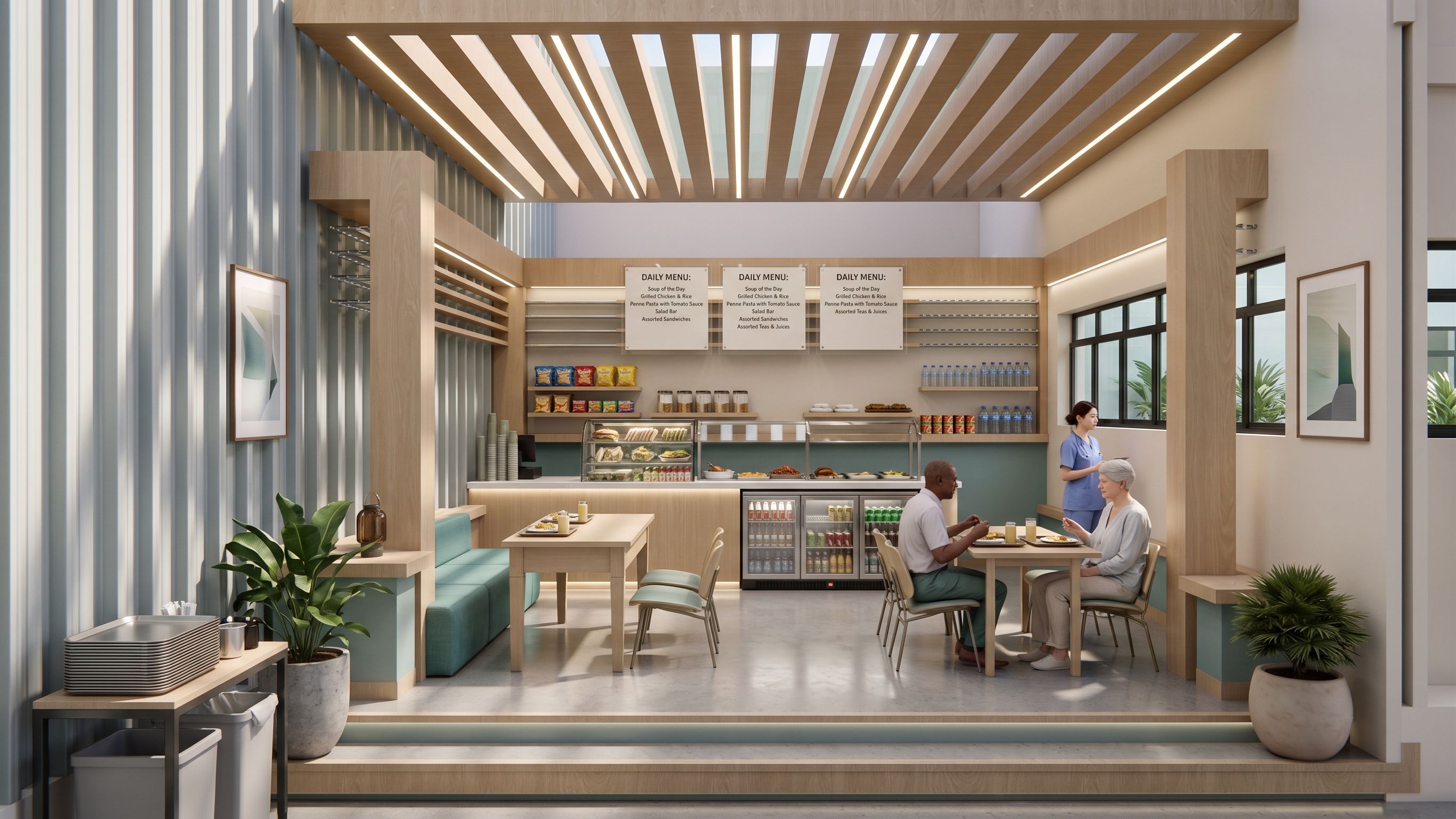
PromptEnhance and complete this interior render of a hospital canteen within a dialysis center. Maintain the existing layout and design direction, but intelligently fill in missing details and refine the space to a fully resolved, realistic environment. Develop the canteen as a clean, functional, and welcoming hospital food service area. Introduce appropriate elements such as a serving counter, display shelves, menu boards, refrigerators, tray stations, and simple seating (tables and chairs), ensuring everything aligns with a healthcare setting. Use realistic, hygienic materials: easy-to-clean surfaces, laminate or solid countertops, subtle textures, and durable finishes. Keep the design simple, practical, and not overly decorative. Apply physically accurate lighting—balanced combination of natural daylight and soft neutral artificial lighting (~4000K). Ensure realistic shadows, reflections, and ambient occlusion. Refine color tones to a calm and appetizing yet clinical palette: warm neutrals, soft whites, light wood accents, and subtle color highlights. Avoid overly saturated or dramatic tones. Add believable hospital-appropriate details such as signage, food display items, trays, and minimal human activity (patients and staff), integrated naturally into the scene without overcrowding. Enhance material realism, depth, and texture detail while maintaining a clean and hygienic appearance. Ensure the final render looks like a real hospital canteen—simple, efficient, inviting, and photorealistic. Do not drastically alter the architecture—only complete and refine the design with realistic, context-appropriate details., keep exact camera angle
Date24 April 2026
Share