
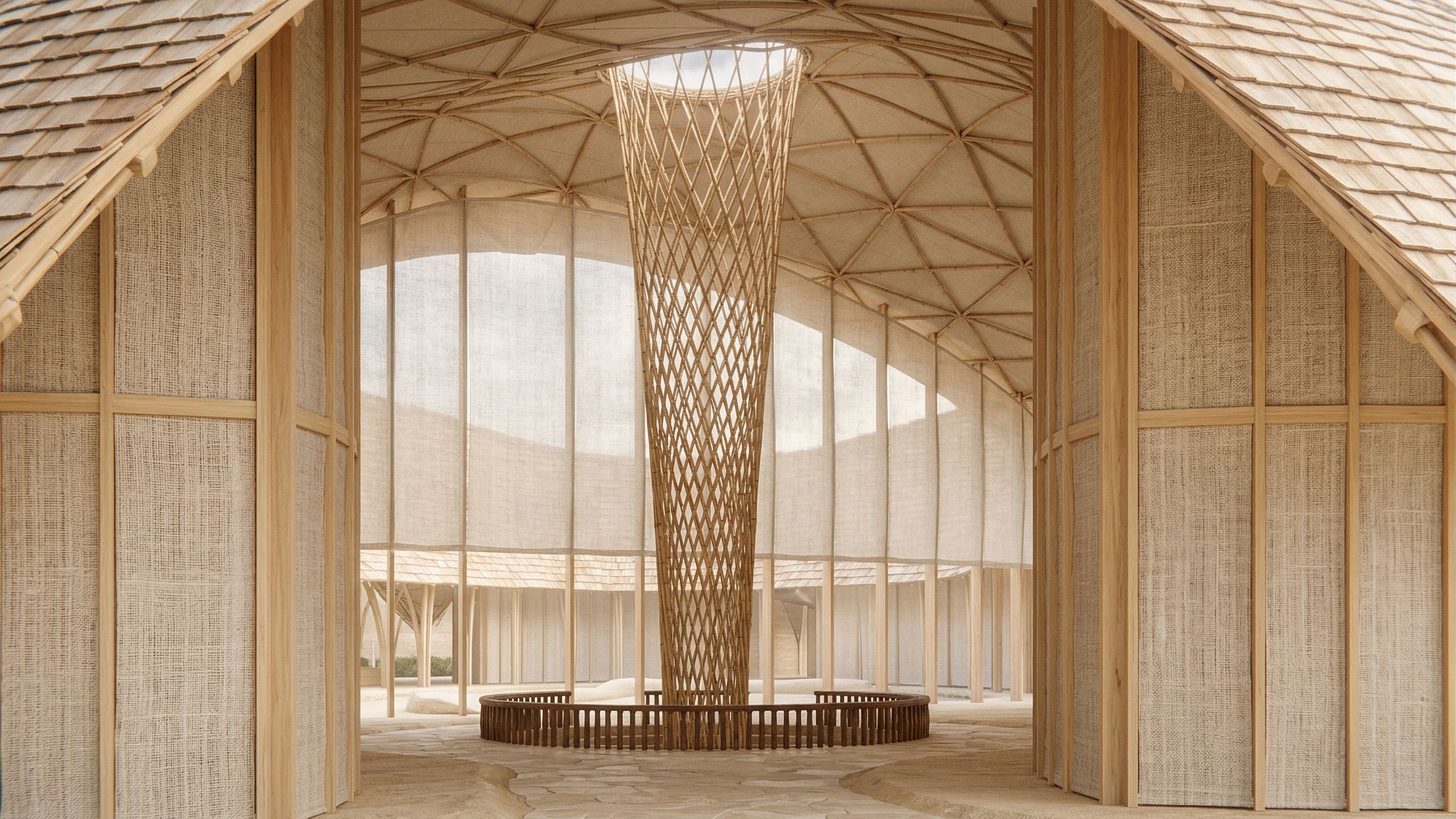
Transform this architectural interior render without changing the geometry, camera angle, proportions, or layout. Preserve the domed roof, circular opening, central vertical element, and overall spatial composition exactly as is. Update the materials to reflect a natural, lightweight construction system using wood shingles, bamboo structure, wood framing, and fabric layers. The roof exterior should read as layered wood shingles, warm-toned, slightly weathered, with subtle variation in color light brown to honey tones. The roof structure underneath should be expressed as bamboo framing, thin, repetitive, and slightly irregular, showing a handcrafted quality. All primary structural elements should be light wood framing, soft and natural in tone, not heavy or dark. The enclosure should be made of translucent fabric panels stretched between the structure, creating a soft, breathable boundary rather than solid walls. The fabric should feel like woven linen or lightweight textile, slightly textured, allowing filtered daylight to pass through. It should create a sense of layering, softness, and transition between spaces. The central vertical element should be reinterpreted as a bamboo or thin wood lattice structure, elegant and porous, allowing light and air to pass through while maintaining a vertical presence. Lighting should be diffused and atmospheric, with sunlight filtering through the fabric and bamboo, creating soft shadows and a calm, spiritual mood. Avoid harsh direct light. Use a natural color palette: warm beige soft cream light sand pale wood / honey tones muted natural fibers Avoid dark colors, glossy finishes, metal, or industrial materials. The overall atmosphere should feel: calm sacred lightweight breathable tactile and handmade This space should feel like a layered pavilion or monastery space, where structure and fabric work together to create soft transitions and filtered light., keep exact camera angle
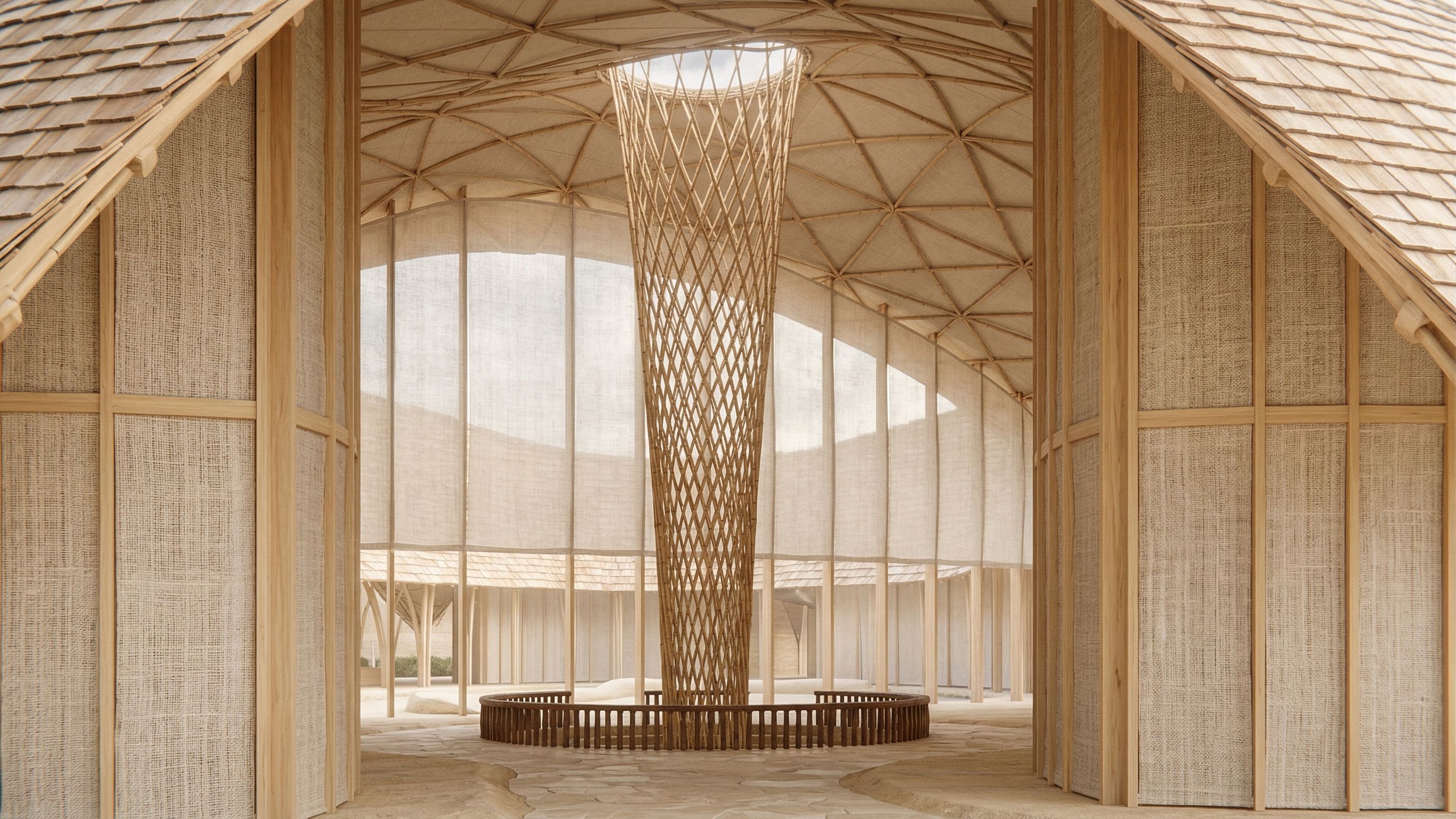
PromptTransform this architectural interior render without changing the geometry, camera angle, proportions, or layout. Preserve the domed roof, circular opening, central vertical element, and overall spatial composition exactly as is. Update the materials to reflect a natural, lightweight construction system using wood shingles, bamboo structure, wood framing, and fabric layers. The roof exterior should read as layered wood shingles, warm-toned, slightly weathered, with subtle variation in color (light brown to honey tones). The roof structure underneath should be expressed as bamboo framing, thin, repetitive, and slightly irregular, showing a handcrafted quality. All primary structural elements should be light wood framing, soft and natural in tone, not heavy or dark. The enclosure should be made of translucent fabric panels stretched between the structure, creating a soft, breathable boundary rather than solid walls. The fabric should feel like woven linen or lightweight textile, slightly textured, allowing filtered daylight to pass through. It should create a sense of layering, softness, and transition between spaces. The central vertical element should be reinterpreted as a bamboo or thin wood lattice structure, elegant and porous, allowing light and air to pass through while maintaining a vertical presence. Lighting should be diffused and atmospheric, with sunlight filtering through the fabric and bamboo, creating soft shadows and a calm, spiritual mood. Avoid harsh direct light. Use a natural color palette: warm beige soft cream light sand pale wood / honey tones muted natural fibers Avoid dark colors, glossy finishes, metal, or industrial materials. The overall atmosphere should feel: calm sacred lightweight breathable tactile and handmade This space should feel like a layered pavilion or monastery space, where structure and fabric work together to create soft transitions and filtered light., keep exact camera angle
Date12 April 2026
Share