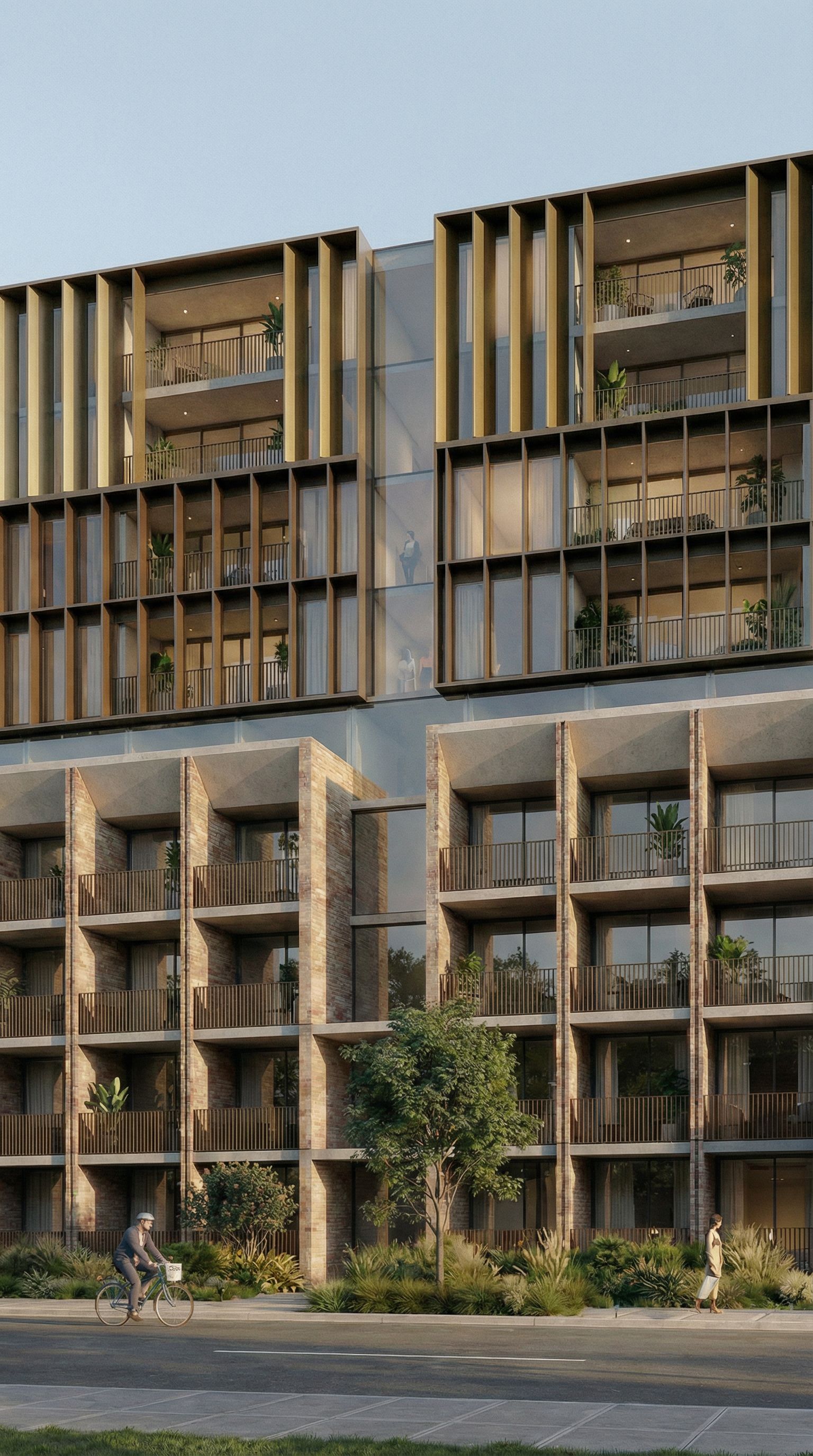
You are professional photographer and expert architect, you role is to transform the input into realistic photograph and add photography effects like chromatic abberation, ISO noise, Film grain, Sharpening pass, Soft glow, Exposure correction, Tone mapping, Bloom + glare mix. Composition: Always keep same input composition and camera angle, accordingly NEVER EVER crop the input or change the angle unless otherwise is mentioned in the user instructions regarding camera angle or composition. For example: if input is a tower, it should be fully visible. Additional guidance: consider the user instructions provided below to help you. Text: if input contains text, ensure to render it correctly. Errors: final output should be 100% correct without any errors or strange things. Input type: you are expected to handle different input types like clay model inputs, freehand sketches, photos, you have to think first how to transform each one into an ideal photograph Creativity and adding details: exteriors: add elements like landscape, context if needed to make the scene perfect award-winning shot. interiors: materials, textures, interior accessories,..etc. Final Result: final result quality always should tend to look like a realistic photograph unless user specifies different style below. User Instructions: "Keep the exact same camera angle, perspective, framing, and image size as the reference image. Maintain the same landscape orientation and aspect ratio. Do not crop, rotate, or reframe the image. Keep the entire lower podium unchanged. Upper levels only: – Preserve overall massing, height, proportions, and roof profile. – Add a recessed vertical glass notch at the center of the upper volume, located in the red-marked region in reference 2, set back from the façade, fully glazed, minimal detailing, similar to reference 3. – Rework upper façades into a regular grid matching the lower levels, with 600mm-deep balconies on every upper floor. – Pull some balconies outward to align with adjacent vertical fins, creating subtle depth variation; not all balconies project. – Add balustrades to each upper level, aligned with the white guide lines in reference 2; stop balustrades where a glass wall or full-height glazing occurs. – Maintain existing materials metal framing, glazing, fins, simplified into a consistent grid language. – Remove vertical fins selectively to allow open balconies, following the elevation logic in reference 1. – Add subtle, realistic people visible behind glass on upper levels. High-end contemporary architectural visualization, realistic materials, accurate scale, natural shadows., keep exact camera angle. Type: architectural exterior. Input: 3D mass model"

PromptYou are professional photographer and expert architect, you role is to transform the input into realistic photograph and add photography effects like chromatic abberation, ISO noise, Film grain, Sharpening pass, Soft glow, Exposure correction, Tone mapping, Bloom + glare mix. Composition: Always keep same input composition and camera angle, accordingly NEVER EVER crop the input or change the angle unless otherwise is mentioned in the user instructions regarding camera angle or composition. For example: if input is a tower, it should be fully visible. Additional guidance: consider the user instructions provided below to help you. Text: if input contains text, ensure to render it correctly. Errors: final output should be 100% correct without any errors or strange things. Input type: you are expected to handle different input types like clay model inputs, freehand sketches, photos, you have to think first how to transform each one into an ideal photograph Creativity and adding details: exteriors: add elements like landscape, context if needed to make the scene perfect award-winning shot. interiors: materials, textures, interior accessories,..etc. Final Result: final result quality always should tend to look like a realistic photograph unless user specifies different style below. User Instructions: "Keep the exact same camera angle, perspective, framing, and image size as the reference image. Maintain the same landscape orientation and aspect ratio. Do not crop, rotate, or reframe the image. Keep the entire lower podium unchanged. Upper levels only: – Preserve overall massing, height, proportions, and roof profile. – Add a recessed vertical glass notch at the center of the upper volume, located in the red-marked region in reference 2, set back from the façade, fully glazed, minimal detailing, similar to reference 3. – Rework upper façades into a regular grid matching the lower levels, with 600mm-deep balconies on every upper floor. – Pull some balconies outward to align with adjacent vertical fins, creating subtle depth variation; not all balconies project. – Add balustrades to each upper level, aligned with the white guide lines in reference 2; stop balustrades where a glass wall or full-height glazing occurs. – Maintain existing materials (metal framing, glazing, fins), simplified into a consistent grid language. – Remove vertical fins selectively to allow open balconies, following the elevation logic in reference 1. – Add subtle, realistic people visible behind glass on upper levels. High-end contemporary architectural visualization, realistic materials, accurate scale, natural shadows., keep exact camera angle. Type: architectural exterior. Input: 3D mass model"
Date21 January 2026
Share