
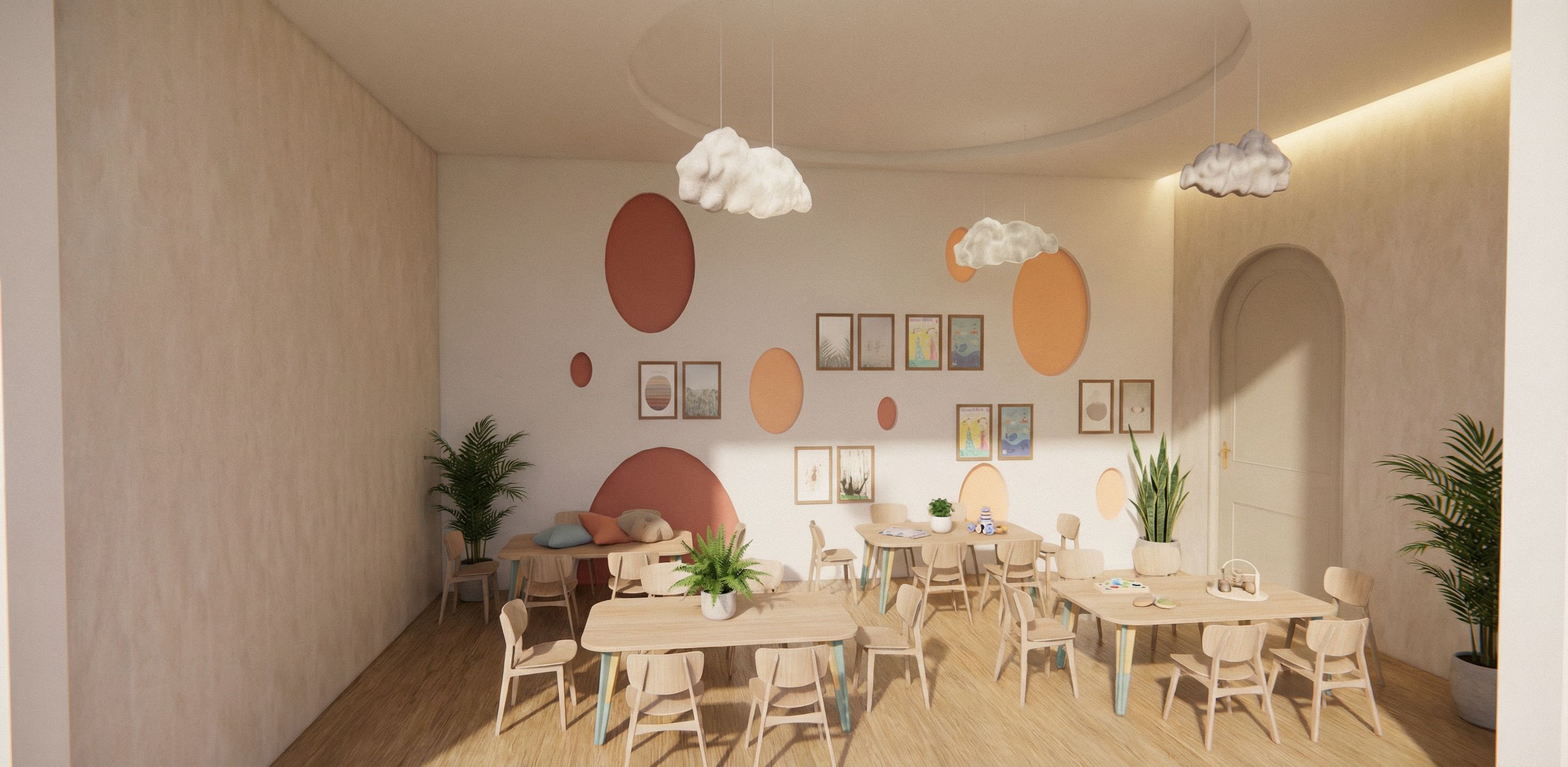
Render the provided interior design of a children’s dining and break room for autistic children into a highly realistic, professional interior photograph. Preserve the exact design, layout, proportions, furniture placement, geometry, and architectural elements exactly as provided, with absolutely no modifications, additions, removals, or stylistic changes. Apply autism-friendly lighting and color treatment only: Use soft, indirect, glare-free lighting with even illumination, avoiding harsh contrasts, strong reflections, or visual noise. Lighting should feel calm, safe, and natural, similar to diffused daylight combined with warm, gentle artificial lighting. Enhance realism using neutral, soothing, low-saturation colors suitable for autistic children soft beige, warm off-white, muted pastel tones, light wood hues, without introducing any new colors or changing material intent. Improve material realism only through texture quality, subtle surface variation, and realistic light interaction—no change in materials, shapes, or finishes. Maintain correct camera perspective, human-eye level view, accurate scale, realistic shadows, soft ambient occlusion, and natural global illumination. The final image should look like a professional, real-world interior photograph of a completed, autism-friendly dining and rest space, calm, minimal, clean, safe, and emotionally comforting, with no visual overstimulation. Ultra-realistic, high resolution, cinematic yet gentle, natural, and believable. , keep exact camera angle
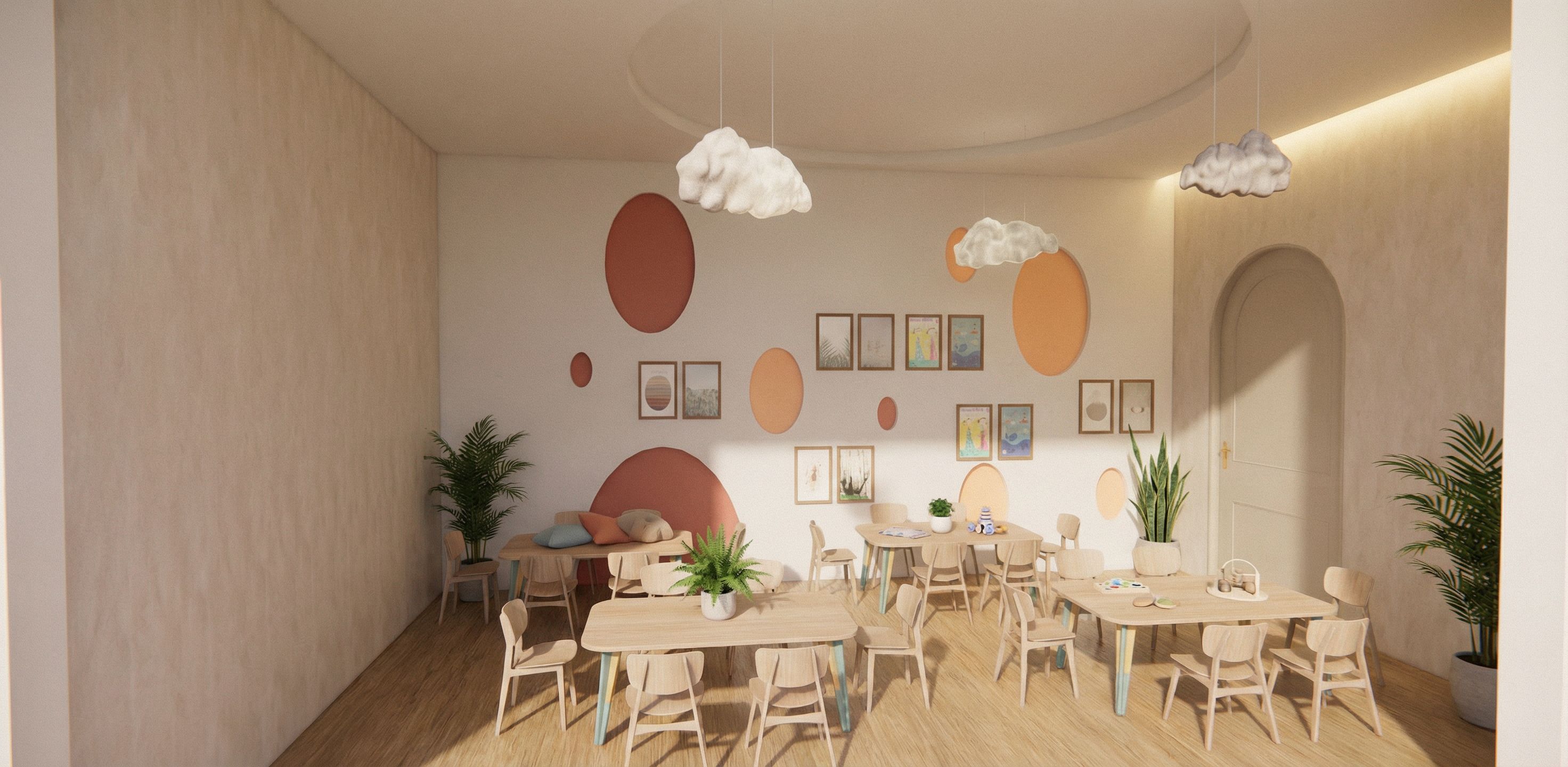
PromptRender the provided interior design of a children’s dining and break room for autistic children into a highly realistic, professional interior photograph. Preserve the exact design, layout, proportions, furniture placement, geometry, and architectural elements exactly as provided, with absolutely no modifications, additions, removals, or stylistic changes. Apply autism-friendly lighting and color treatment only: Use soft, indirect, glare-free lighting with even illumination, avoiding harsh contrasts, strong reflections, or visual noise. Lighting should feel calm, safe, and natural, similar to diffused daylight combined with warm, gentle artificial lighting. Enhance realism using neutral, soothing, low-saturation colors suitable for autistic children (soft beige, warm off-white, muted pastel tones, light wood hues), without introducing any new colors or changing material intent. Improve material realism only through texture quality, subtle surface variation, and realistic light interaction—no change in materials, shapes, or finishes. Maintain correct camera perspective, human-eye level view, accurate scale, realistic shadows, soft ambient occlusion, and natural global illumination. The final image should look like a professional, real-world interior photograph of a completed, autism-friendly dining and rest space, calm, minimal, clean, safe, and emotionally comforting, with no visual overstimulation. Ultra-realistic, high resolution, cinematic yet gentle, natural, and believable. , keep exact camera angle
Date09 February 2026
Share