
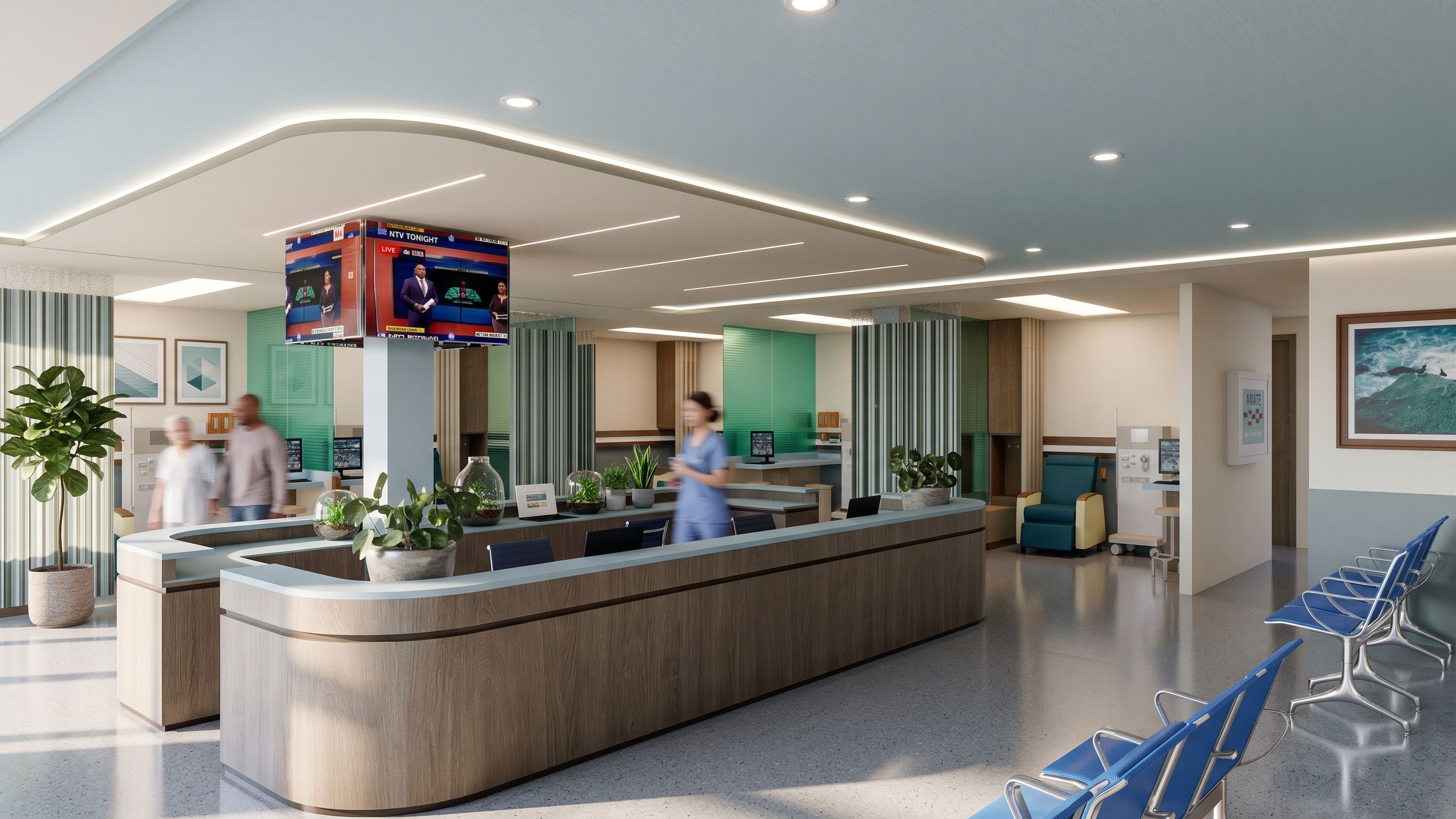
Enhance this existing architectural render of a hospital dialysis center interior without changing the design, layout, proportions, materials, or furniture placement. Maintain full fidelity to the original design intent. Focus on achieving ultra-realistic visualization quality by improving lighting accuracy, material definition, and environmental detail. Use physically accurate lighting with soft natural daylight and balanced artificial medical lighting neutral white ~4000K, ensuring realistic shadow behavior, reflections, and ambient occlusion. Refine material textures to be highly realistic: clean medical surfaces, subtle reflections on polished floors, accurate fabric detail on seating, and realistic finishes on equipment and cabinetry. Avoid exaggeration or stylization. Calibrate color tones to a natural, clinically appropriate palette—clean, soft, and calming whites, light neutrals, muted blues/greens. Ensure correct white balance and eliminate color cast. Enhance depth and realism through proper contrast, sharpness, and subtle imperfections micro-texture, slight wear where appropriate while keeping the space hygienic and professional. Improve entourage realism if present patients, staff, equipment with natural poses and integration into lighting conditions, but do not overcrowd or alter the scene composition. Final output should look like a high-end professional photograph of a real dialysis center—calm, sterile, welcoming, and believable. No artistic reinterpretation, no design changes, only photorealistic enhancement.”, keep exact camera angle
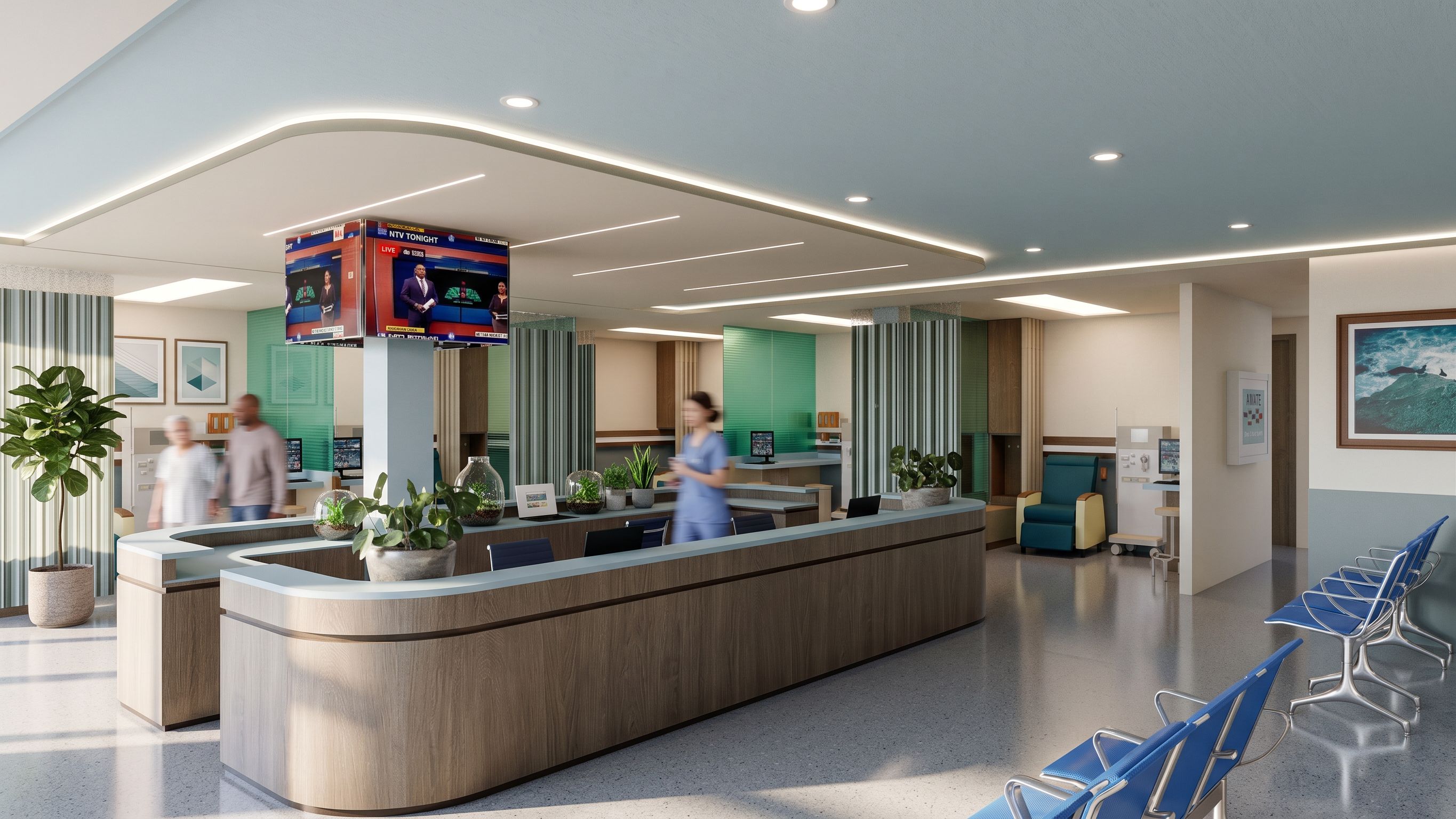
PromptEnhance this existing architectural render of a hospital dialysis center interior without changing the design, layout, proportions, materials, or furniture placement. Maintain full fidelity to the original design intent. Focus on achieving ultra-realistic visualization quality by improving lighting accuracy, material definition, and environmental detail. Use physically accurate lighting with soft natural daylight and balanced artificial medical lighting (neutral white ~4000K), ensuring realistic shadow behavior, reflections, and ambient occlusion. Refine material textures to be highly realistic: clean medical surfaces, subtle reflections on polished floors, accurate fabric detail on seating, and realistic finishes on equipment and cabinetry. Avoid exaggeration or stylization. Calibrate color tones to a natural, clinically appropriate palette—clean, soft, and calming (whites, light neutrals, muted blues/greens). Ensure correct white balance and eliminate color cast. Enhance depth and realism through proper contrast, sharpness, and subtle imperfections (micro-texture, slight wear where appropriate) while keeping the space hygienic and professional. Improve entourage realism if present (patients, staff, equipment) with natural poses and integration into lighting conditions, but do not overcrowd or alter the scene composition. Final output should look like a high-end professional photograph of a real dialysis center—calm, sterile, welcoming, and believable. No artistic reinterpretation, no design changes, only photorealistic enhancement.”, keep exact camera angle
Date24 April 2026
Share