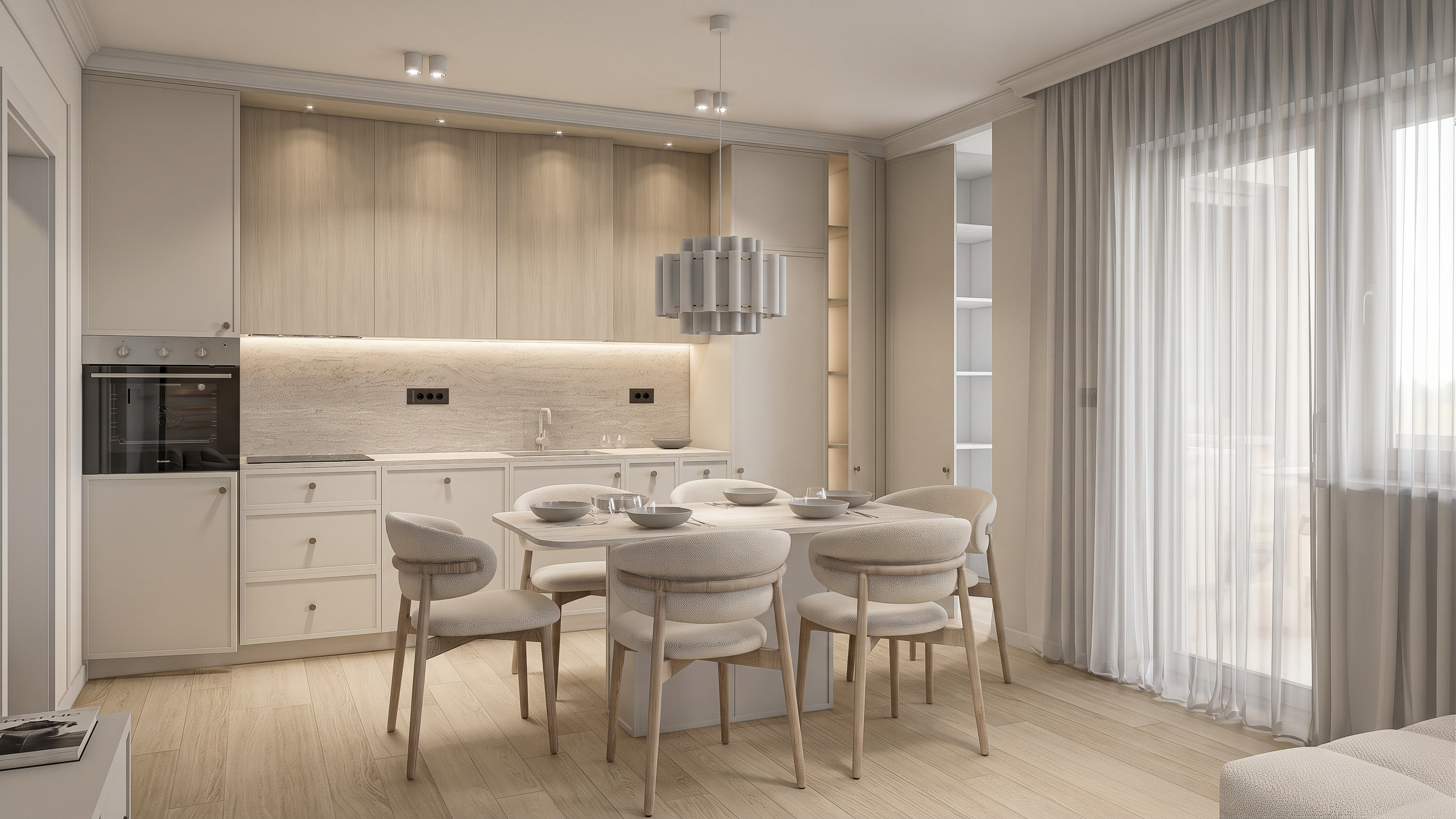
- Prompt
- Transform the provided architectural 3D render into an exceptionally photorealistic, high-end professional interior architectural photograph, matching the quality of premium architectural photography and luxury interior design magazines.
ABSOLUTE PRIORITY – PRESERVE THE ORIGINAL DESIGN
Use the uploaded image as the strict and definitive reference. Preserve 100% of the original geometry, architecture, dimensions, proportions, spatial layout, furniture design, cabinetry, doors, windows, decorative details, materials, colors, textures, object positions, camera angle, perspective, framing, aspect ratio and composition.
Do not redesign, reinterpret, replace, remove, move or add any architectural element, furniture, decoration or lighting fixture.
Maintain every visible detail of the original 3D model, including cabinet divisions, door profiles, handles, furniture shapes, wall finishes, ceiling details and material boundaries.
PHOTOREALISTIC MATERIALS
Enhance all existing materials to achieve exceptional physical realism while preserving their original appearance and colors.
Create natural wood grain with subtle microtextures, realistic stone surfaces, detailed woven fabrics, authentic upholstery, physically accurate glass reflections, realistic metal finishes and subtle surface imperfections.
Use physically based material rendering, realistic roughness, natural reflections, micro-surface details and accurate material response to light.
Avoid artificial smoothness, excessive gloss, plastic-looking surfaces and exaggerated textures.
PROFESSIONAL ARCHITECTURAL LIGHTING
Create physically accurate global illumination with soft natural daylight, realistic indirect light bounce, subtle ambient occlusion, natural contact shadows and balanced exposure.
Preserve all existing artificial lighting fixtures and their original positions. Do not introduce additional light sources or visible fixtures.
Use realistic warm interior lighting where already present in the original design, with natural color temperature and soft light diffusion.
Maintain a harmonious balance between natural daylight and artificial illumination.
HIGH-END ARCHITECTURAL PHOTOGRAPHY
Achieve the visual quality of a photograph captured with a professional full-frame architectural camera and premium tilt-shift lens.
Natural photographic dynamic range, accurate white balance, subtle tonal variations, realistic depth, crisp material details and refined photographic color grading.
Preserve the original camera position, perspective, focal composition and vertical alignment.
Avoid excessive sharpening, HDR effects, artificial contrast, cinematic filters and exaggerated depth of field.
FINAL QUALITY
Ultra-photorealistic architectural visualization, indistinguishable from a real professional interior photograph.
Premium editorial interior photography quality, natural atmosphere, realistic material behavior, subtle imperfections, refined lighting and exceptional detail.
Maintain the exact original image resolution, aspect ratio and framing whenever supported.
CRITICAL FINAL INSTRUCTION
This is a photorealism enhancement task, NOT a redesign task.
The original architectural model must remain visually identical. Improve only photographic realism, material authenticity, lighting behavior, reflections, shadows and overall image quality.
No geometry changes. No furniture changes. No color changes. No added objects. No missing details. No altered perspective.
- Created
- October 13, 2026