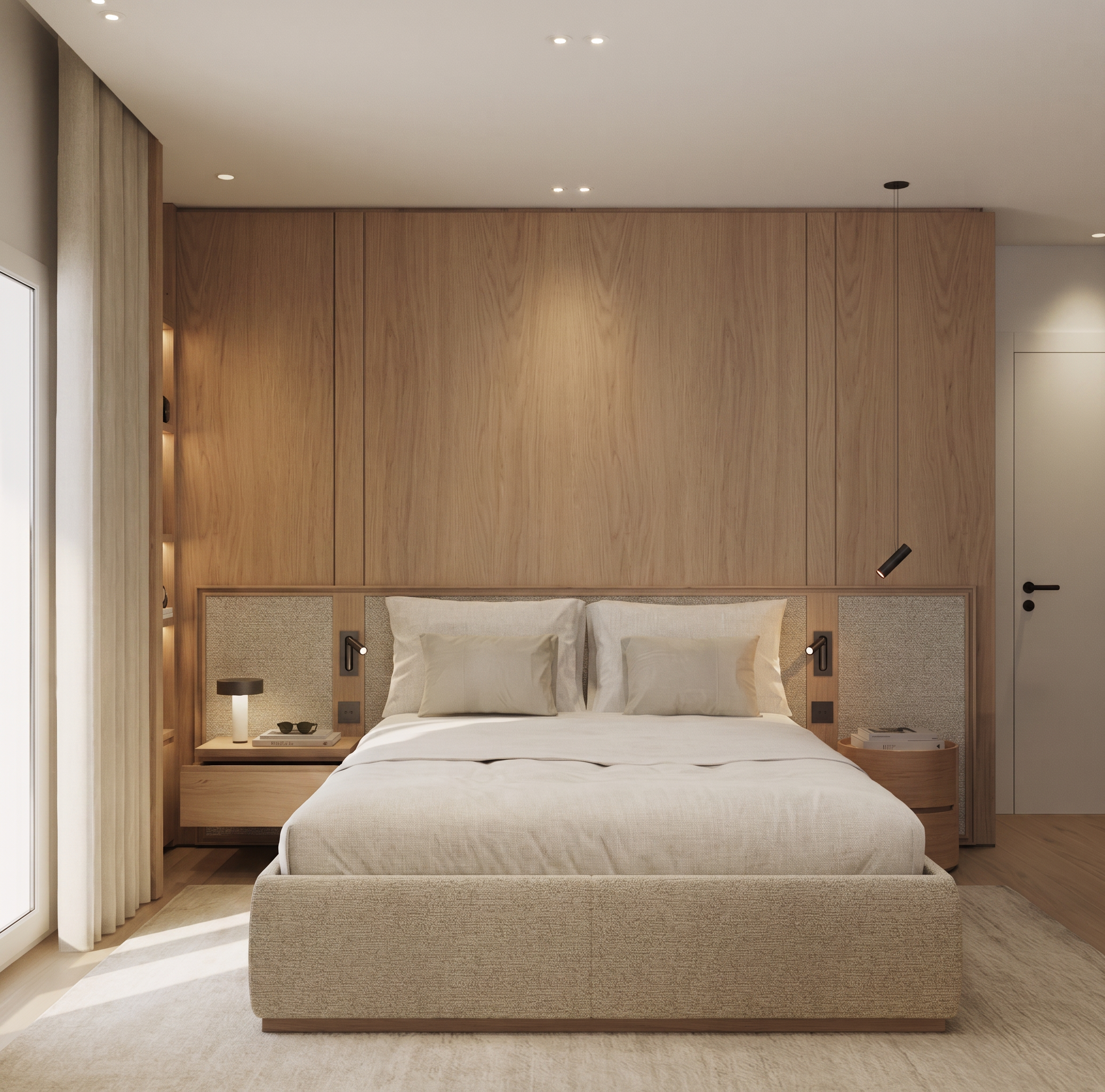
- Prompt
- Enhance both the **oak wood and fabric materials** to achieve an extremely realistic, natural, high-end photographic appearance, as if the interior were captured in a professional architectural photoshoot.
For all **wood surfaces**, use premium natural European oak with authentic, refined grain patterns, subtle pores, delicate imperfections, and slight natural variations between individual panels. Keep the oak warm-neutral and elegant, with soft beige, light honey, and muted brown undertones. Avoid excessive yellow, orange, or red tones.
The oak should have a **natural matte / lightly oiled finish**, realistic micro-roughness, subtle reflections, and fine surface depth. Avoid repetitive grain patterns, obvious texture tiling, artificial uniformity, excessive knots, glossy finishes, or plastic CGI-looking wood.
For all **fabric and upholstered surfaces**, enhance the material with realistic woven fibers, fine textile grain, subtle thread variation, natural softness, and delicate micro-texture. The fabric should have a **soft matte finish**, with realistic folds, gentle wrinkles, subtle compression around cushions and edges, and natural variations caused by the direction of the fibers.
Make the fabric react naturally to light, with **soft highlights, realistic shadow transitions, subtle contact shadows, and visible textile texture without excessive sharpness**. Avoid flat, smooth, plastic, velvet-like, or artificial CGI surfaces unless already present in the original design.
Maintain a sophisticated and understated material palette. Both oak and fabric should feel **tactile, organic, premium, and naturally imperfect**.
Integrate the materials naturally with the existing daylight and artificial lighting, using soft bounced illumination, realistic global illumination, balanced exposure, subtle reflections, and natural contact shadows.
The final result should resemble a **real high-end interior photographed with a professional full-frame camera**, not a 3D render.
**Important:** Preserve the original architecture, furniture, geometry, proportions, colors, fabric type, panel divisions, wood grain direction, camera angle, and composition. Do not redesign or replace any elements. Only enhance the **material realism, texture detail, roughness, depth, and natural interaction with light**.
**Avoid:** repetitive textures, texture tiling, plastic surfaces, artificial gloss, overly orange oak, exaggerated wood grain, excessive fabric bump, oversharpened fibers, perfectly uniform materials, fake wrinkles, CGI appearance, excessive contrast.
- Created
- August 24, 2026