- Prompt
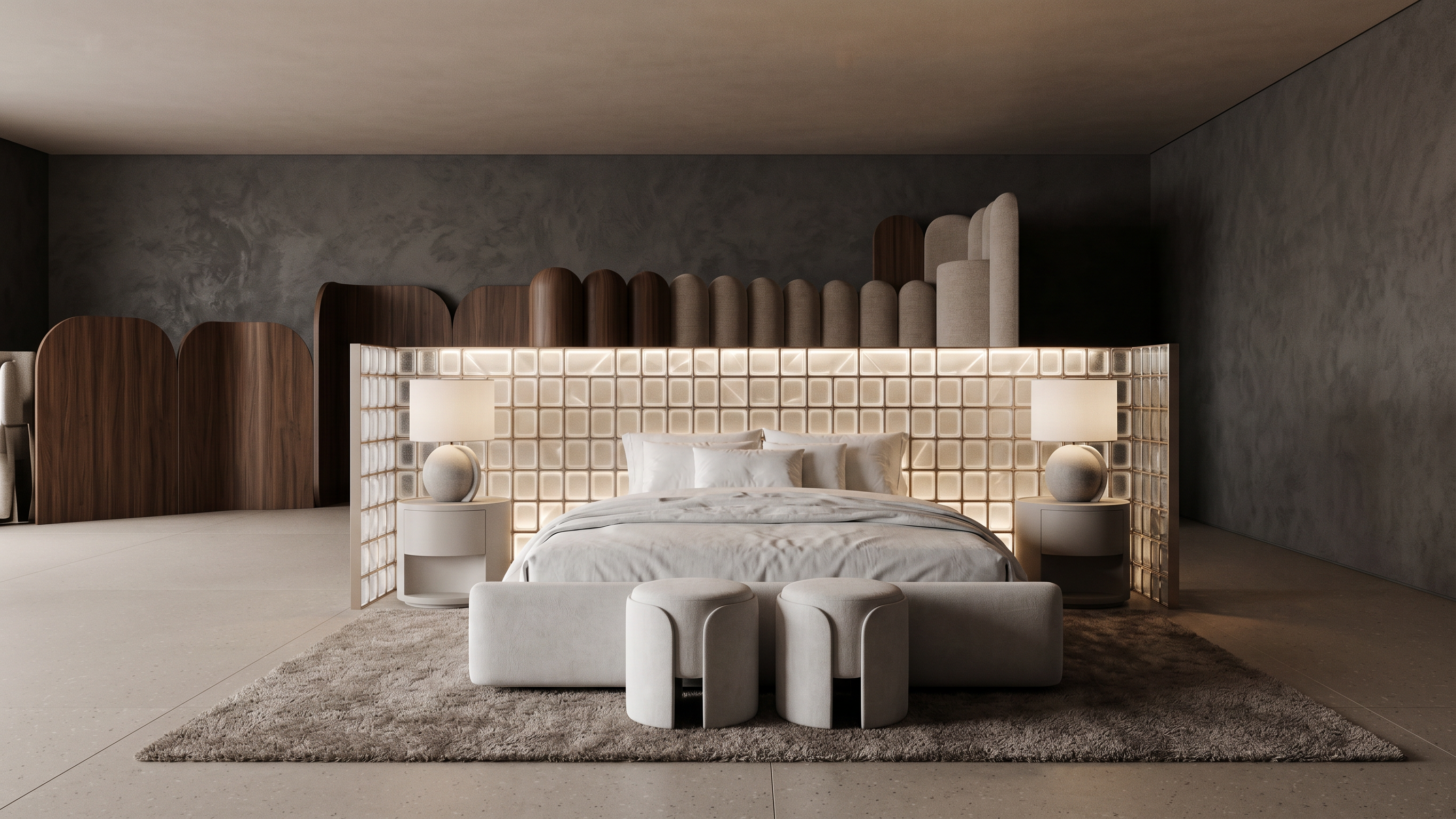
- This bedroom is conceived as a contemporary luxury retreat where architecture, furniture, art, and comfort are treated as one continuous design language. The room is built around a restrained palette of warm ivory, creamy white, soft taupe, mushroom beige, charcoal gray, deep walnut, translucent glass, and muted bronze. Rather than relying on bright colors or excessive decoration, the interior creates richness through texture, proportion, curved geometry, layered surfaces, controlled contrast, and carefully positioned lighting. The overall atmosphere is calm, sophisticated, tactile, intimate, and highly architectural.
5. Headboard Glass Grid
One of the most distinctive architectural elements behind the bed is the translucent modular glass-grid composition. This element should be interpreted as a sophisticated architectural glass installation rather than a simple glass wall.
The surface is composed of repeated square or rectangular translucent modules arranged in a precise grid. Each module should have slightly softened edges and a subtle frosted or textured surface. The glass should transmit light without producing completely transparent views.
The preferred material is architectural textured glass, frosted glass blocks, or semi-translucent cast glass. The finish should be satin rather than glossy. Light should scatter softly through the material, creating a luminous background behind the bed.
The grid introduces rhythm and repetition into the room. Each module acts like a small architectural tile, creating a visual relationship between furniture and architecture.
The framing should be extremely thin and refined, using muted champagne bronze, brushed bronze, dark bronze, or a very subtle charcoal metal depending on the desired interpretation.
The glass should catch warm light gently. Avoid excessive reflections or mirror-like highlights.
Charcoal Architectural Wall
- Created
- August 23, 2026