- Prompt
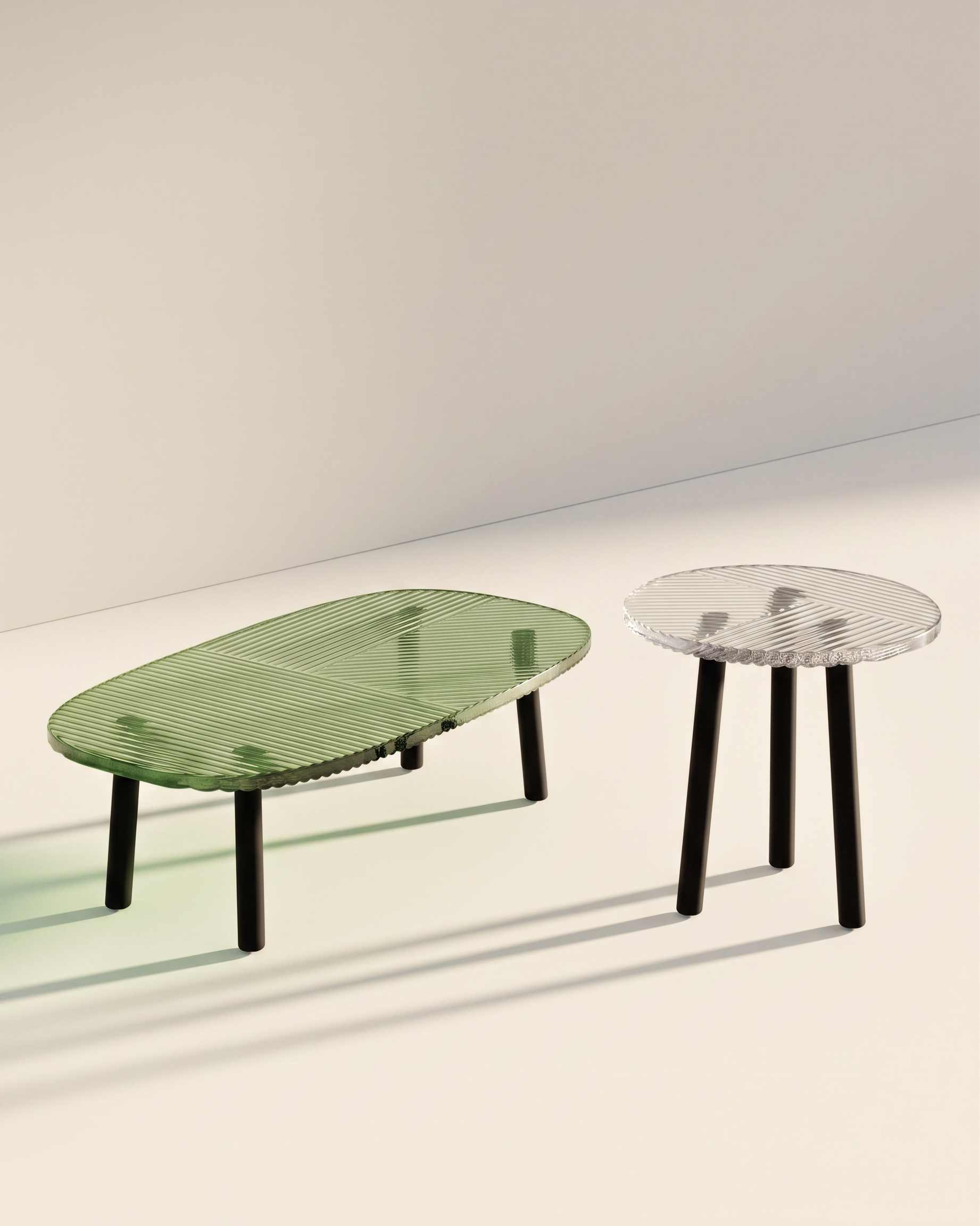
- Create a highly photorealistic, high-end product photograph of the pair of side tables shown in the reference image.
**ABSOLUTELY PRESERVE the original design, geometry, proportions, dimensions, lines, structure, and overall silhouette of both side tables exactly as shown in the reference image. Do not modify, reinterpret, simplify, or redesign any part of the objects. The reference image must be treated as the strict design source.**
The two side tables are made of glass with a **slightly textured and tactile surface**. The distinctive feature of the glass tops is the **relief pattern on the underside of the glass**, creating a ribbed / gridded linear texture that gives the surface strong character, depth, and an interesting play of transparency and light.
**IMPORTANT:** faithfully reproduce the exact subdivision and arrangement of the linear decoration visible in the reference image. The grid/ribbed pattern must follow the same direction, spacing, proportions, rhythm, and layout as the reference. Do not invent or add any different pattern. The texture should appear physically integrated into the underside of the glass, creating subtle optical distortions, refractions, shadows, and variations in transparency when viewed from different angles.
One side table should feature **clear, natural transparent glass**, while the other should feature **transparent colored glass in refined green tones**. The green glass must remain translucent and luminous, allowing light to pass through the material and revealing the relief pattern underneath.
The glass edges must have a **soft, smoothly rounded profile**, with subtly polished and softened edges rather than sharp or perfectly angular edges.
The legs and supporting structure are made of black painted metal with a refined satin finish. The metal should have a subtle, realistic sheen without appearing glossy.
The material rendering must be extremely realistic and sophisticated: physically accurate glass transparency, refraction, internal reflections, subtle optical distortion, realistic thickness, soft highlights, delicate reflections, and natural light interaction with the textured underside. The green glass should create elegant tonal variations and transparency without becoming opaque.
**Do not change the design in any way. Do not alter the proportions, dimensions, thicknesses, curvature, number of components, positioning, or relationships between the elements. Do not add any additional objects, accessories, decorations, or structural elements. Do not remove anything from the original design.
Place the two side tables together in a neutral, minimal, high-end photographic studio environment, similar to a professional furniture/product photography set. The background should be predominantly **soft white and warm-neutral white tones**, clean, seamless, bright, and understated.
Use sophisticated studio lighting specifically designed to enhance the qualities of glass and metal. Create soft but clearly visible shadows, subtle reflections, controlled highlights, realistic refractions, and delicate light gradients across the glass surfaces. The lighting should emphasize the relief pattern on the underside of the tops and make the transparency, depth, texture, and material qualities immediately visible.
Position both side tables at the center of the composition, with a generous amount of clean, bright negative space surrounding them. Give the objects plenty of visual breathing room while keeping them clearly readable and visually prominent.
- Created
- August 11, 2026