- Prompt
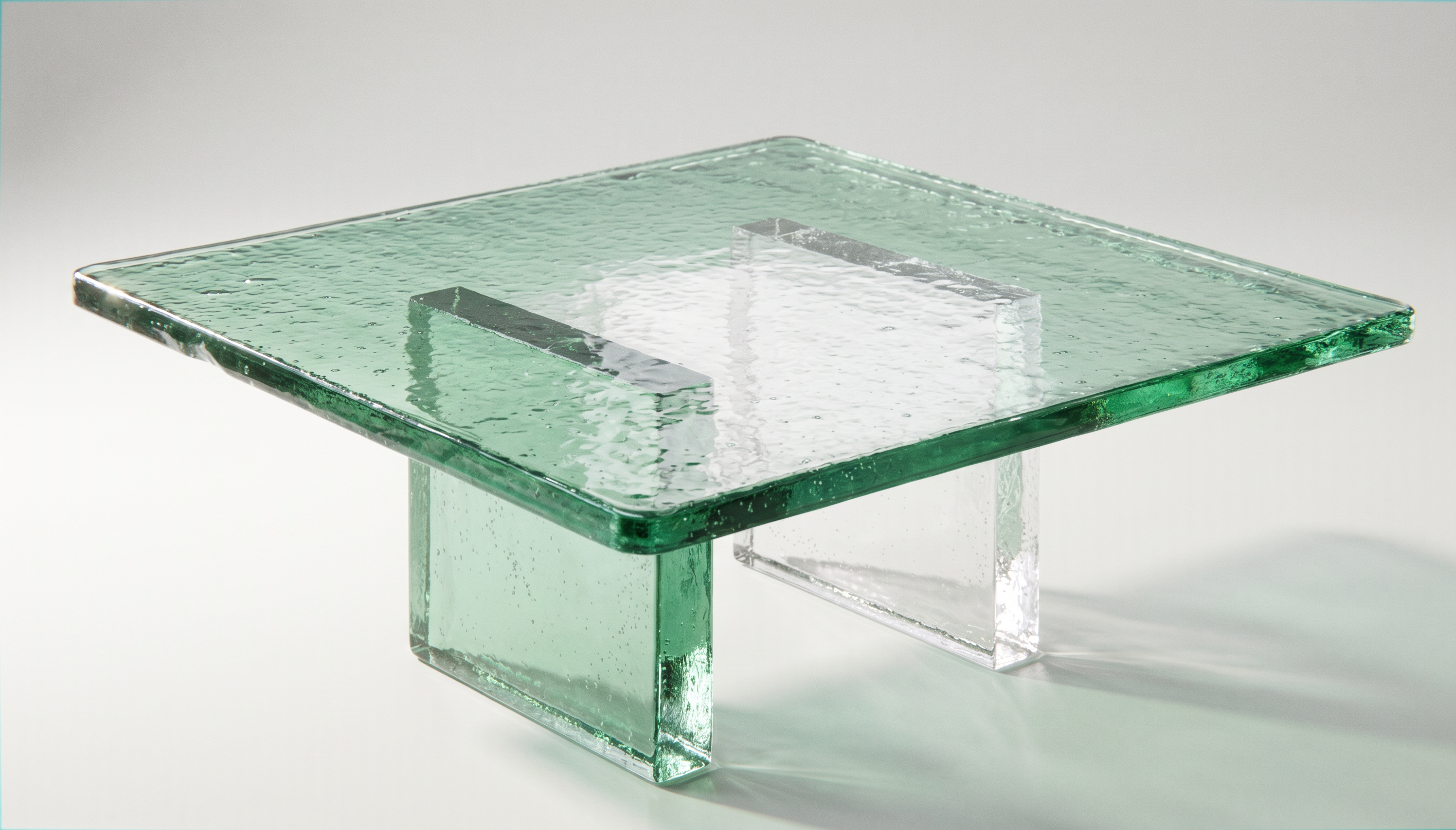
- Create a highly photorealistic, high-end studio photograph of the pair of side tables shown in the base image.
Use the exact design, geometry, proportions, dimensions, thicknesses, composition, and overall silhouette of the side tables from the reference image. Do not modify, reinterpret, simplify, or redesign the shape or lines in any way. The base image must be treated as the absolute reference for the product design.
The two side tables are made entirely of textured, vibrantly expressive glass, with a rich and tactile surface quality that creates subtle variations, distortions, reflections, and refractions of light. The glass should feel refined and sophisticated, with a beautiful handcrafted material character while remaining realistic and physically plausible.
Create the two tables with two different glass finishes:
One side table in natural transparent glass, completely clear and colourless, with realistic transparency, subtle optical distortions, reflections, and refractions.
The other side table in transparent coloured glass in refined shades of green, with a sophisticated translucent green tone. The colour must remain transparent and luminous, allowing light to pass through the material while creating beautiful green reflections and refractions.
The glass surfaces must have a materic, vibrant and slightly irregular texture, while preserving the exact geometry of the original design. The texture should enhance the perception of depth and materiality without altering the shape of the objects.
The edges of all glass slabs must be soft, smooth and rounded, with naturally softened transitions and realistic highlights along the edges. Avoid sharp, perfectly machined-looking edges.
Place both side tables together in a neutral, minimal photographic studio environment, similar to a high-end contemporary product photography set. Use a very light background in shades of white, off-white and pale grey, with a seamless or subtly graduated backdrop.
The environment must be extremely restrained and secondary to the objects, designed specifically to enhance the qualities of the glass. Use soft, diffused but directional studio lighting that creates:
delicate and realistic shadows on the floor,
subtle reflections on the glass,
visible light refractions through the transparent material,
soft highlights along the rounded edges,
nuanced tonal variations within the textured glass,
realistic contact shadows beneath the tables.
The lighting should emphasize the contrast between the natural transparent glass and the translucent green glass, making their different optical qualities clearly visible.
Create a sophisticated, contemporary, editorial-quality product photograph with a minimalist luxury aesthetic. The image should feel like a professional photograph for a high-end furniture and collectible design catalogue.
Use realistic physically based materials, accurate glass optics, natural reflections and refractions, subtle imperfections, realistic light behaviour, high-resolution textures, and extremely detailed material rendering.
Do not change the camera perspective, proportions, geometry, construction, or design of the side tables from the base image. The product design must remain exactly faithful to the reference image. Only the material treatment, colour variation, lighting, and neutral studio environment should be introduced.
- Created
- August 7, 2026