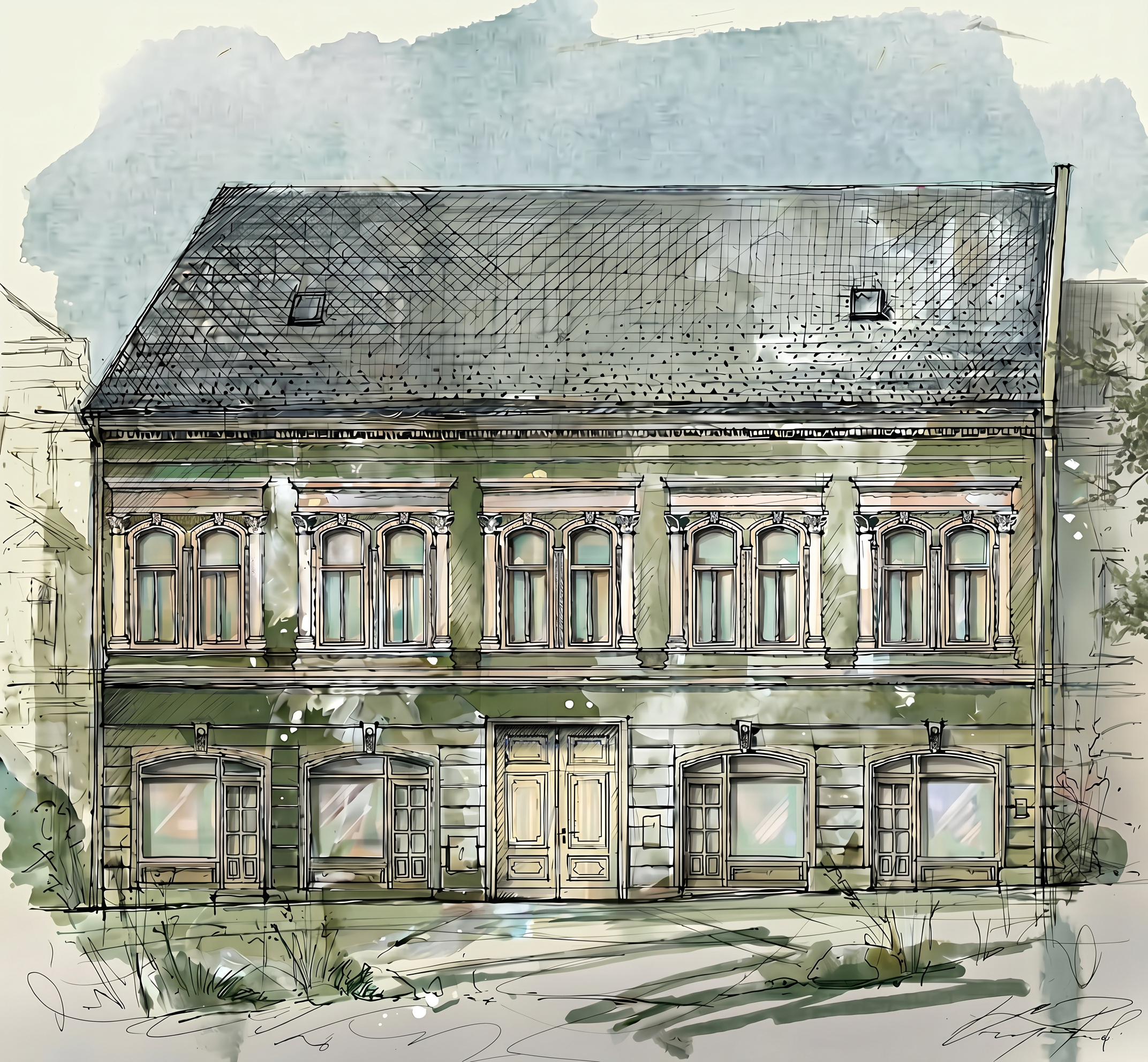
- Prompt
- Use the uploaded image strictly as the architectural reference and preserve the building exactly as designed. Do not alter the proportions, perspective, facade composition, windows, roof, structure, dimensions, or any architectural elements. The architecture must remain unchanged. Create a refined architectural visualization that sits between architectural illustration and realistic rendering. The goal is not a sketch, but a polished presentation image that helps a client clearly understand the project while still retaining an artistic, handcrafted character. Reduce rough sketch effects, excessive linework, visible construction marks, and abstract graphic elements. Replace them with clean architectural presentation techniques, controlled detailing, realistic depth, and carefully developed materials. The image should feel professional, elegant, and believable, while remaining painterly and artistic rather than fully photorealistic. Render the facade in sophisticated green tones with subtle material variation, depth, shadows, and natural lighting. Architectural details such as window frames, cornices, moldings, facade articulation, and decorative elements should remain crisp, white, and clearly defined, creating a strong contrast against the green facade surfaces. Windows should be light and realistic, using soft white and pale grey tones with subtle reflections and transparency. Avoid blue glass and exaggerated reflections. Introduce realistic architectural lighting, atmospheric shadows, depth, and carefully balanced contrast. Every element should be thoughtfully rendered to communicate scale, materiality, and architectural quality. The foreground and surrounding context should support the architecture through elegant landscaping, subtle vegetation, soft textures, and realistic environmental details. Keep them refined and secondary so the building remains the focal point. The overall style should resemble a high-quality architectural competition visualization, a premium client presentation image, or an architectural magazine illustration. Clean composition, realistic spatial depth, believable materials, and strong visual hierarchy are more important than expressive sketching. Maintain a painterly and artistic finish through watercolor-like softness, subtle brushwork, and handcrafted atmosphere, but prioritize clarity, realism, and presentation quality. No text. No labels. No annotations. No dimensions. No typography. No watermarks. The final image should feel like a carefully crafted architectural visualization that helps a client immediately understand the design, materials, atmosphere, and character of the project—realistic enough to communicate the architecture clearly, yet artistic enough to feel unique and memorable.
- Created
- June 19, 2026
- Seed
- 0