- Prompt
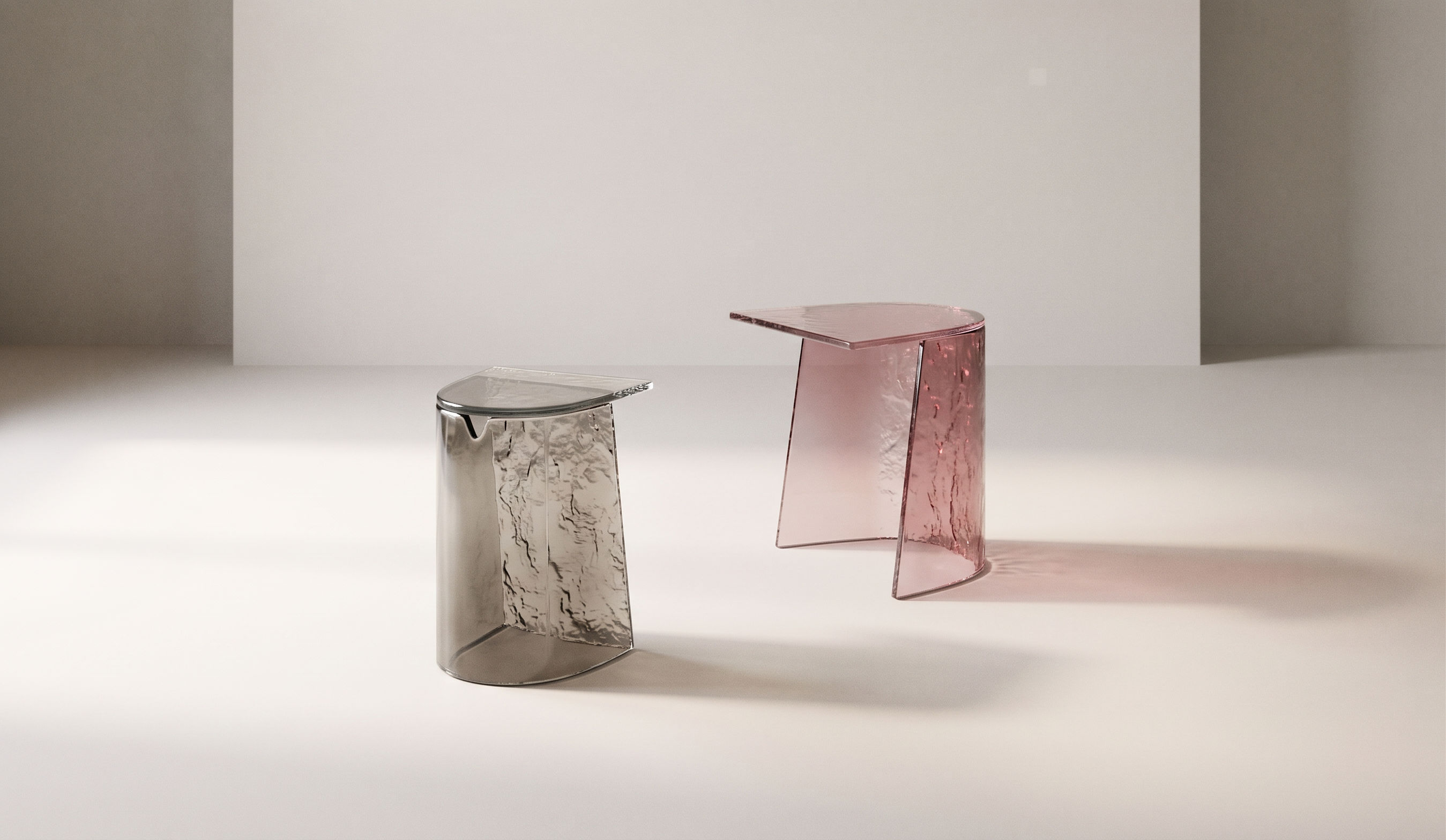
- Create a highly photorealistic, high-end studio photograph of the pair of side tables shown in the base image.
IMPORTANT — PRESERVE THE ORIGINAL DESIGN EXACTLY:
Use the base image as the absolute reference for the design. Reproduce the side tables with exactly the same shape, geometry, proportions, dimensions, thicknesses, composition, positioning and lines as shown in the original image. Do not redesign, reinterpret, simplify or modify any part of the objects. The silhouette, structure, proportions and relationship between all elements must remain completely unchanged.
MATERIAL — TEXTURED, VIBRANT GLASS
The side tables are entirely made of high-quality artistic glass with a rich, tactile and vibrant surface.
The upper surface of the glass is perfectly smooth, polished and glossy, creating subtle, elegant reflections.
The underside of the glass is rough, irregular and strongly tactile, resembling glass formed through a controlled pouring/casting process.
The rough underside should create a beautiful sense of depth, vibration and material richness when illuminated.
The glass is semi-transparent and subtly back-painted, with a sophisticated gradient of smoky grey / fumé and soft dusty pink tones, exactly inspired by the reference images.
The colours must remain subtle and translucent rather than opaque or saturated.
Preserve visible variations in transparency, density and colour within the glass, creating a refined layered appearance.
The glass should feel heavy, precious, artisanal and highly crafted, while remaining elegant and contemporary.
The edges of every glass slab are soft, rounded and smoothly polished, with no sharp or perfectly cut-looking edges.
Show realistic refraction, internal reflections, subtle caustics and variations of transparency typical of high-quality architectural/artistic glass.
Avoid making the material look like acrylic, plastic, resin or ordinary transparent glass.
COMPOSITION & ENVIRONMENT
Place the exact same pair of side tables in a neutral, minimal photographic studio environment, similar to a high-end furniture/product photography set.
The background should feature very subtle tones ranging from warm off-white / cream to light neutral grey, with a seamless, understated appearance.
The environment must be extremely clean and minimal, with no distracting furniture, decoration or architectural elements. The entire visual focus must remain on the side tables and their material.
LIGHTING
Use sophisticated, soft but directional studio lighting designed specifically to enhance the glass.
Create:
soft natural-looking shadows on the floor,
elegant highlights on the polished upper surfaces,
subtle reflections along the curved edges,
visible refraction and depth inside the glass,
delicate tonal variations across the smoky grey and dusty pink areas,
subtle light interaction with the rough underside of the glass.
The lighting should reveal the contrast between the smooth glossy upper surface and the rough, cast-textured underside.
Use a large softbox-style key light combined with gentle fill light and subtle rim lighting to define the silhouette without creating harsh or artificial reflections.
PHOTOREALISM
The final image must look like a real high-end professional furniture/product photograph, not a 3D render.
Use physically accurate materials, realistic glass behaviour, natural reflections and refractions, extremely detailed surface texture, accurate shadows and realistic light falloff.
High resolution, sharp material definition, sophisticated tonal range, subtle imperfections and premium editorial furniture photography aesthetic.
Do not change the original design in any way. The base image is the strict reference for the geometry, proportions, shape and composition of the side tables. Only the material, colour treatment, lighting and photographic environment should be interpreted according to the instructions above.
- Created
- August 7, 2026