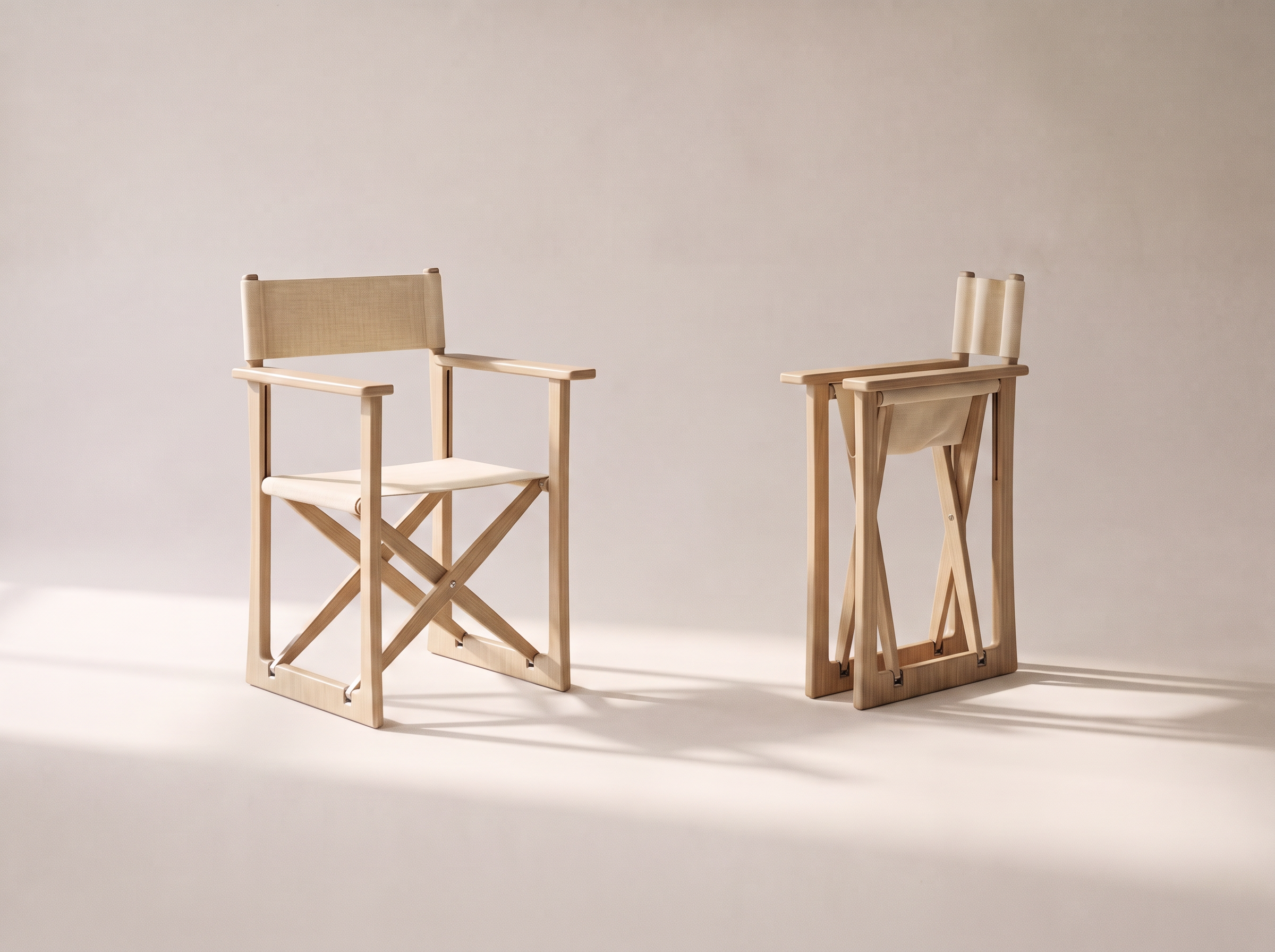
- Prompt
- Create a highly photorealistic render of the two chairs shown in the reference image, preserving their original design with absolute precision and maintaining both chairs exactly as depicted, from their two different viewpoints. Structure and materials: The chairs feature a light beige elm wood frame with a smooth, refined surface and an extremely subtle, almost imperceptible natural wood grain. The wood should appear authentic and high-quality, with delicate grain variations that do not overpower the light, uniform appearance of the finish. The seat and backrest of each chair are upholstered in a rigid, smooth linen canvas in a warm cream color, with a natural, raw-textured finish. The fabric should have a taut, structured appearance, consistent with the original construction, while retaining the subtle irregularities and tactile quality of natural linen. Avoid excessive wrinkles, visible padding, or an overly soft appearance. Metal connection details: At the lower section of each chair, where the inclined structural elements connect, accurately render the metal joining components in a light satin metallic finish. Emphasize the precision of the connections, the refined satin surface, and the crisp definition of the junctions between the metal and wooden elements. These details should look technically accurate, discreet, and meticulously crafted. Absolute design preservation: Do not modify, reinterpret, redesign, simplify, or add any elements to the original chairs. Preserve exactly the geometry, proportions, dimensions, structural configuration, angles, curves, bevels, chamfers, edges, and connections of both chairs. Every curve and bevel must remain identical to the reference image. Pay particular attention to the precision of the design and the clean transitions between the different components. Enhance only the realism of the materials, lighting, and rendering quality without altering the products in any way. Composition and viewpoints: Maintain exactly the three closed chairs shown in the original image, preserving their respective viewpoints, orientations, positions, scale, and spatial arrangement. Each chair must retain its original appearance and perspective as represented in the reference image. Do not duplicate either chair, remove either chair, change their positions, or introduce additional views of the same product. Scene and lighting: Place the three closed chairs in a bright, neutral, minimalist photographic studio setting, with a seamless warm-white or very light beige background and a matching floor. The environment should resemble a professional furniture product photography set, with soft, diffused natural-looking lighting, subtle contact shadows, and balanced exposure. Use gentle directional light to reveal the delicate wood grain, the raw linen texture, the satin metal connections, and the precision of the chairs' construction without creating harsh shadows or excessive reflections. Keep the composition clean and uncluttered, with the two chairs as the only subjects. Do not introduce any additional furniture, accessories, decorative objects, plants, architectural features, or other elements. Final result: A premium, editorial-quality, photorealistic product render suitable for a high-end contemporary design furniture catalogue. The image should communicate material authenticity, refined craftsmanship, technical precision, and the elegance of the original design. Preserve the exact camera perspectives and overall composition of the reference image, changing only the rendering quality, lighting, and material realism. No design alterations, no additional objects, and no reinterpretation of the original products.
- Created
- October 22, 2026