- Prompt
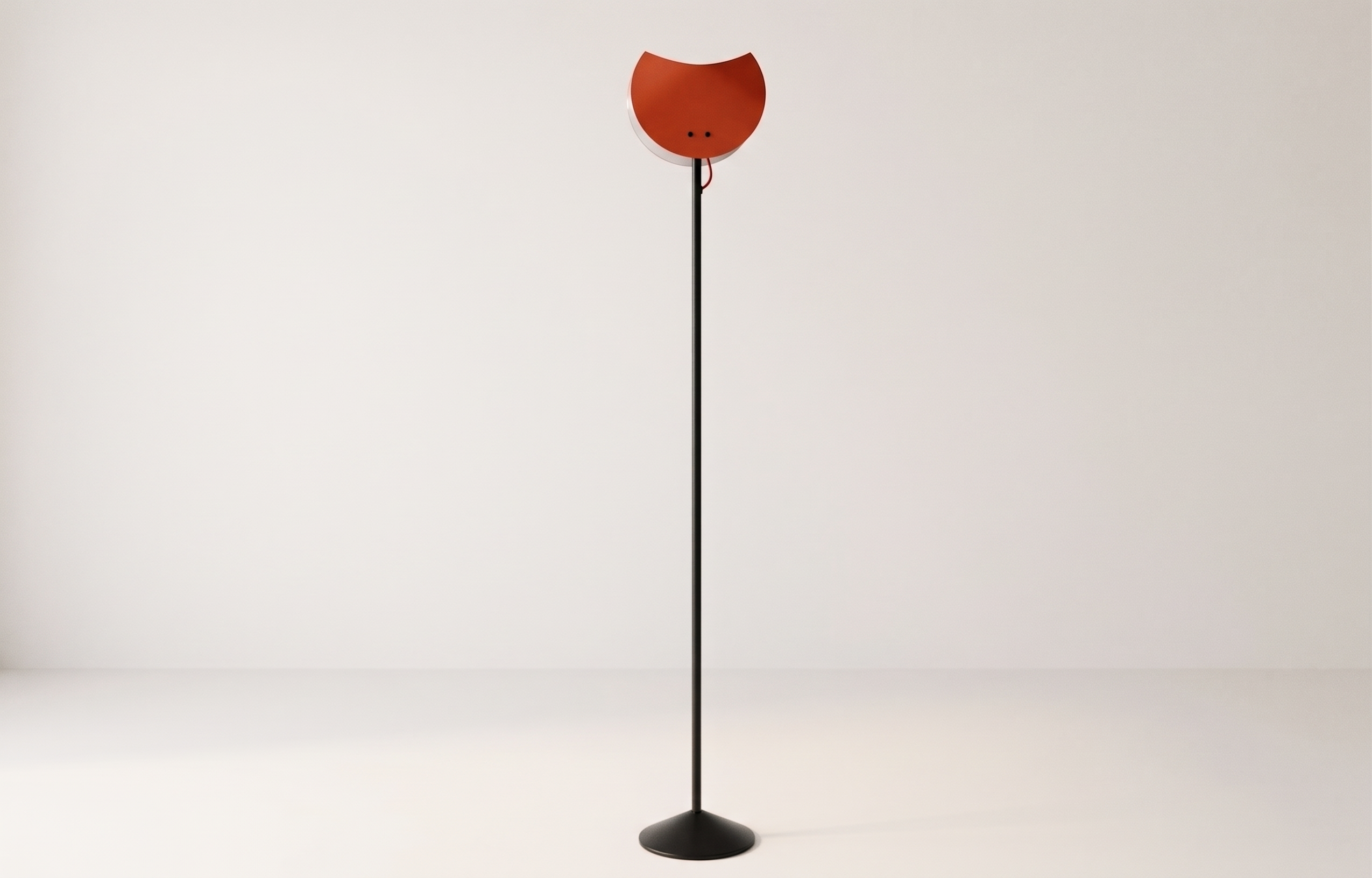
- Create a highly photorealistic product image of the floor lamp shown in the base image. Preserve the original design exactly as it appears in the reference image. Do not alter, reinterpret, redesign, simplify, or add any elements. Maintain the exact shape, proportions, dimensions, geometry, curves, construction, component positioning, perspective, and overall silhouette of the original lamp.
Transform only the visual quality of the image into a premium, photorealistic product photograph by improving the materials, lighting, reflections, shadows, and atmosphere.
The lamp is a floor-standing design with a conical metal base resting directly on the floor and a central tubular metal structure made of aluminium, finished in satin black paint. At the upper part of the central body there is a sculptural metal lampshade, painted in a warm red-orange tone. The exterior surface of the lampshade has a slightly satin finish with controlled, refined reflectivity, creating realistic highlights across its curved surfaces without appearing excessively glossy.
The lampshade is attached to the central body with visible black screws, which must remain clearly recognizable and positioned exactly as shown in the reference image. The screws should appear black on the external front surface of the lamp body.
At the upper part of the lamp, the electrical power cable is subtly visible, emerging from the upper area and entering directly into the metal tubular structure that feeds the lamp. Reproduce this cable exactly according to the reference image, keeping it discreet, realistic and naturally integrated into the construction. Do not relocate, enlarge, hide, or redesign the cable. It should remain visible only where it is visible in the original image and then disappear naturally inside the metal tube.
The light source is positioned inside the shade and should produce a warm, realistic illumination that interacts naturally with the white interior surface. The light should spread in a sculptural and atmospheric way through the curved surfaces of the lampshade, creating subtle gradients, soft highlights, realistic internal reflections, and a convincing sense of depth. The light source itself should not be excessively visible or blown out.
Use physically accurate materials: realistic satin-painted aluminium, subtle fine surface texture, natural reflections, soft specular highlights, realistic metal edges, and convincing light interaction between the different surfaces.
Set the lamp in a minimal, neutral and refined photographic studio environment, similar to a high-end design catalogue or professional product photography set. Use a predominantly warm white / off-white palette, with a seamless or softly transitioning white background and floor. Keep the environment extremely clean and uncluttered, with generous negative space around the lamp.
Create sophisticated, soft and diffused studio lighting, with subtle directional illumination and natural contact shadows beneath the lamp. The lighting should emphasize the sculptural qualities of the curved lampshade, the contrast between the warm red-orange exterior and the white interior, and the satin black aluminium structure. Reflections should remain controlled and elegant.
Create a premium, sophisticated and contemporary visual language typical of high-end Italian lighting product photography, with a mood and photographic aesthetic comparable to the refined imagery associated with Tooy catalogues: minimal, architectural, warm, elegant, material-focused and editorial.
Most important instruction: the reference image is the absolute design source. Do not modify the lamp in any way. Do not change its proportions, geometry, curves, dimensions, structure, component positions, screws, electrical cable, lampshade shape, base shape, or viewpoint. Do not add or remove details. Only enhance the realism, materials, lighting, shadows and photographic atmosphere.
- Created
- September 14, 2026