- Prompt
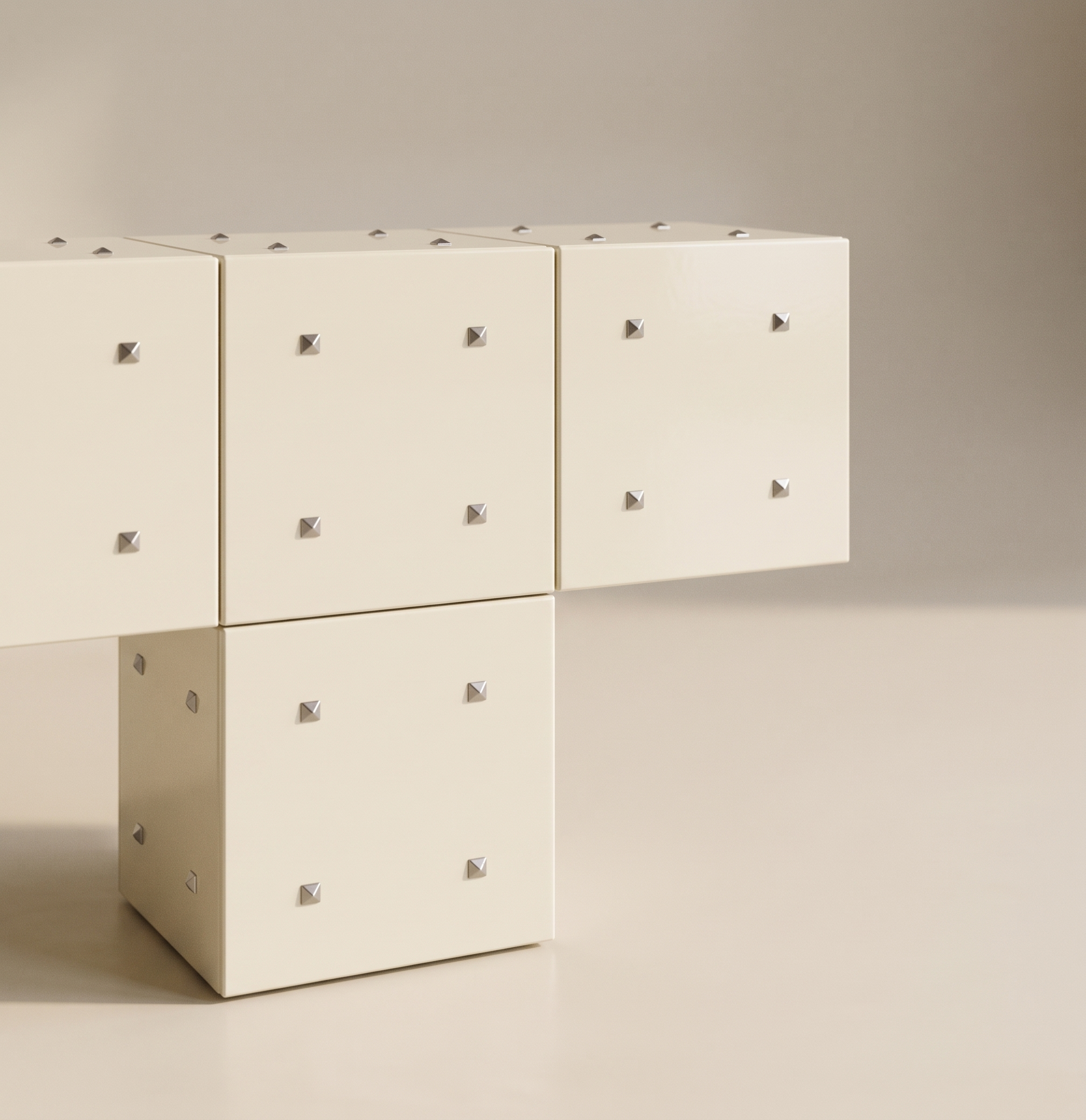
- The cabinet is composed of cubic modules featuring a light cream-colored, semi-gloss lacquered MDF structure. Each cube is characterized by small circular holes, precisely positioned at regular, uniform intervals in a consistent geometric pattern, exactly as shown in the reference image.
Inside each circular hole, integrate a small pyramid-shaped metal stud or boss. Each metallic element must be approximately the same size as the corresponding hole, fitting precisely within it. The pyramidal geometry must be clearly defined, with crisp edges, accurate proportions, and a refined metallic finish. The metal details should appear carefully integrated into the cabinet surface, emphasizing the contrast between the soft, warm cream lacquer and the precision of the metal elements.
STRICT DESIGN PRESERVATION — ABSOLUTELY NO MODIFICATIONS
Do not modify, reinterpret, redesign, simplify, or add any features to the original cabinet design. Preserve the exact geometry, dimensions, proportions, module configuration, spacing, alignment, surface details, and overall construction shown in the reference image. Maintain the original camera angle, perspective, and viewpoint.
The only intended material and detail enhancement is the addition of the small pyramidal metal studs within the existing circular holes. Do not alter the size, shape, or spacing of the holes. Do not introduce additional holes, hardware, decorative elements, or structural components.
CAMERA AND COMPOSITION
The image must be a close-up detail shot of the cabinet, focusing on a portion of its surface rather than showing the entire piece. Emphasize the relationship between the cubic modules, the regularly spaced circular holes, and the small pyramidal metal details. Highlight the precision of the geometry, the accuracy of the spacing, the crispness of the edges, and the quality of the material finishes.
Maintain the original viewpoint and perspective of the reference image. Use a refined product-photography composition with realistic depth, natural shadows, subtle reflections, and sufficient visual clarity to appreciate the craftsmanship and construction details.
PHOTOGRAPHIC SET AND LIGHTING
Place the cabinet in a minimal, neutral, bright photographic studio. Use a smooth, light beige floor and a seamless background in the same finish and tonal family, creating the appearance of a sophisticated professional product-photography set.
Use soft, diffused studio lighting with gentle directional highlights to reveal the semi-gloss cream lacquer, the subtle surface reflections, and the metallic finish of the pyramidal studs. Shadows should be soft, controlled, and physically realistic, enhancing the three-dimensional quality of the geometry without obscuring any details.
The overall atmosphere should be understated, architectural, warm, and refined. Keep the composition completely clean, with no additional furniture, accessories, decorative objects, plants, people, or architectural elements.
VISUAL IDENTITY AND FINAL IMAGE QUALITY
The final image should be suitable for a professional product-design presentation to BD Barcelona Design, with a sophisticated, distinctive, and contemporary visual language. Aim for the brand's design-led aesthetic: sculptural clarity, attention to materiality, bold yet controlled geometric expression, and carefully composed editorial product photography.
Prioritize photorealistic materials, precise detailing, accurate proportions, realistic light behavior, subtle reflections, and exceptional rendering quality. The final result should look like a professionally photographed design object rather than a computer-generated image.
Final priority: absolute fidelity to the original cabinet design and camera viewpoint. Enhance only the realism, materials, lighting, and the specified pyramidal metal details. Do not introduce any other changes or elements.
- Created
- October 21, 2026