- Prompt
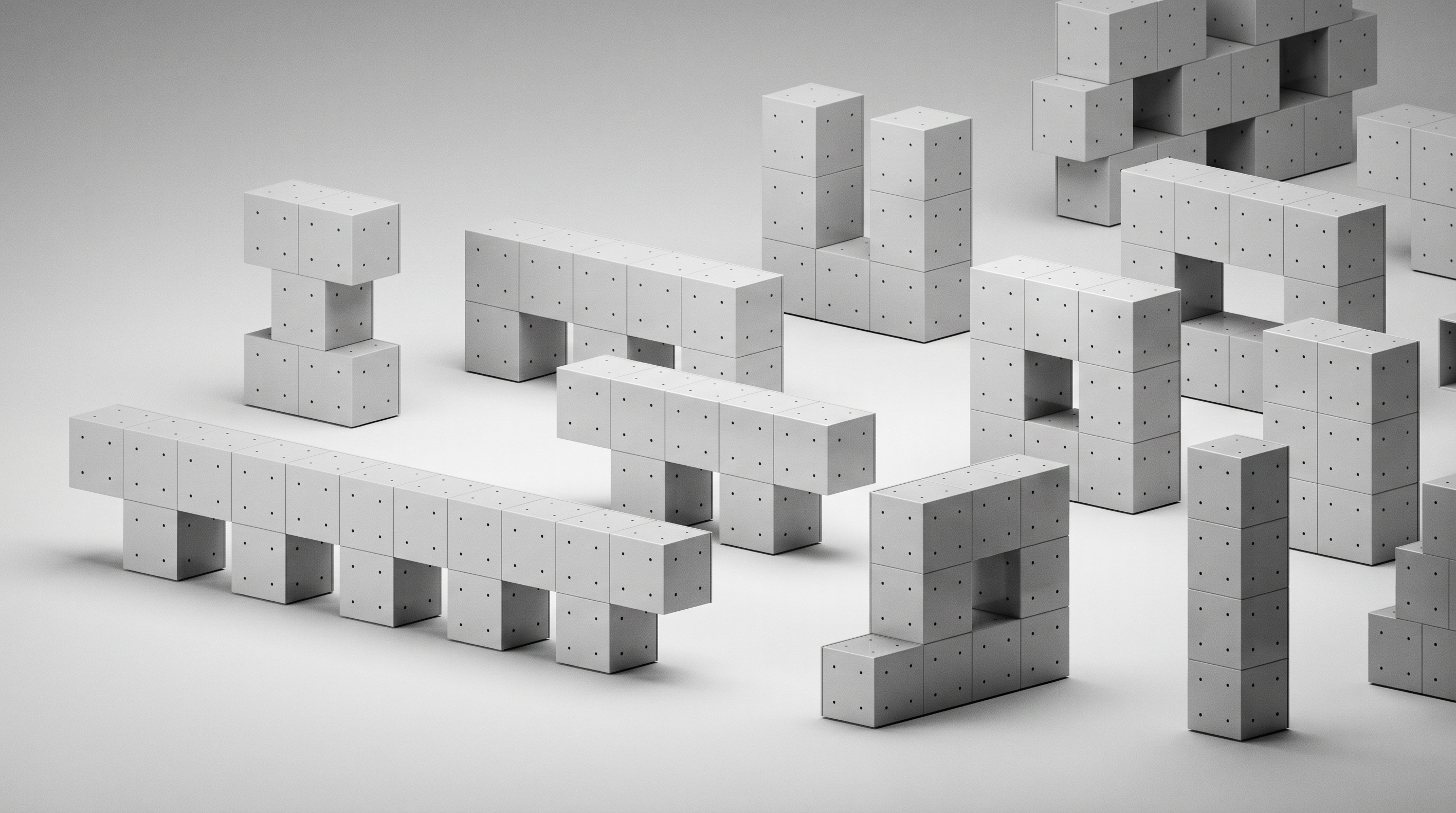
- Create a highly photorealistic, black-and-white product render of this modular cabinet system, composed of cubic modules made of semi-gloss lacquered MDF. Each cube features small circular holes, precisely arranged at regular, geometrically consistent intervals, exactly as shown in the reference image.
ABSOLUTE DESIGN PRESERVATION — DO NOT MODIFY THE ORIGINAL DESIGN. Preserve the exact geometry, proportions, dimensions, structural details, number of modules, and configuration of every cabinet shown in the reference image. Do not redesign, reinterpret, simplify, add, or remove any elements. Maintain the original orthogonal camera viewpoint, with no perspective distortion or changes to the viewing angle. The primary objective is to emphasize the precision, clarity, and geometric rigor of the modular system.
COMPOSITION AND VISUAL COMMUNICATION: Create a powerful, visually striking product presentation that clearly showcases the different possible configurations of this modular cabinet system. Arrange the compositions in a carefully balanced, editorial-style layout, ensuring that each configuration is clearly visible and that the relationships between the cubic modules are immediately understandable. The image should communicate the system's modular versatility, architectural character, and design precision at first glance. Preserve the exact appearance of each individual configuration from the reference image.
MATERIALS AND FINISHES: Render the cabinet in semi-gloss lacquered MDF, with a smooth, refined surface and realistic, subtle specular reflections. Accurately reproduce the small circular perforations, ensuring that their edges are crisp, their diameters remain consistent, and their spacing follows the exact regular pattern of the reference. Use carefully controlled highlights and shadows to reveal the surface quality, depth of the holes, and sharpness of the cubic geometry.
BLACK-AND-WHITE VISUAL LANGUAGE: Produce the final image entirely in monochrome, using a sophisticated range of whites, light greys, mid-tones, and deep blacks. Follow the tonal gradations, lighting direction, contrast, and shadow softness of the reference image. Avoid flat, uniform greyscale rendering: use nuanced tonal transitions to emphasize the three-dimensional volumes, the semi-gloss lacquer finish, and the precision of the perforated surfaces. The result should feel refined, architectural, and visually powerful.
ENVIRONMENT AND LIGHTING: Place the cabinet compositions in a bright, neutral photographic studio. Use a smooth, light-white floor and a seamless background in the same finish, creating a continuous cyclorama with no visible corners or distracting transitions. Use soft, directional studio lighting with controlled highlights, subtle reflections, and carefully graduated shadows beneath and around the furniture. The lighting should enhance the geometry and materiality without obscuring any details. The environment must remain completely minimal, with absolutely no additional furniture, accessories, decorative objects, plants, people, architectural features, or other elements.
BD BARCELONA DESIGN AESTHETIC: The final image is intended as a professional product presentation for BD Barcelona. Adopt a sophisticated, conceptual, design-led visual language consistent with the brand's distinctive approach to contemporary design, collectible furniture, and artistic product presentation. Aim for the quality of a high-end design catalogue or editorial campaign: bold yet restrained composition, precise geometry, refined material rendering, and strong visual identity. The furniture must remain the sole protagonist.
STRICT NEGATIVE CONSTRAINTS: Do not alter the cabinet design, proportions, module dimensions, perforation size, perforation spacing, number of modules, or original configurations.
- Created
- October 21, 2026