- Prompt
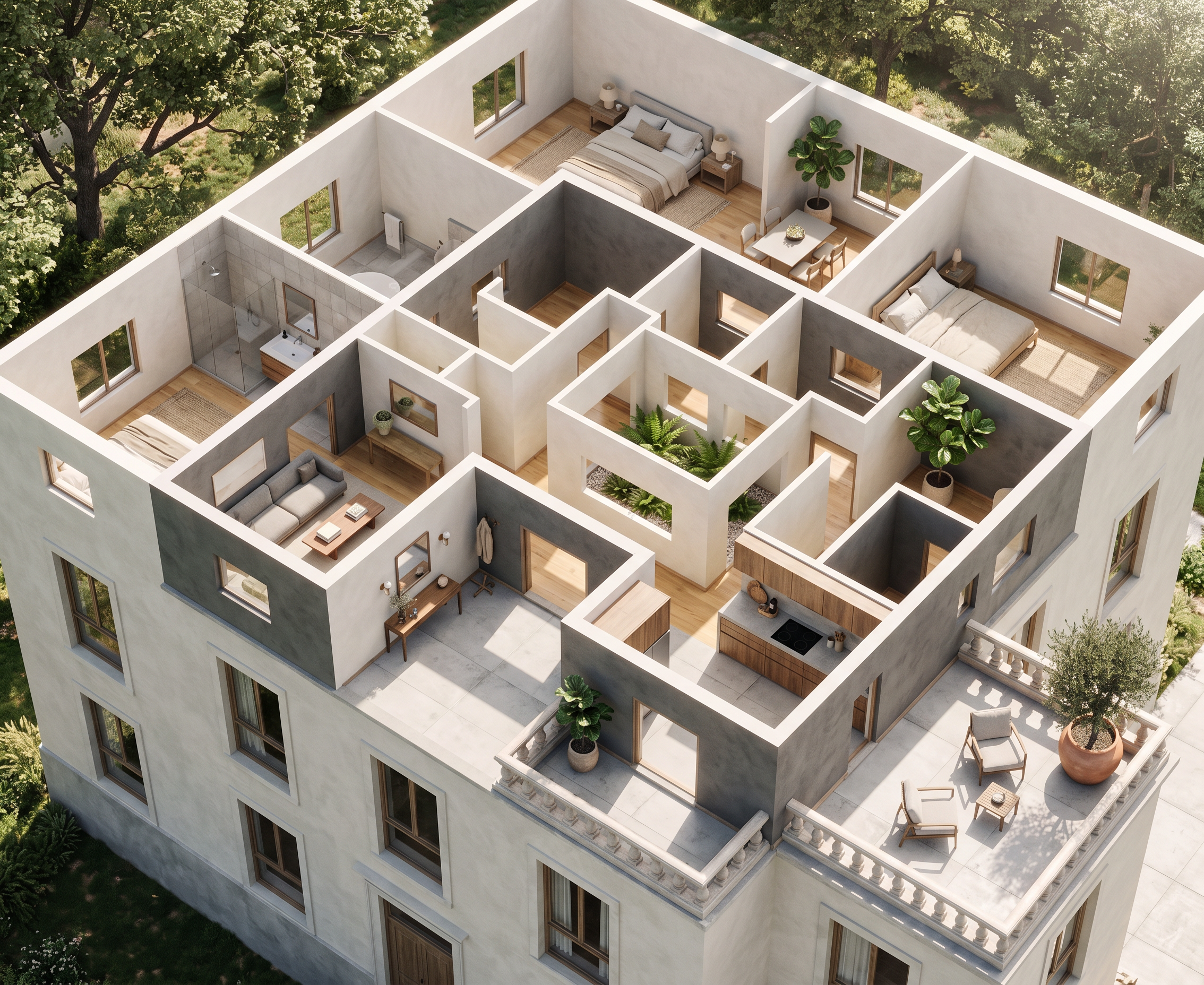
- Transform the provided 3ds Max architectural render into an ultra-photorealistic high-end architectural photograph.
ABSOLUTELY PRESERVE THE ORIGINAL DESIGN:
- Keep the exact architecture, geometry, proportions, dimensions and building massing.
- Do NOT redesign, remodel, modify, add or remove any architectural element.
- Preserve the exact façade, windows, doors, balconies, walls, slabs, columns, openings, roof, stairs and all existing details.
- Do NOT change the size, shape, position or proportions of any element.
- Preserve the exact camera angle, camera position, perspective, framing and composition of the original 3D render.
REALISTIC MATERIALS:
Convert the existing 3D materials into realistic physically-based materials.
- Realistic concrete with natural texture, subtle pores and imperfections.
- Realistic stone with authentic surface variation.
- Real natural wood with visible grain and subtle color variation.
- Realistic glass with accurate transparency and reflections.
- Realistic metal with physically accurate reflections and roughness.
- High-quality PBR material appearance.
- Natural imperfections and realistic surface details.
- No artificial plastic or CGI-looking materials.
DAYLIGHT:
Create a realistic natural daytime environment.
- Soft natural sunlight.
- Realistic directional shadows.
- Physically accurate global illumination.
- Natural indirect and bounced light.
- Realistic ambient occlusion.
- Balanced exposure and natural white balance.
- Realistic sky illumination.
- Soft, natural atmospheric depth.
- Bright but not overexposed daylight.
ENVIRONMENT:
Create a realistic environment that naturally fits the architecture.
- Add realistic mature trees around the building.
- Add suitable shrubs, plants, grass and landscaped areas.
- Use realistic vegetation with natural scale and density.
- Add subtle surrounding landscape and ground details.
- Create a believable completed architectural site.
- Keep vegetation away from important architectural details and do not hide the building.
- The environment must complement the original architecture without changing it.
PHOTOREALISTIC ARCHITECTURAL PHOTOGRAPHY:
- Ultra-photorealistic.
- High-end professional architectural photography.
- Realistic camera optics.
- Natural perspective.
- Accurate reflections and shadows.
- High-resolution textures.
- Realistic material roughness.
- Natural colors and contrast.
- Subtle realistic depth of field.
- Natural atmospheric perspective.
- No excessive HDR.
- No oversaturation.
- No artificial cinematic effects.
- No CGI appearance.
FINAL RESULT:
The final image must look like a real professional daytime photograph of the EXACT SAME building from the original 3ds Max model, with realistic materials, natural daylight, realistic landscaping and a believable architectural environment.
CRITICAL:
100% PRESERVE THE ORIGINAL ARCHITECTURAL DESIGN.
ONLY IMPROVE MATERIAL REALISM, LIGHTING, VEGETATION, LANDSCAPING AND ENVIRONMENT.
DO NOT CHANGE THE DESIGN IN ANY WAY.
- Created
- September 20, 2026