- Prompt
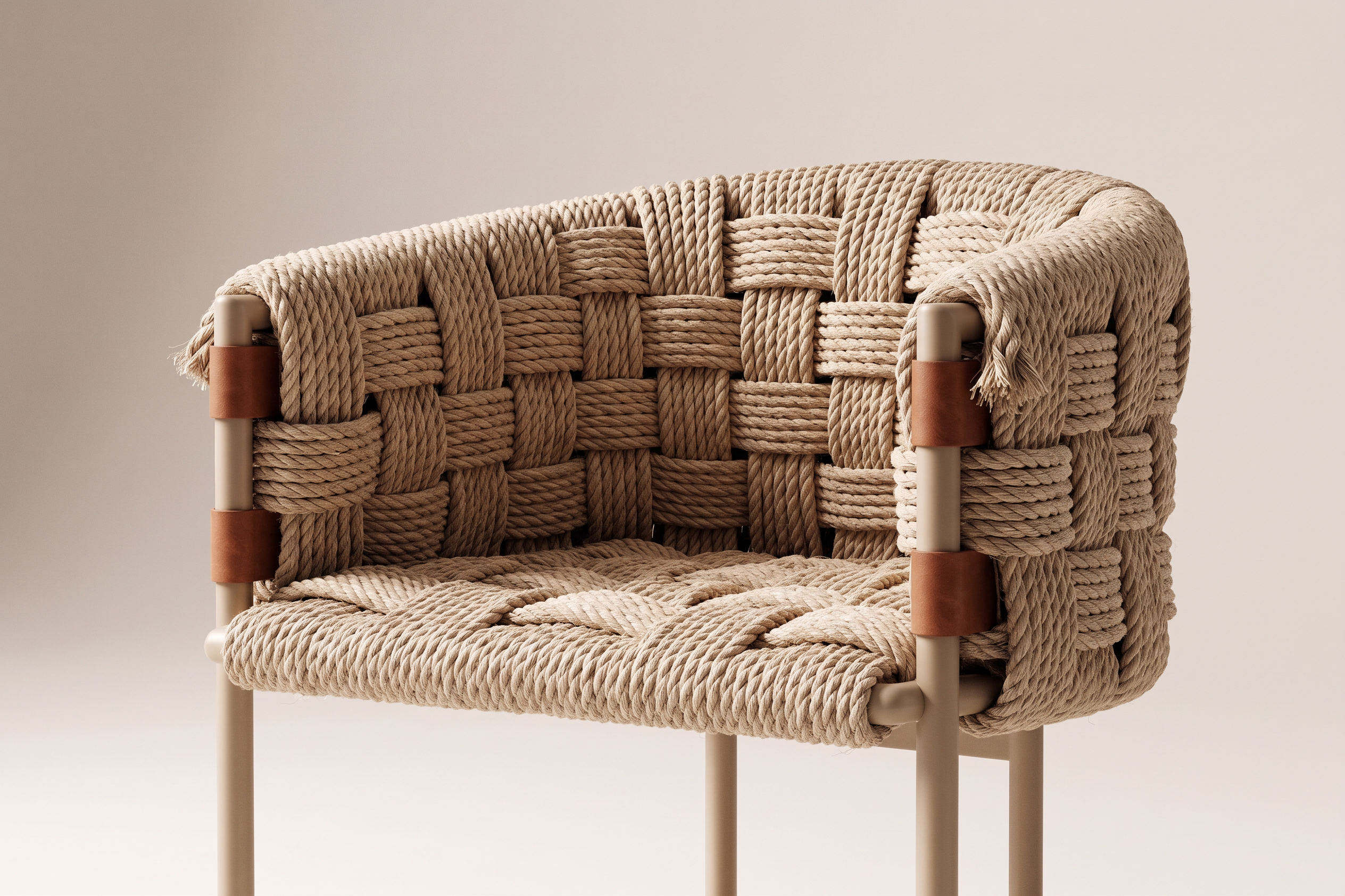
- Create a highly photorealistic rendering of this EXACT chair, preserving its original design, proportions, dimensions, silhouette, structural geometry, connections, camera angle and overall composition.
DO NOT redesign the chair or change its proportions.
The ONLY major design change is the upholstery/material concept:
REPLACE THE TEXTILE UPHOLSTERY WITH A SCULPTURAL WOVEN ROPE STRUCTURE.
Use an exceptionally thick, substantial natural rope — approximately 16 cm in diameter — woven and wrapped around the existing chair structure.
The rope should follow the EXACT silhouette and architecture of the original chair.
Create a beautiful, rhythmic weaving where the thick rope wraps around the structural frame and continues across the chair to form the seat and supporting surfaces.
The rope itself becomes both the upholstery and the construction of the seating surface.
WEAVING:
Create an intentional, sophisticated architectural weave — not a decorative basket weave.
The thick rope should cross, wrap and interlock naturally around the existing structure, creating subtle tension and compression where the ropes meet.
Show clearly how the rope physically wraps around and connects to the chair frame.
The weaving should feel structurally believable and beautifully crafted, with carefully controlled spacing and an elegant rhythm.
Keep the overall silhouette visually close to the ORIGINAL chair.
Do not allow the rope to create an oversized, bulky or completely different chair.
ROPE MATERIAL:
Use a warm natural raw-fibre rope in an elegant neutral sand / flax / natural linen tone.
Make the rope extremely photorealistic and tactile.
Show:
• individual twisted fibres
• fine natural strands
• subtle irregularities
• realistic fibre direction
• slight variations in thickness
• delicate fraying in selected areas
• natural matte surface
• realistic compression where ropes cross
The rope should feel sophisticated and furniture-grade — somewhere between natural linen rope, hemp and refined marine rope.
Avoid rustic, nautical or craft-project aesthetics.
The expression should remain architectural, contemporary and luxurious.
SOFTNESS:
Although the rope is extremely substantial, give it a subtle softness and flexibility.
Where the ropes cross or wrap around the frame, show gentle compression and deformation so the material feels physical and believable rather than rigid.
The seat should have a very slight natural sag and tension created by the woven construction, suggesting comfort while maintaining the chair's elegant form.
PHOTOREALISM:
Render this as an exceptionally high-end furniture photograph.
Use warm, soft directional daylight that beautifully grazes across the rope and reveals every fibre, twist and woven connection.
Create soft realistic shadows between the overlapping ropes and deeper micro-shadows inside the weave.
Use subtle ambient occlusion at every crossing and connection.
The chair should be perfectly in focus with extremely high material definition.
Warm neutral architectural background.
Soft contact shadows.
Natural photographic exposure.
High-resolution medium-format photography feeling.
Refined European furniture campaign aesthetic.
The final result should look like a REAL PHYSICAL PROTOTYPE that has been meticulously hand-woven from extremely thick natural rope.
MOST IMPORTANT:
Preserve the EXACT original chair architecture, proportions and silhouette.
Do not redesign the frame.
Do not change the camera angle.
Only reinterpret the upholstered areas as a thick, sculptural woven smooth rope construction that wraps around the existing structure and forms the seat.
- Created
- September 2, 2026