- Prompt
- Use Image 1 (Finall.png) as the primary image and preserve its exact architecture, camera angle, composition, spatial proportions, circulation layout, walls, ceiling, floor geometry, openings, and furniture placement. Use Images 2 and 3 strictly as design references for the furniture styling, colors, fabrics, materials, finishes, accessories, and overall visual language; transfer these characteristics naturally into Image 1 without changing its architectural structure.
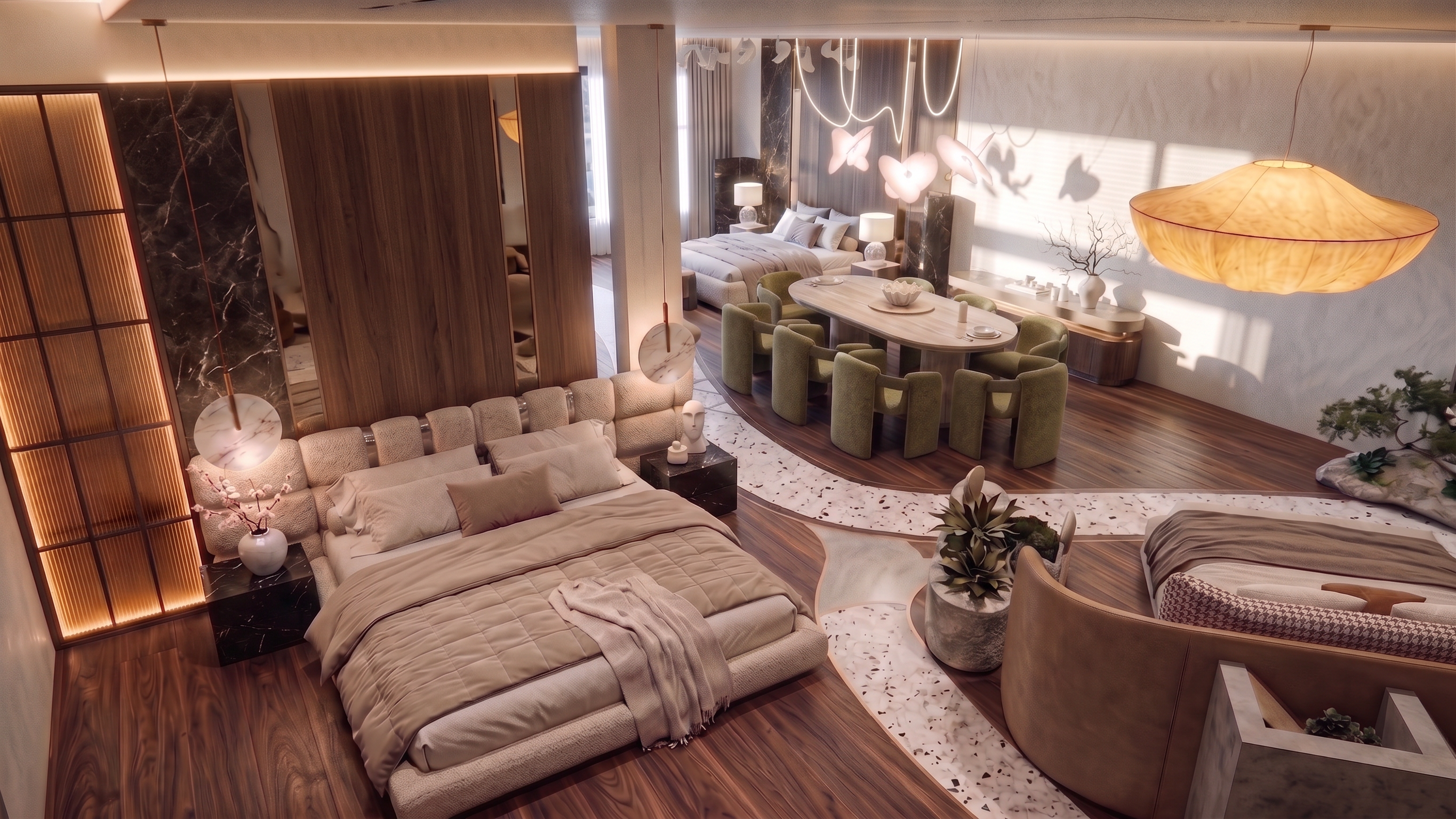
Transform the clay-rendered furniture store into a photorealistic ultra-luxury contemporary furniture showroom with a cohesive warm earthy palette: deep walnut wood, warm ivory and cream bouclé, muted sage/olive green upholstery, rich mocha and cognac brown, soft taupe, natural stone, travertine/terrazzo, dark marble, brushed bronze and subtle black accents. Match the furniture from References 2 and 3 as closely as possible, including the sculptural organic sofas, rounded lounge chairs, dining tables and chairs, upholstered beds, cabinetry, coffee tables, decorative objects, cushions, throws, rugs, plants and lighting; preserve their distinctive silhouettes and material character while adapting them naturally to the spaces visible in Image 1.
Create a strong material hierarchy and showroom zoning: dark walnut timber flooring for the main furniture platforms, contrasting light terrazzo/stone circulation paths, warm textured plaster walls, walnut wall cladding, selected stone or marble feature surfaces, softly integrated bronze details, and warm concealed LED lighting. The circulation should remain visually clear and continuous, with the curved pathways acting as an architectural design element rather than random decoration.
The final result must feel like one complete high-end furniture brand showroom, not three separate images combined. Maintain consistent material scale, fabric texture, wood grain direction, lighting temperature, shadows, reflections, perspective and color grading throughout the entire scene. Use warm architectural lighting around 2700–3000K, subtle daylight where appropriate, realistic indirect illumination, soft contact shadows, accurate reflections and premium editorial interior-photography quality.
Most important: Image 1 controls the architecture, camera, geometry, spatial organization and composition; Images 2 and 3 control the furniture design language, colors, materials and styling. Do not redesign the architecture, do not move major furniture zones, do not introduce unrelated furniture styles, and do not alter the original camera perspective. Produce an 8K-quality, highly realistic, sophisticated, warm and cohesive furniture showroom visualization suitable for a premium architectural/interior-design presentation.
- Created
- September 22, 2026