- Prompt
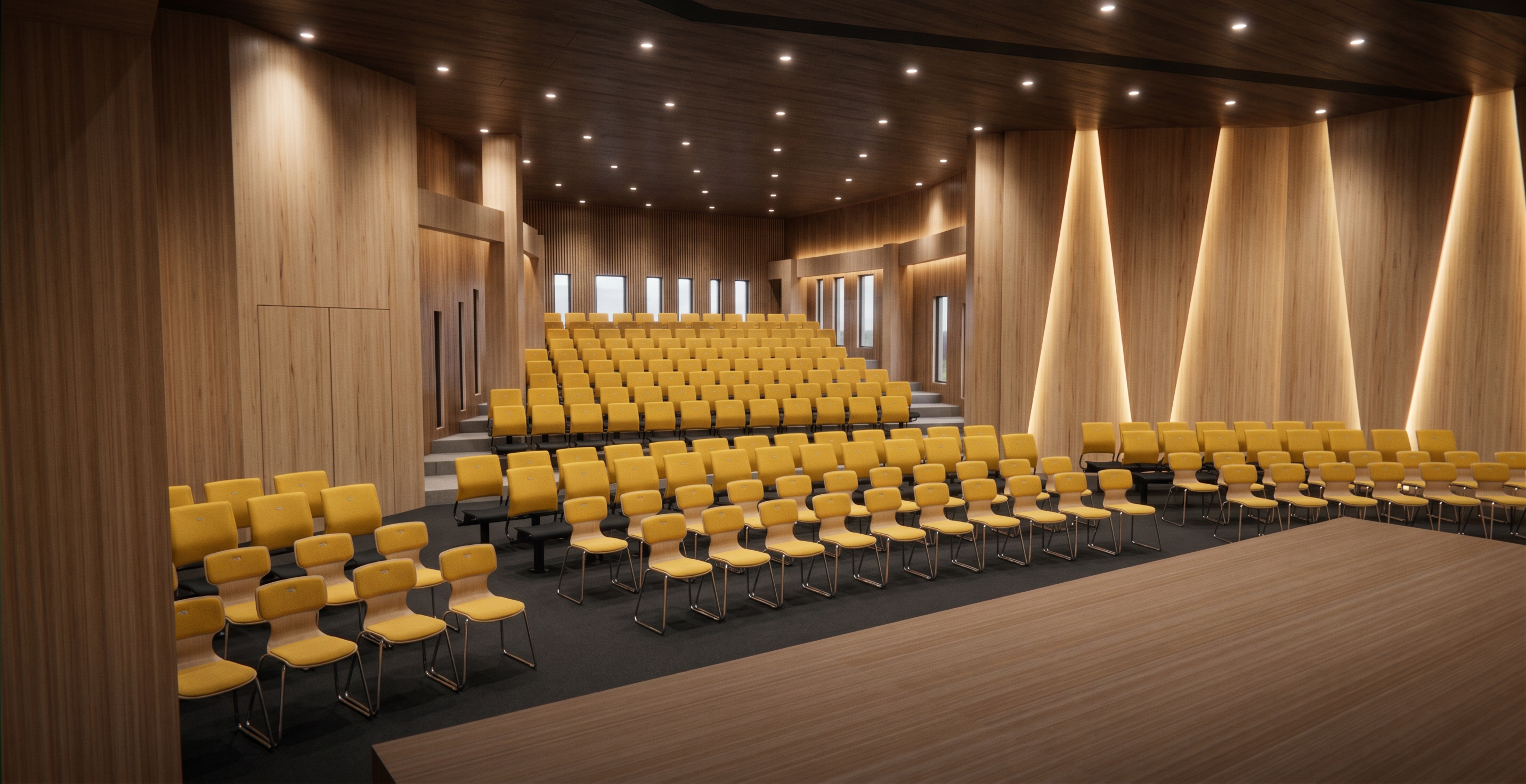
- Transform the provided 3D architectural visualization into an ultra-realistic, photorealistic architectural interior render.
IMPORTANT: Preserve the original design exactly. Do NOT change, redesign, add, remove, resize, or reposition any architectural element, furniture, chair, wall, ceiling, floor, stage, screen, column, opening, or decorative element.
Maintain exactly the same camera angle, camera position, focal length, perspective, composition, proportions, geometry, layout, and framing as the original image.
Keep the exact original colors, materials, textures, patterns, and shapes. The yellow auditorium chairs must remain the same yellow color and exact original chair design. Preserve the black metal frames and legs exactly as shown.
Make the wood surfaces look highly realistic with natural wood grain, subtle variation, realistic pores, fine surface imperfections, accurate reflections, and physically accurate material response, while maintaining the original wood color and pattern.
Make the yellow chair upholstery look like real high-quality fabric, with visible fine textile fibers, subtle fabric weave, realistic softness, natural light absorption, and very subtle imperfections. Do not alter the chair shape or proportions.
Make the dark floor/carpet realistic with fine textile texture, natural fiber variation, realistic roughness, and subtle directional pattern, while keeping its original color and appearance.
Add realistic architectural lighting based only on the existing lighting design. Use physically accurate recessed downlights, soft indirect illumination, realistic ambient light, natural shadows, subtle contact shadows, soft light falloff, and realistic global illumination.
Improve the realism of the ceiling, walls, wood panels, acoustic elements, stage, screen, floor, and chairs through physically based rendering (PBR) without changing their original appearance.
Create realistic depth, ambient occlusion, reflections, material roughness, subtle highlights, realistic shadow gradients, and natural light interaction between all surfaces.
The final image should look like a professional high-end architectural photography shot, captured with a full-frame camera, realistic exposure, natural dynamic range, sharp but not overly processed details, physically accurate perspective, and cinematic yet natural lighting.
No redesign. No additional furniture. No additional decoration. No new architectural elements. No change to the camera angle. No change to the seating arrangement. No change to the colors. No change to the materials. No change to the textures. Only increase the realism and photographic quality of the existing design.
Photorealistic architectural visualization, realistic PBR materials, natural wood grain, realistic fabric upholstery, physically accurate lighting, global illumination, realistic shadows, ambient occlusion, subtle reflections, high detail, professional interior photography, 8K quality, ultra realistic.
Negative Prompt
Do not change the camera angle, perspective, composition, architecture, geometry, proportions, furniture design, chair design, chair count, chair arrangement, colors, materials, textures, wall panels, ceiling, floor, stage, screen, columns, openings, or lighting positions. No redesign, no additional objects, no removed objects, no distorted chairs, no warped geometry, no exaggerated textures, no oversaturated colors, no artificial plastic appearance, no cartoon look, no CGI look, no fisheye lens, no wide-angle distortion, no blurry details, no excessive sharpening.
- Created
- September 29, 2026