
Spanish Style House
Era: Spanish colonial revival 1915–1940s
The Spanish style house — usually Spanish colonial revival in the US — brings the architecture of Spain and its colonies to warm climates like California, Florida and the Southwest. Its signature is thick white stucco walls under low-pitched red clay tile roofs.
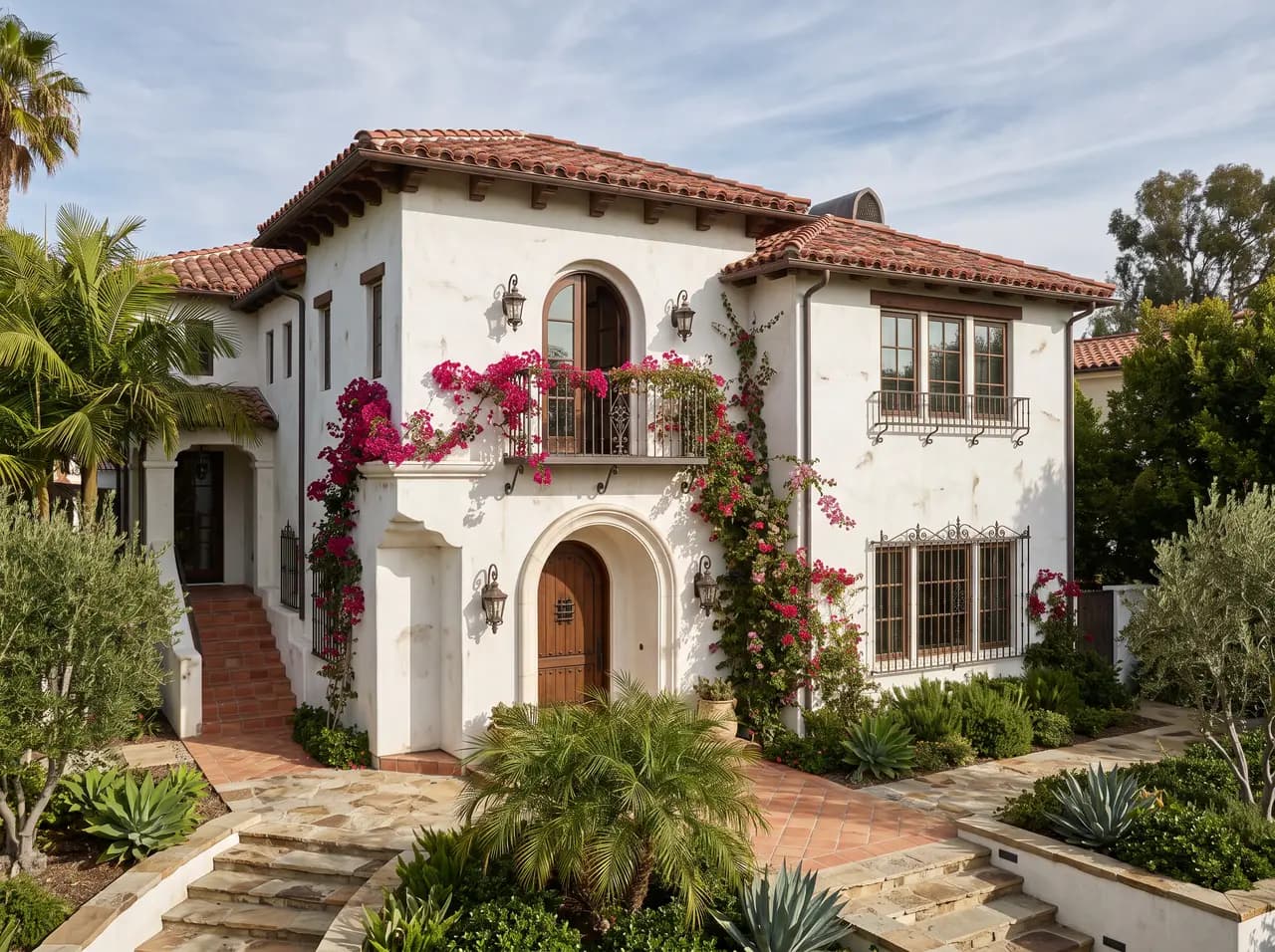
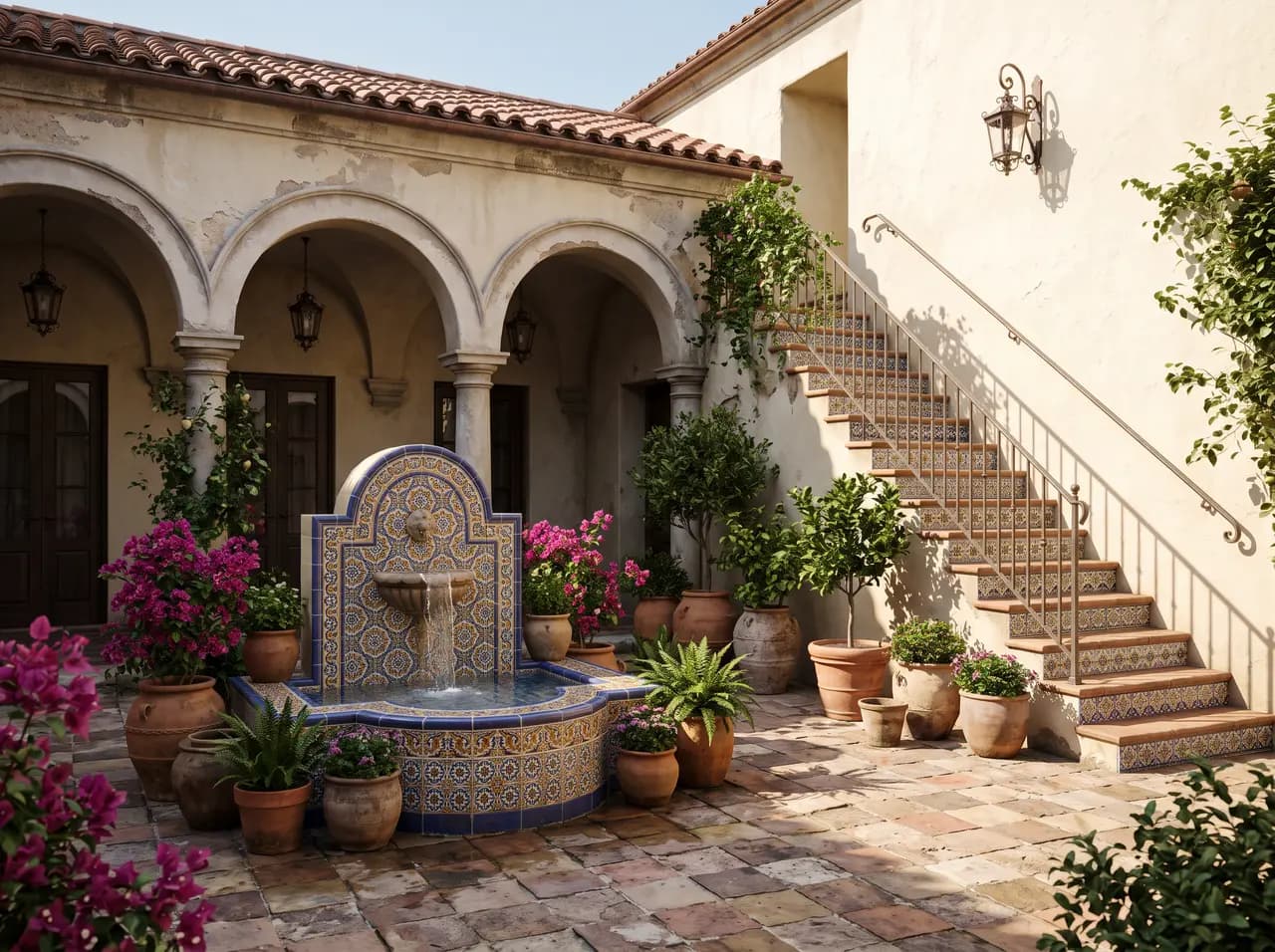
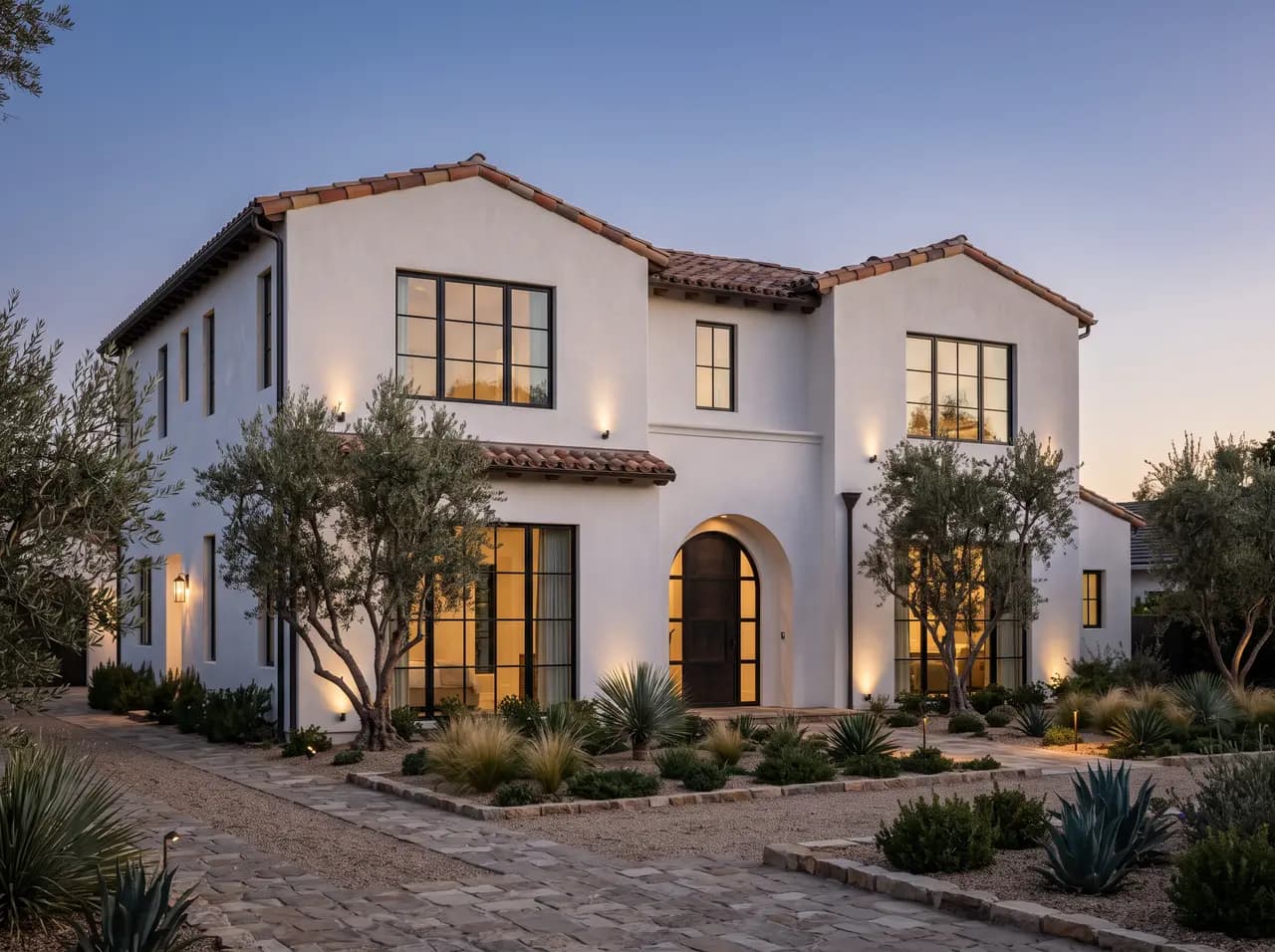
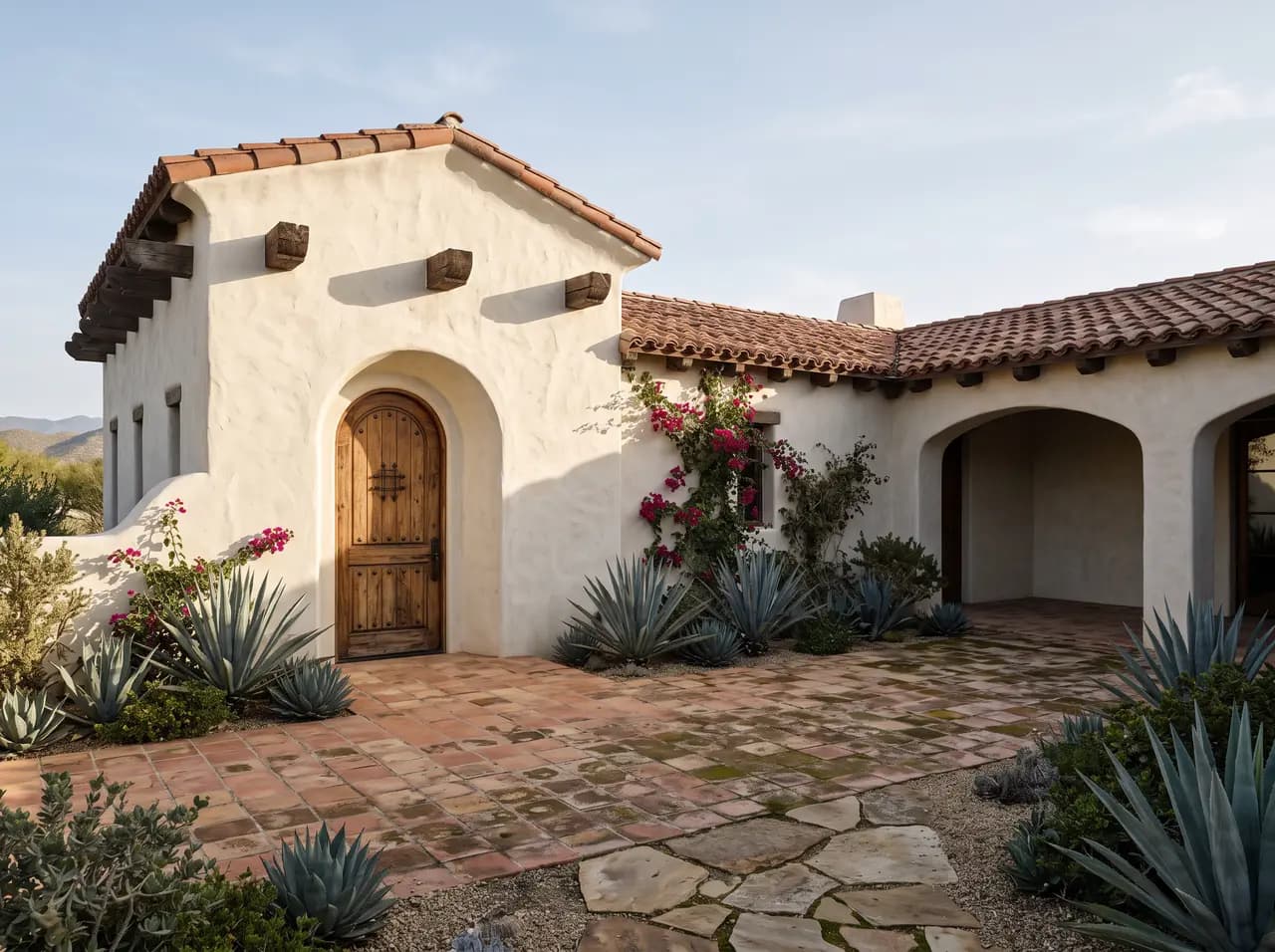
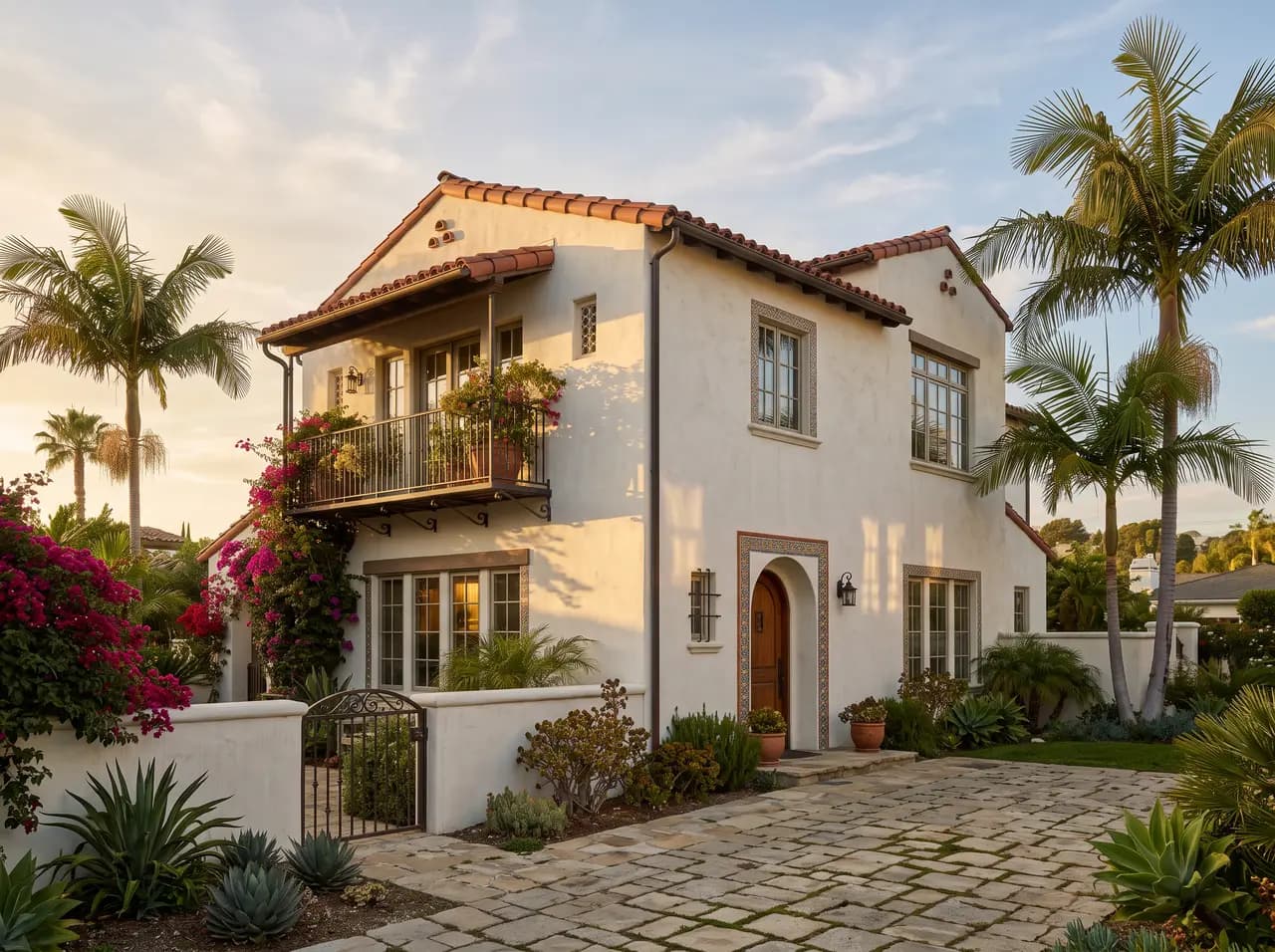
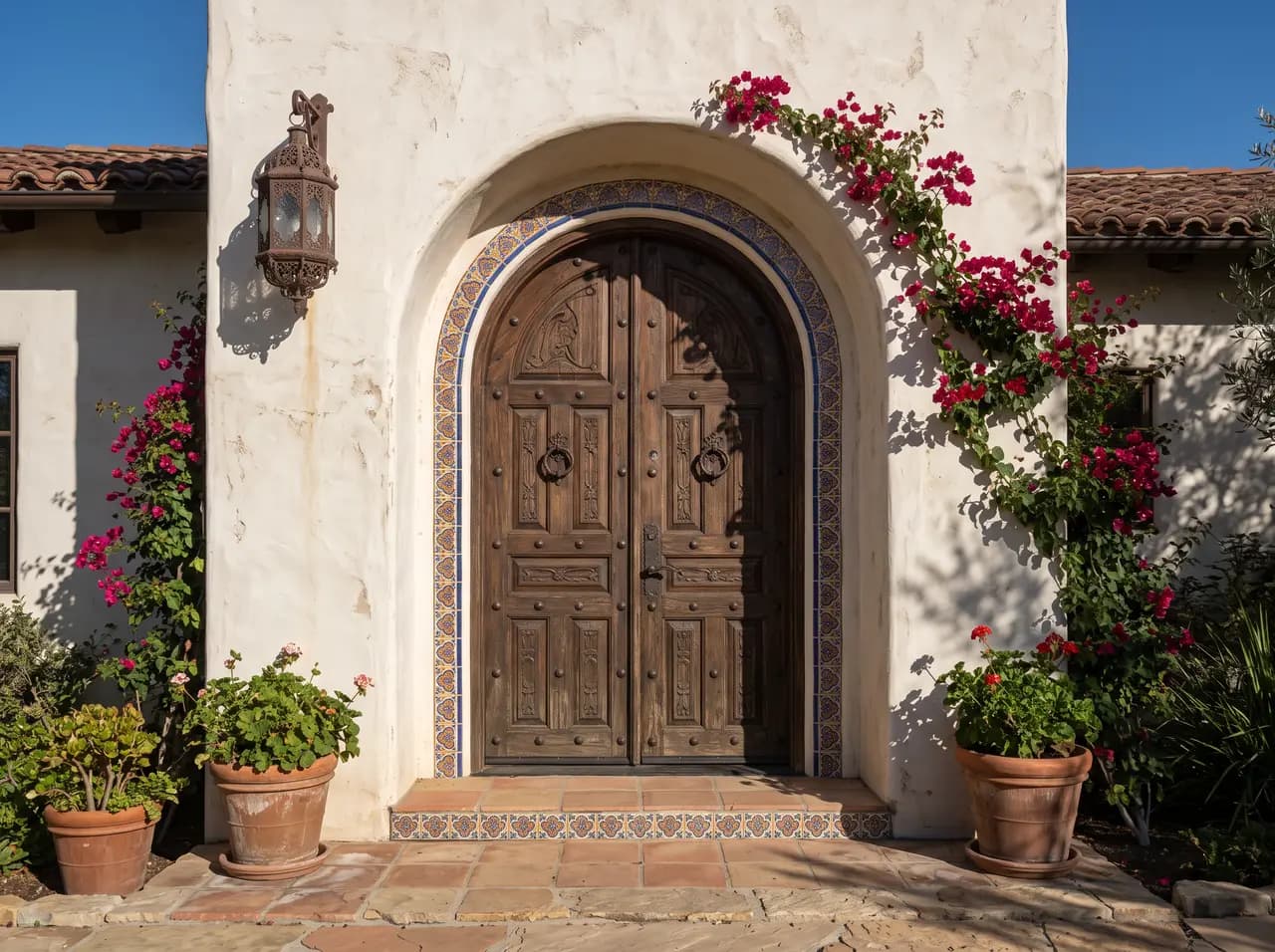
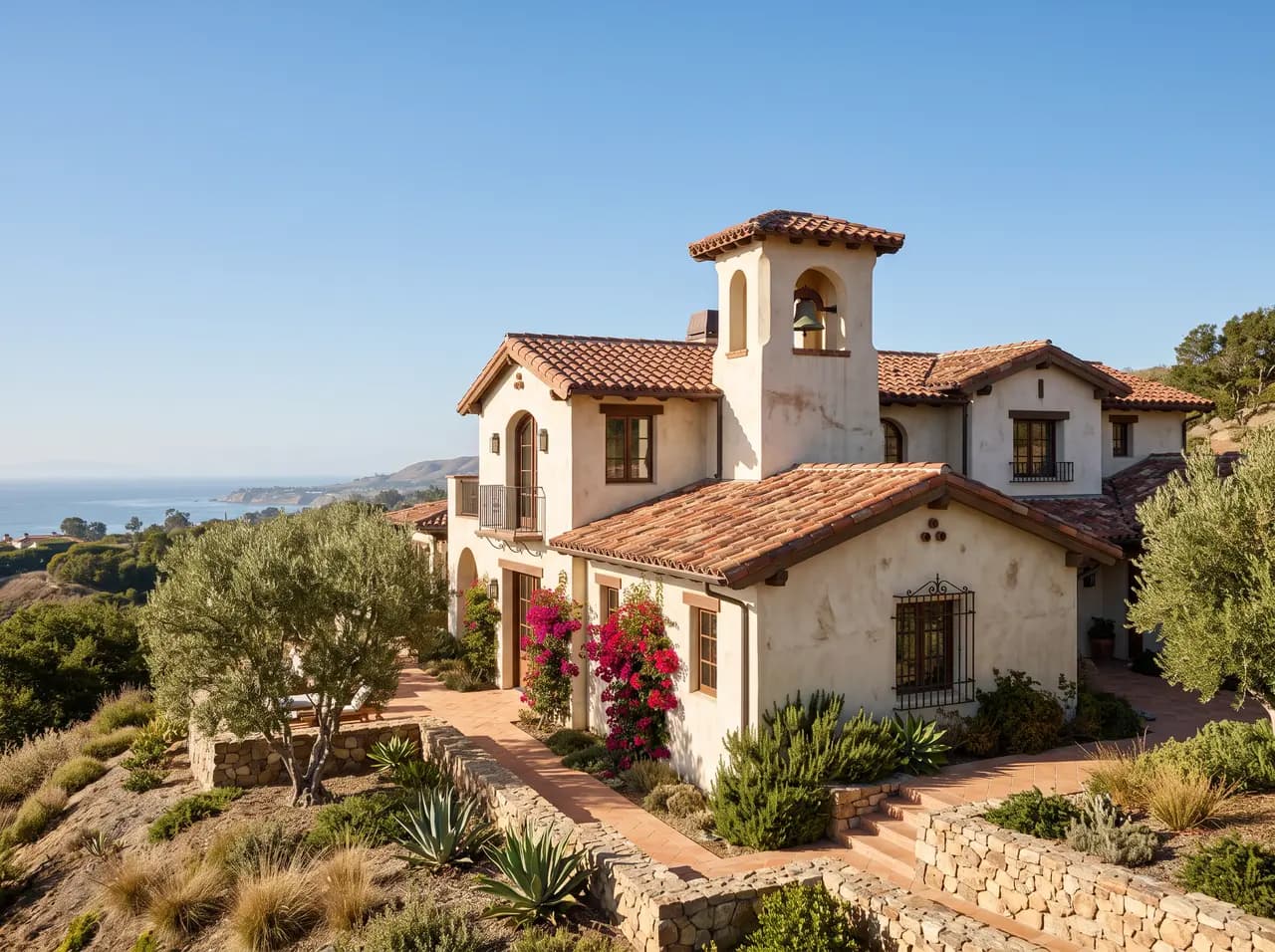
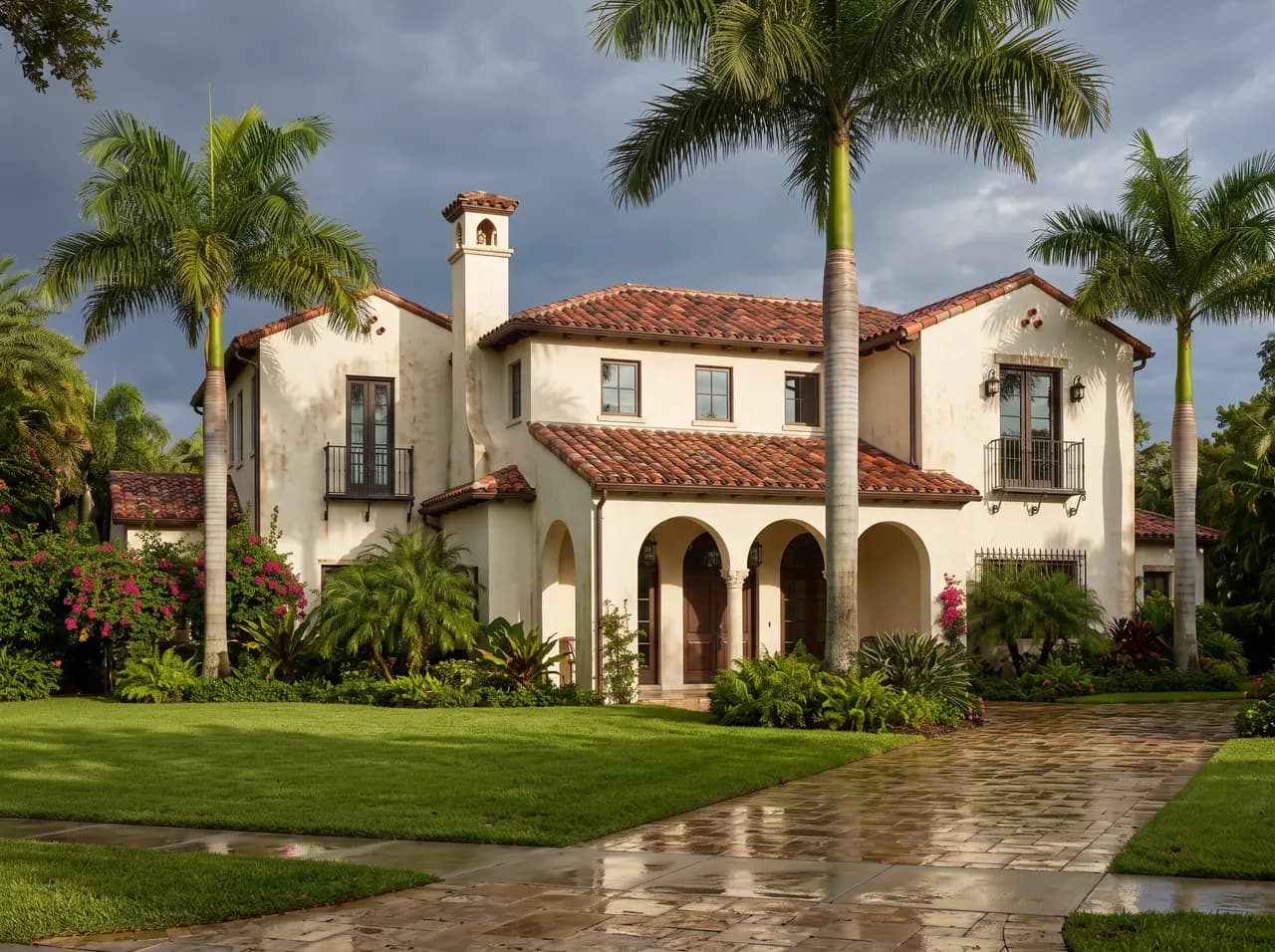
Arched doorways and windows, wrought-iron grilles and balconies, colorful tile accents and inward-looking courtyards keep the house cool and private. Modern Spanish homes simplify the ornament but keep the stucco, tile and arches.
Key features of a spanish style house
Use this checklist to spot a spanish house — or to brief the look for your own.
Stucco walls
Thick, smooth or hand-troweled white or cream stucco.
Clay tile roofs
Low-pitched roofs in red barrel tile with minimal overhang.
Arches
Arched entries, windows and loggias.
Wrought iron
Window grilles, balconies, railings and lanterns.
Courtyards
Patios and fountains shaded by the house itself.
A short history of the spanish house
Spanish Colonial Revival took off after the 1915 Panama-California Exposition in San Diego, where architect Bertram Goodhue designed a showpiece of richly ornamented, Spanish-inspired buildings. Unlike the plainer Mission Revival before it, the style drew directly on Spain itself, especially Andalusia, and on colonial Mexico. Santa Barbara rebuilt much of its downtown in the style after its 1925 earthquake, and architect George Washington Smith defined its residential form there.
The look suited Southern California, Florida and the Southwest, where stucco and tile handled heat well and Hollywood glamour helped market it; Addison Mizner popularized a related Mediterranean look in Palm Beach. Interest faded after World War II, then returned with ranch-sized “Spanish” homes and, more recently, faithful revivals. Builders today use stucco over wood or block framing, clay or concrete tile, and steel-look windows.
Types of spanish houses
The style has several branches. Name the one you want when you brief a designer or write a prompt.
Andalusian farmhouse
A simple whitewashed volume with a clay tile roof, small deep-set windows and little ornament. It feels rustic and relaxed, and suits single-story homes with exposed wood beams and terracotta floors carried outside onto the patio.
Spanish hacienda
A low, sprawling house wrapped around a central courtyard, with long covered corridors, heavy timber posts and thick walls. It suits larger lots and connects nearly every room directly to the outdoors.
Monterey hybrid
A two-story form that combines Spanish stucco or adobe with a cantilevered wooden balcony across the second floor. Born in 1830s California, it often adds shutters and a lower roof pitch, blending Spanish and New England influences.
Modern Spanish
Clean white stucco, simplified arches, black steel windows and a tile roof with tight eaves. Ornament is pared back to one or two moments, such as a carved door or a patterned tile stair, for a calm, contemporary feel.
Turn your house into a Spanish
Upload a photo of your home and see it restyled as a spanish house in about 30 seconds — same footprint and windows, new roofline, materials and colours. Try several versions before you call a contractor.
Restyle my house free- 3 free credits
- No credit card
- Works on your phone
- 1Photograph your houseA straight-on phone photo of the front works best. Sketches and 3D model views work too.
- 2Choose SpanishOpen any design above with “Try this design”, or describe the details you want to keep.
- 3Compare the resultsPhotoreal options arrive in seconds. Keep the favourite and download it in high resolution.
Spanish house colour palettes
Three proven schemes for body, trim and door. Render your house in each before you buy paint.
Classic Andalusian
Lime white · Terracotta · Wrought-iron black · Walnut
Lime white on the stucco, terracotta on roof tile and patio pavers, black on grilles and lanterns, and a walnut stain on the front door, shutters and exposed rafter tails.
Sun-warmed adobe
Sand · Rust clay · Sage · Dark bronze
Sand-colored stucco softens bright light, rust clay tile tops the roof, sage goes on shutters and window frames, and dark bronze suits door hardware, gates and railings.
Coastal Spanish
Bright white · Talavera blue · Saltillo red · Teak
Bright white on the walls, Talavera blue on tile stair risers, the door and planters, Saltillo red on the roof, and natural teak on gates and window frames for warmth by the coast.
Spanish vs Mission vs Ranch
| Spanish | Mission | Ranch | |
|---|---|---|---|
| Roof | Low-pitched red barrel tile | Red tile with curved parapets | Low-pitched, wide-eaved gable or hip |
| Facade materials | Textured stucco, tile accents | Smooth, plain stucco | Brick, wood siding or stucco |
| Windows | Arched, deep-set, iron grilles | Arched or rectangular, simple | Wide picture and ribbon windows |
| Stories and plan | One or two, courtyard plan | One or two, arcaded front | Single story, long and low |
| Signature detail | Wrought iron and painted tile | Scalloped parapet over the entry | Attached garage, long front porch |
How to give your house a spanish look
Refresh the stucco
A new finish coat in a warm white evens out patched and cracked walls. A hand-troweled texture looks more authentic than a uniform sprayed finish, and future repairs blend in more easily.
Swap in steel-look windows
Black steel or slim aluminum windows and doors set into arched openings give the house a crisp, current edge. Keep the deep reveals, because the shadow lines around each opening are central to the style.
Build an outdoor room
Turn a side yard or rear patio into a courtyard with tile paving, a small fountain, olive or citrus trees in pots and a timber pergola. It extends living space and suits the inward-looking plan.
Light it like a hacienda
Iron lanterns at the door and along garden walls, plus soft uplighting on palms and stucco, make the house glow at night. Preview new lanterns and stucco colors on a photo of your home in AI Render Studio.
Common questions
What are the features of a Spanish style house?
White stucco walls, red clay tile roofs, arched openings, wrought-iron details, decorative tile and courtyards.
Spanish vs Mediterranean style — what is the difference?
Spanish revival is more rustic and handmade; Mediterranean blends Spanish and Italian influences and is often larger and more formal.
Can I modernize a Spanish style house?
Keep the stucco and tile, simplify trim, add black steel windows and drought-tolerant landscaping for a modern Spanish look.
Is a Spanish style house good for hot climates?
Yes — the style developed in hot, dry regions. Thick masonry or stucco walls slow heat gain, barrel tile roofs leave an air gap that helps shed heat, and courtyards, loggias and deep window reveals create shade. In humid climates, good drainage, a breathable stucco system and quality roof underlayment matter even more than in the desert.
Can you put a clay tile roof on an existing house?
Often, but check the structure first. Clay tile is much heavier than asphalt shingles, so a structural engineer or experienced roofer should confirm the rafters can carry the load. Lightweight concrete tile, or metal panels shaped like barrel tile, are common alternatives when the existing frame would need too much reinforcement.
What is the difference between Spanish Colonial and Spanish Colonial Revival?
Spanish Colonial describes buildings actually built under Spanish rule in places like Florida, Texas, New Mexico and California, usually of adobe or stone with simple forms. Spanish Colonial Revival is the 20th-century style inspired by them and by Spain itself, built with modern framing and stucco and richer tile, ironwork and carved detail.
Compare every style in the house styles guide, or try a full facade makeover with the AI house exterior designer.