
Cottage Style House
Era: English vernacular; revival 1920s–1930s
A cottage style house is small, informal and full of character. Inspired by English country cottages, it pairs steep, sometimes asymmetrical rooflines with stone, brick or stucco walls, an arched front door and windows framed by climbing plants.
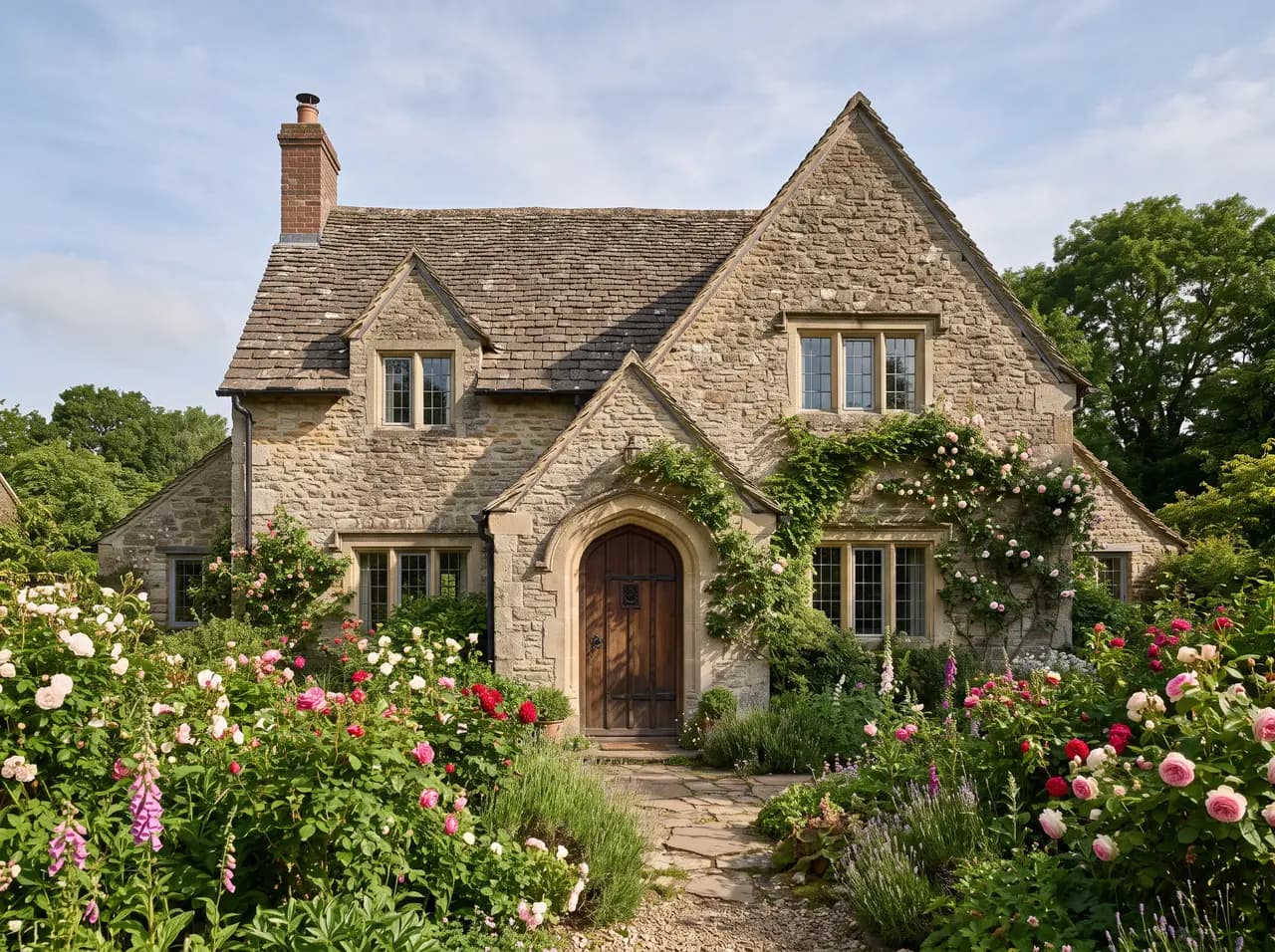
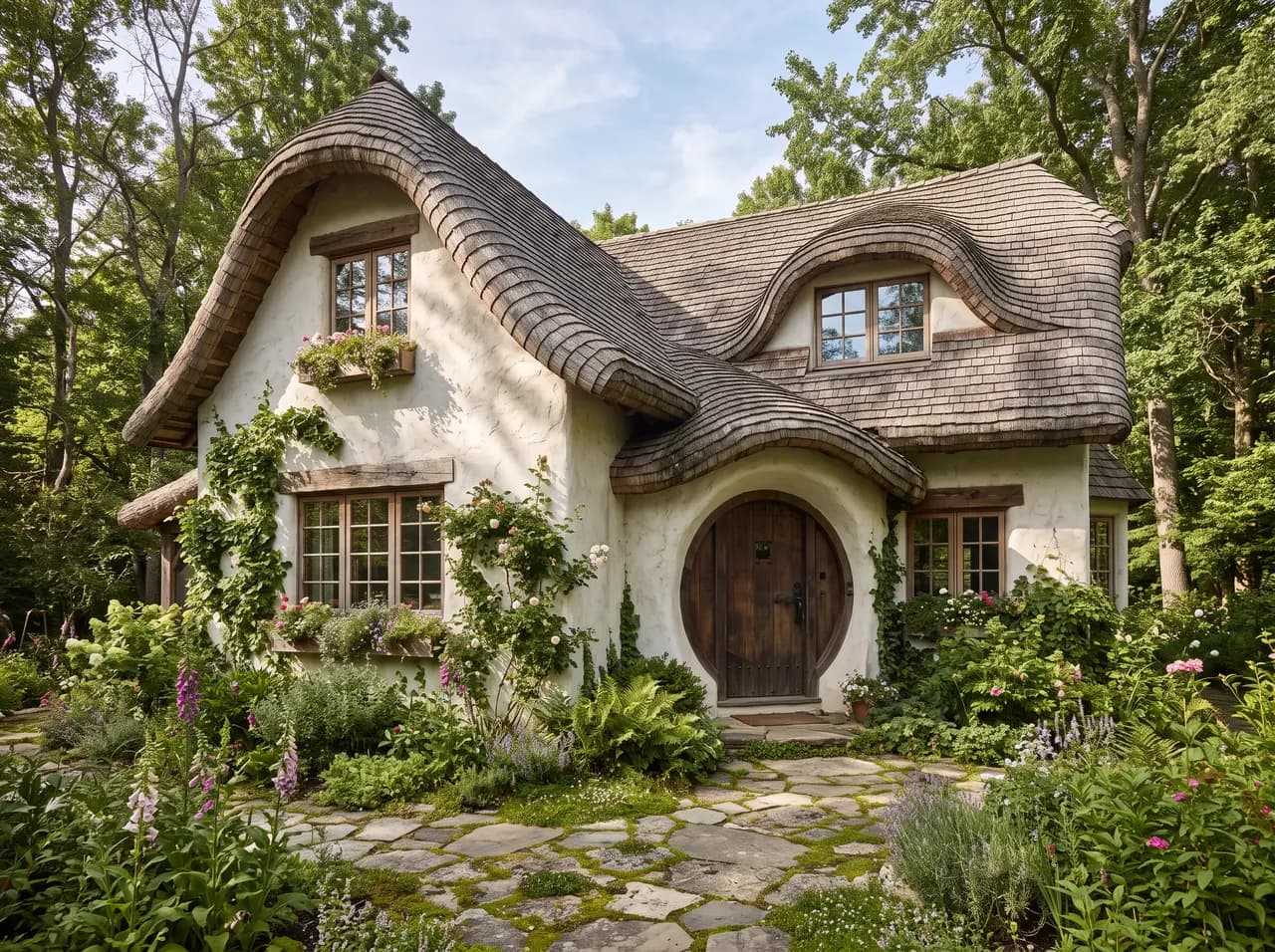
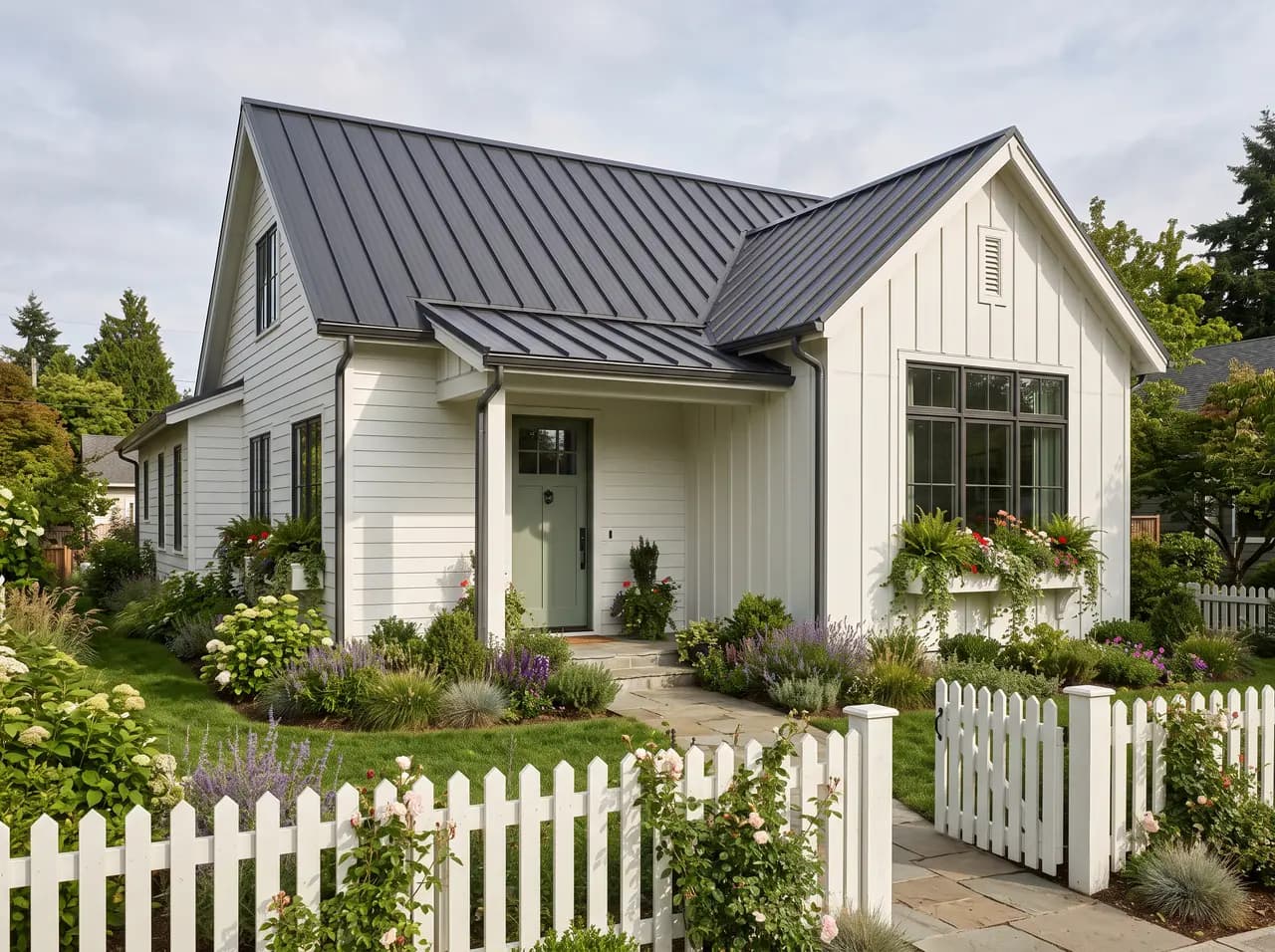
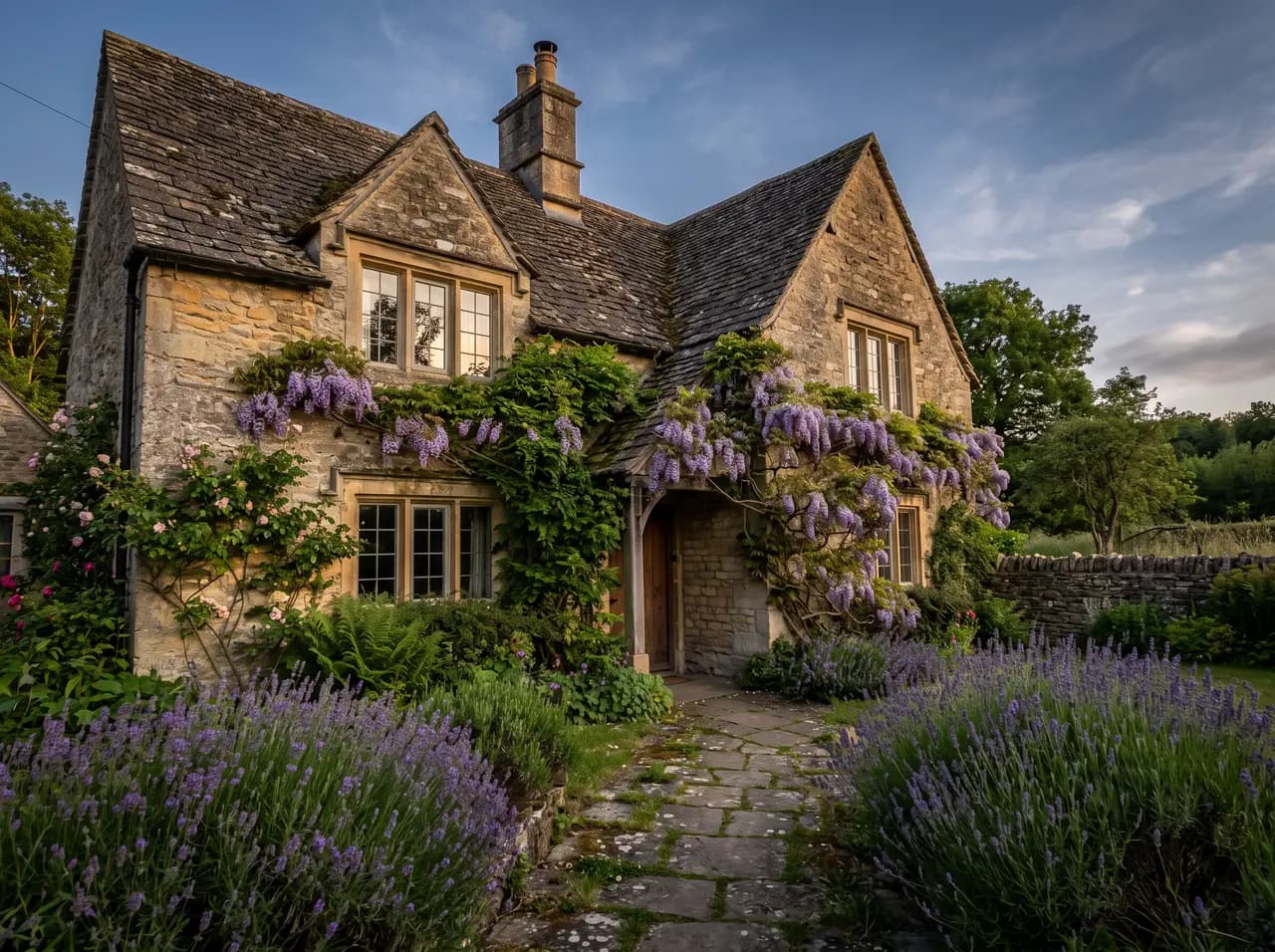
Storybook cottages exaggerate these features with rolled eaves and curved rooflines; modern cottages keep the scale and warmth with simpler materials, painted siding and cottage gardens.
Key features of a cottage style house
Use this checklist to spot a cottage house — or to brief the look for your own.
Steep cross gables
Often asymmetrical, sometimes with rolled eaves.
Natural walls
Stone, brick, stucco or painted siding.
Arched front door
Rounded wooden doors with heavy hardware.
Small-paned windows
Casements or double-hungs, often with window boxes.
Cottage garden
Informal planting, climbing roses and picket fences.
A short history of the cottage house
In England, a cottage was originally a small rural dwelling for a farm laborer, built of local stone, cob or timber, often under thatch. In the 19th century the Picturesque movement recast the humble form as a romantic ideal, and American writer Andrew Jackson Downing promoted “cottage residences” in his pattern books for families seeking a modest home in harmony with the landscape.
The American high point came in the 1920s and 1930s, when period-revival suburbs filled with English-inspired cottages and Hollywood set designers helped inspire whimsical “storybook” versions in Los Angeles. After World War II, ranches largely replaced small cottages, but the style returned with new traditional neighborhoods and the small-house movement. Today’s cottages often use fiber-cement or board-and-batten siding, stone veneer and energy-efficient windows.
Types of cottage houses
The style has several branches. Name the one you want when you brief a designer or write a prompt.
Storybook cottage
The most whimsical version, with swooping rooflines, rolled eaves that mimic thatch, crooked chimneys and round-top doors. Popular in 1920s California, it treats the house almost like a stage set and rewards playful detailing.
Stone English cottage
Built or clad in rough fieldstone, with a steep slate or shingle roof, a prominent chimney on the front and small casement windows. It feels rooted and timeless and suits wooded or sloping lots.
Coastal cottage
Lighter and breezier, with painted shingle or clapboard siding, white trim, a small covered porch and plenty of windows. Common in beach towns, it borrows freely from Cape Cod and Shingle style houses.
Modern cottage
Keeps the small footprint and steep gables but uses crisp board-and-batten, black windows, metal roof accents and fewer decorative details. Inside, open plans and vaulted ceilings make a compact house feel larger.
Turn your house into a Cottage
Upload a photo of your home and see it restyled as a cottage house in about 30 seconds — same footprint and windows, new roofline, materials and colours. Try several versions before you call a contractor.
Restyle my house free- 3 free credits
- No credit card
- Works on your phone
- 1Photograph your houseA straight-on phone photo of the front works best. Sketches and 3D model views work too.
- 2Choose CottageOpen any design above with “Try this design”, or describe the details you want to keep.
- 3Compare the resultsPhotoreal options arrive in seconds. Keep the favourite and download it in high resolution.
Cottage house colour palettes
Three proven schemes for body, trim and door. Render your house in each before you buy paint.
English garden
Sage · Cream · Faded rose · Weathered oak
Sage green on the siding, cream on the trim and window boxes, faded rose on the front door, and weathered oak on the gate, fence posts and garden bench.
Stone and slate
Fieldstone · Slate blue · Ivory · Moss
Fieldstone stays natural on the walls, slate blue suits the roof and door, ivory brightens window frames around the arched entry, and moss green ties shutters into the planting.
Seaside cottage
Driftwood gray · Bright white · Harbor blue · Sand
Driftwood gray on the shingles, bright white on trim and porch railings, harbor blue on the front door and shutters, and soft sand repeated in the path and porch floor.
Cottage vs Tudor vs Cape Cod
| Cottage | Tudor | Cape Cod | |
|---|---|---|---|
| Roof | Steep, asymmetrical, sometimes rolled eaves | Very steep, overlapping front gables | Steep, symmetrical side gable |
| Facade materials | Stone, brick, stucco or siding | Brick, stucco and half-timbering | Cedar shingles or clapboard |
| Windows | Small-paned casements, window boxes | Tall leaded casements in groups | Shuttered double-hungs flanking the door |
| Stories and plan | One to one-and-a-half, informal | Two stories, rambling | One-and-a-half, center-hall plan |
| Signature detail | Arched plank front door | Half-timbering and massive chimney | Symmetrical facade with central chimney |
How to give your house a cottage look
Add an arched entry
Even if the door itself is rectangular, an arched hood, curved trellis or round-top surround instantly softens a plain facade. Finish it with a heavy plank door, iron hardware and a small lantern.
Paint in soft layers
Cottage colors work best muted. Choose a gentle body color, a slightly lighter trim and one saturated accent for the door or shutters, then repeat that accent in planters or a garden gate.
Plant a real cottage garden
Replace foundation shrubs with layered perennials, climbing roses on a trellis, lavender along the path and a low picket fence or stone wall. Dense, informal planting is half of the style.
Warm the lighting
Swap builder-grade fixtures for small lanterns at the door and path lights along the walk, using warm white bulbs. To see the full effect first, upload a photo of your house to AI Render Studio and restyle it as a cottage.
Common questions
What is a cottage style house?
A small, informal home with steep gables, natural wall materials, an arched door, small-paned windows and an abundant garden.
Cottage vs Tudor — what is the difference?
Cottages are smaller and simpler; Tudors are larger and add half-timbering and massive chimneys.
How do I give my house cottage style?
Add an arched door, window boxes, shutters, a picket fence and a lush informal garden; soft colors like sage or cream help.
What makes a cottage look “storybook”?
Exaggeration. Storybook houses push cottage features to a playful extreme: rolled or wavy roof edges that imitate thatch, deliberately uneven rooflines, oversized chimneys, round doors, clinker brick and hand-hewn timbers. The style flourished in 1920s Los Angeles, where film-industry craftsmen helped shape it, and it remains a niche favorite for custom homes.
Is a cottage style house a good choice for a small lot?
Yes. The style is designed around a small footprint, and its steep roof lets a half-story of bedrooms fit under the eaves without raising the walls. Setting the house close to the street with a garden in front and a compact plan behind makes efficient use of narrow suburban and infill lots.
What roofing materials suit a cottage?
Traditional choices include slate, cedar shingles and, in England, thatch. In the US, architectural asphalt shingles in weathered gray or brown are most common, and some storybook homes lay shingles in waves to imitate thatch. Standing-seam metal works well on modern cottages, especially over porches and bay windows.
Compare every style in the house styles guide, or try a full facade makeover with the AI house exterior designer.