
Mediterranean Style House
Era: Mediterranean revival 1920s–1930s, revived today
A Mediterranean style house borrows from the sunny coasts of Italy, Spain, Greece and southern France. It is a family of looks, not one. Mediterranean homes share thick stucco walls, low terracotta tile roofs, arched openings and living space that flows outdoors.
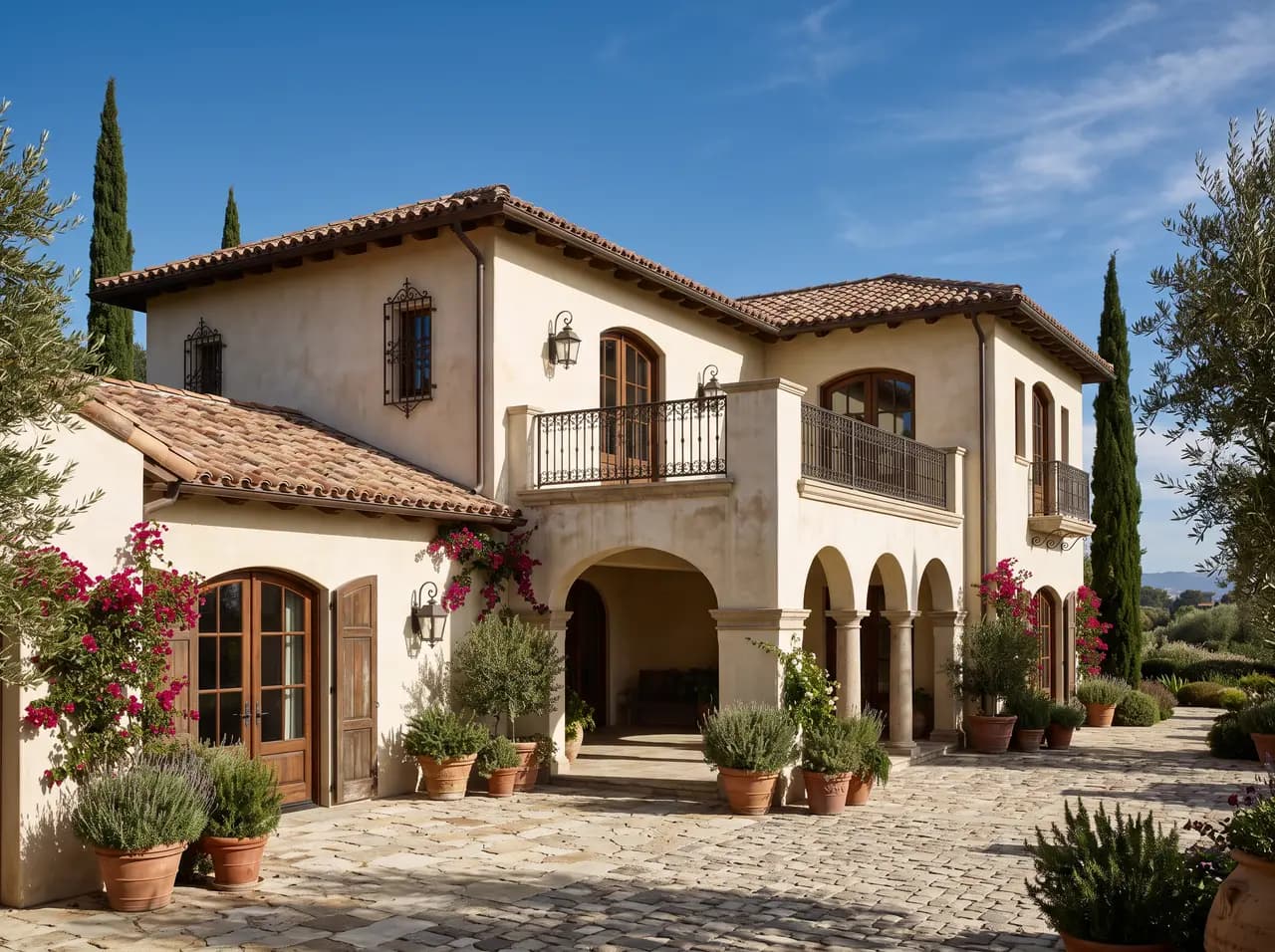
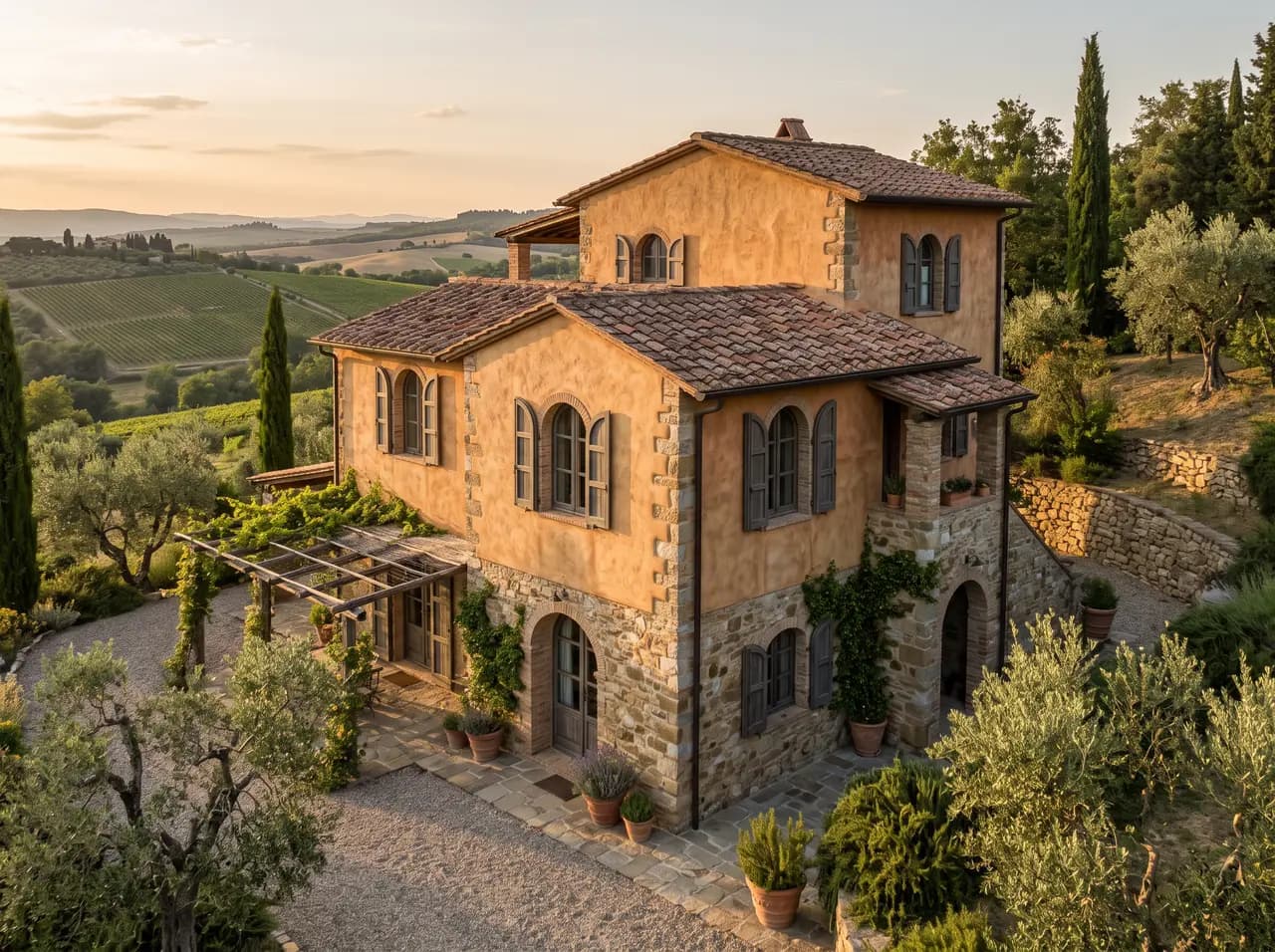
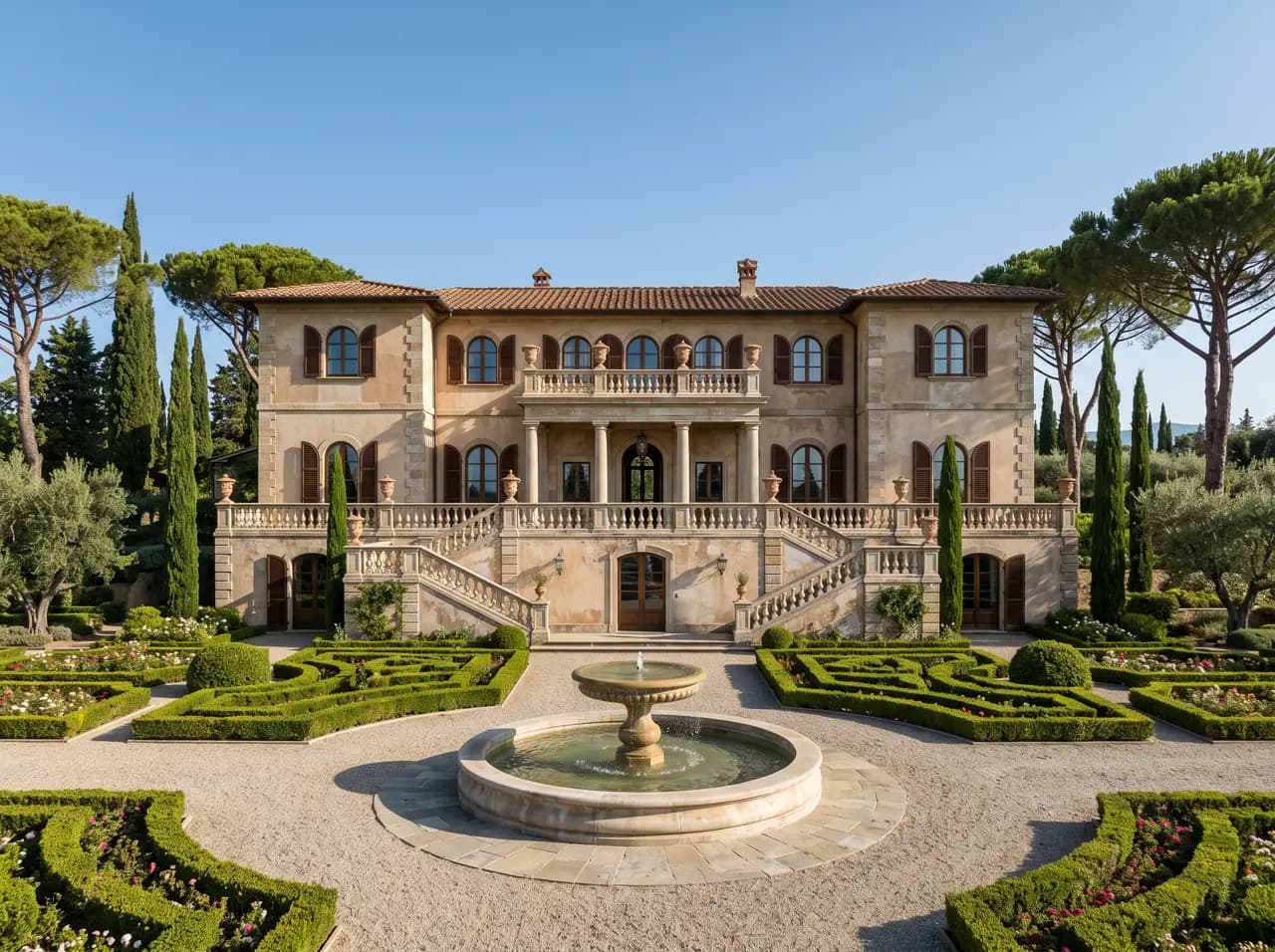
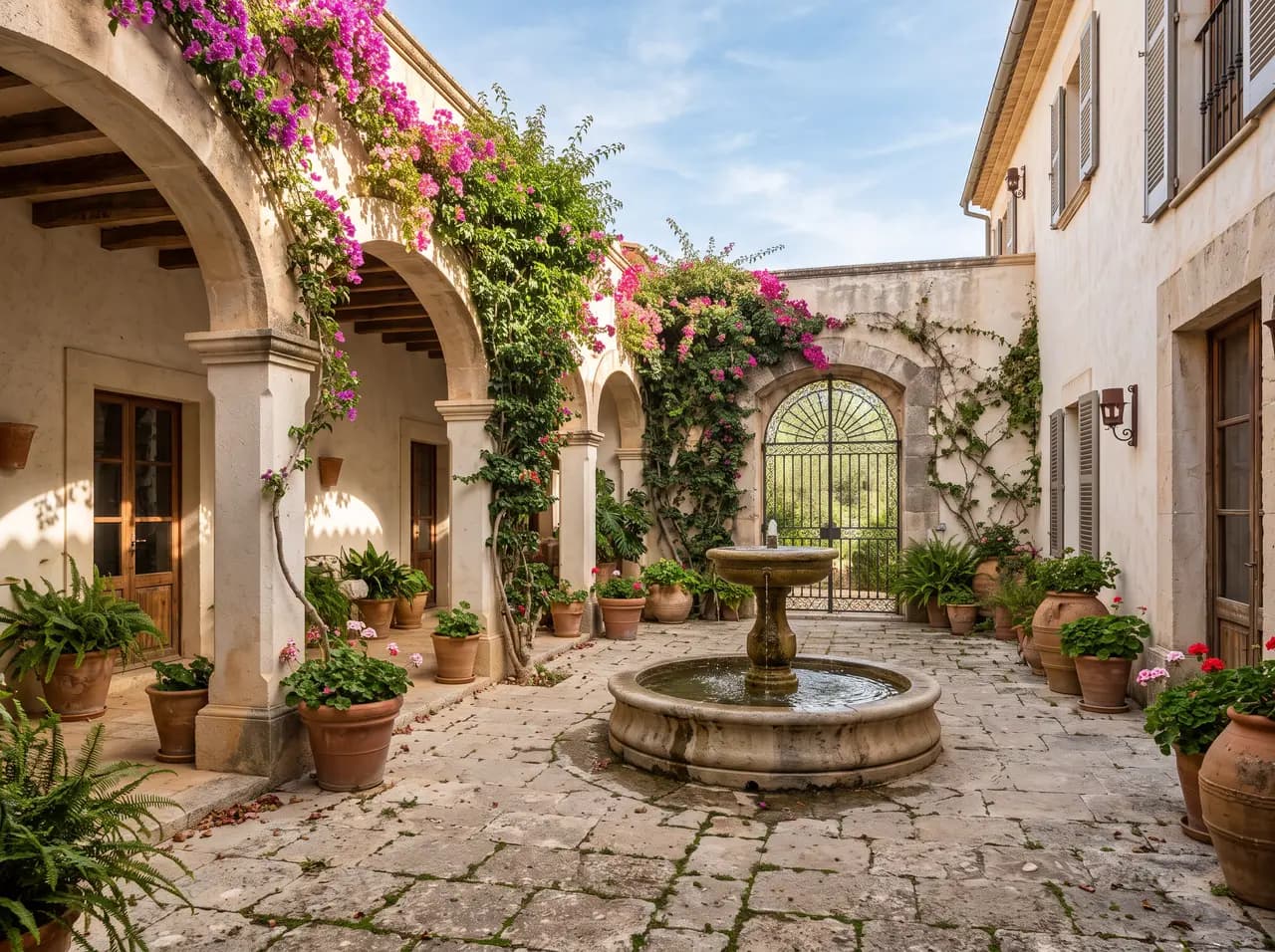
In the US they cluster in warm places like Florida, California and Texas. Spanish style is one branch and has its own guide; Mediterranean is wider and often more formal. Modern Mediterranean house design keeps the stucco and tile and drops the heavy ornament.
Key features of a mediterranean style house
Use this checklist to spot a mediterranean house — or to brief the look for your own.
Stucco walls
Thick, textured stucco in cream, ochre, sand or white.
Terracotta tile roofs
Low-pitched roofs in barrel or flat clay tile.
Arches and loggias
Arched doors, windows and covered outdoor galleries.
Outdoor living
Courtyards, terraces and pergolas beside the house.
Iron, stone and tile
Wrought-iron railings, stone trim and tile accents.
A short history of the mediterranean house
Homes around the Mediterranean share old habits: thick masonry walls, clay tile roofs and shaded courtyards that cope with hot, dry summers. American architects and wealthy owners who traveled in Europe brought those ideas home. Mediterranean Revival drew on Italian Renaissance villas and on Spanish architecture, and it often blended the two on one house.
The style peaked in the 1920s, especially in the Florida land boom and along the California coast. Palm Beach, Coral Gables and Santa Barbara still show it well. Building slowed in the Great Depression and the style fell from favor after World War II. It returned in the late 20th century, when many Sunbelt suburbs filled with stucco homes under tile roofs. Today’s builders use stucco over wood or block framing and concrete or clay tile.
Types of mediterranean houses
The style has several branches. Name the one you want when you brief a designer or write a prompt.
Italian and Tuscan villa
Warm stucco or stone in earthy ochre and cream, a low tile roof, heavy timber beams and an arched loggia. Cypress trees and gravel paths complete the Italian countryside look. Tuscan is the rustic end of this branch.
Spanish-influenced Mediterranean
Whitewashed or cream stucco with wrought-iron balconies, painted tile and a courtyard. This branch overlaps with Spanish style, which has its own guide, but Mediterranean versions are often larger and more formal.
Greek island
Cubic white forms, flat or low roofs, blue doors and shutters, and stairs and terraces stepping down a slope. The look is simple and bright, and it works well on small coastal lots.
Modern Mediterranean
Smooth stucco, simplified arches, black steel windows, a tile or flat roof and a few pieces of detail in stone or tile. It keeps the warmth of the style with cleaner lines.
Turn your house into a Mediterranean
Upload a photo of your home and see it restyled as a mediterranean house in about 30 seconds — same footprint and windows, new roofline, materials and colours. Try several versions before you call a contractor.
Restyle my house free- 3 free credits
- No credit card
- Works on your phone
- 1Photograph your houseA straight-on phone photo of the front works best. Sketches and 3D model views work too.
- 2Choose MediterraneanOpen any design above with “Try this design”, or describe the details you want to keep.
- 3Compare the resultsPhotoreal options arrive in seconds. Keep the favourite and download it in high resolution.
Mediterranean house colour palettes
Three proven schemes for body, trim and door. Render your house in each before you buy paint.
Tuscan stone
Ochre stucco · Terracotta · Travertine · Cypress green
Ochre on the stucco, terracotta on the roof tile and pots, travertine on trim, steps and window surrounds, and deep cypress green on shutters and the front door.
Aegean white and blue
Whitewash · Aegean blue · Sky · Driftwood
Whitewash on every wall, Aegean blue on the door and shutters, a lighter sky blue on pots and tile accents, and driftwood tones on pergolas and outdoor furniture.
Amalfi coast
Soft lemon · Cream · Tile red · Olive
Soft lemon on the main walls, cream on trim and arches, red clay tile on the roof, and olive green on shutters, gates and planters.
Mediterranean vs Spanish vs Mission
| Mediterranean | Spanish | Mission | |
|---|---|---|---|
| Influences | Italy, Spain, Greece, southern France | Spain and colonial Mexico | California’s Spanish missions |
| Roof | Low hip or gable in tile, sometimes flat | Low-pitched red barrel tile | Red tile with curved parapets |
| Facade materials | Stucco with stone or cast-stone trim | Textured stucco, tile accents | Smooth, plain stucco |
| Windows | Tall and arched, often shuttered | Arched, deep-set, iron grilles | Arched or rectangular, simple |
| Signature detail | Loggia, balustrade, columns | Wrought iron and painted tile | Scalloped parapet over the entry |
How to give your house a mediterranean look
Refresh the stucco
A new coat in warm cream, sand or ochre covers patches and brings the walls back to life. A slightly rough, hand-finished texture looks more authentic than a flat sprayed finish.
Add arches and a loggia
Arched French doors, a covered terrace or a simple timber pergola give the house the shaded outdoor room that defines the style. Keep the proportions generous so it reads as part of the house.
Update doors and windows
Dark steel-look or bronze frames, a solid wood front door and iron hardware suit the style. Add shutters in blue, green or deep brown for color against the pale walls.
Plant the garden
Olive and citrus trees, cypress, lavender, rosemary and bougainvillea fit the look and need little water once established. Terracotta pots and a gravel or stone courtyard finish it. Upload a photo to AI Render Studio to preview colors and plantings in about 30 seconds, with 3 free credits when you sign up and no credit card.
Common questions
What is a Mediterranean style house?
A home inspired by the coasts of Italy, Spain and Greece, with stucco walls, low tile roofs, arched openings, loggias and courtyards.
Mediterranean vs Spanish style house — what is the difference?
Spanish style draws on Spain and colonial Mexico and is plainer. Mediterranean is the wider family. It adds Italian and Greek ideas like columns, loggias and whitewashed forms, and is often more formal.
What colors suit a Mediterranean style house?
Cream, sand or ochre stucco with terracotta roofs is classic. White walls with blue doors give a Greek island look.
What is Mediterranean Revival architecture?
It is the American style of the early 20th century, strongest in the 1920s, that borrowed from Italian villas, Spanish buildings and other coastal European homes. Typical features are stucco walls, tile roofs, arched openings, loggias, balconies and courtyards. It was built mostly in Florida and California.
Is Mediterranean the same as Tuscan style?
No. Tuscan is one branch of Mediterranean design. It is rustic and Italian, with stone or ochre stucco, heavy timber beams and cypress trees. Mediterranean also covers Spanish, Greek and southern French influences, and many of those homes are whiter, brighter and less rustic than a Tuscan villa.
Do Mediterranean houses have flat roofs or pitched roofs?
Most have low-pitched hip or gable roofs covered in terracotta tile. Flat or nearly flat roofs appear on Greek island and modern Mediterranean homes, often with a terrace or parapet. A clay tile roof is heavy, so an existing house needs a structural check before you switch to it.
Compare every style in the house styles guide, or try a full facade makeover with the AI house exterior designer.