
Victorian Style House
Era: 1837–1901
Victorian is not one style but a family of them, built during Queen Victoria’s reign when mass-produced trim and new railways let builders decorate as never before. Italianate, Gothic revival, Second Empire, Stick and Queen Anne houses all count as Victorian.
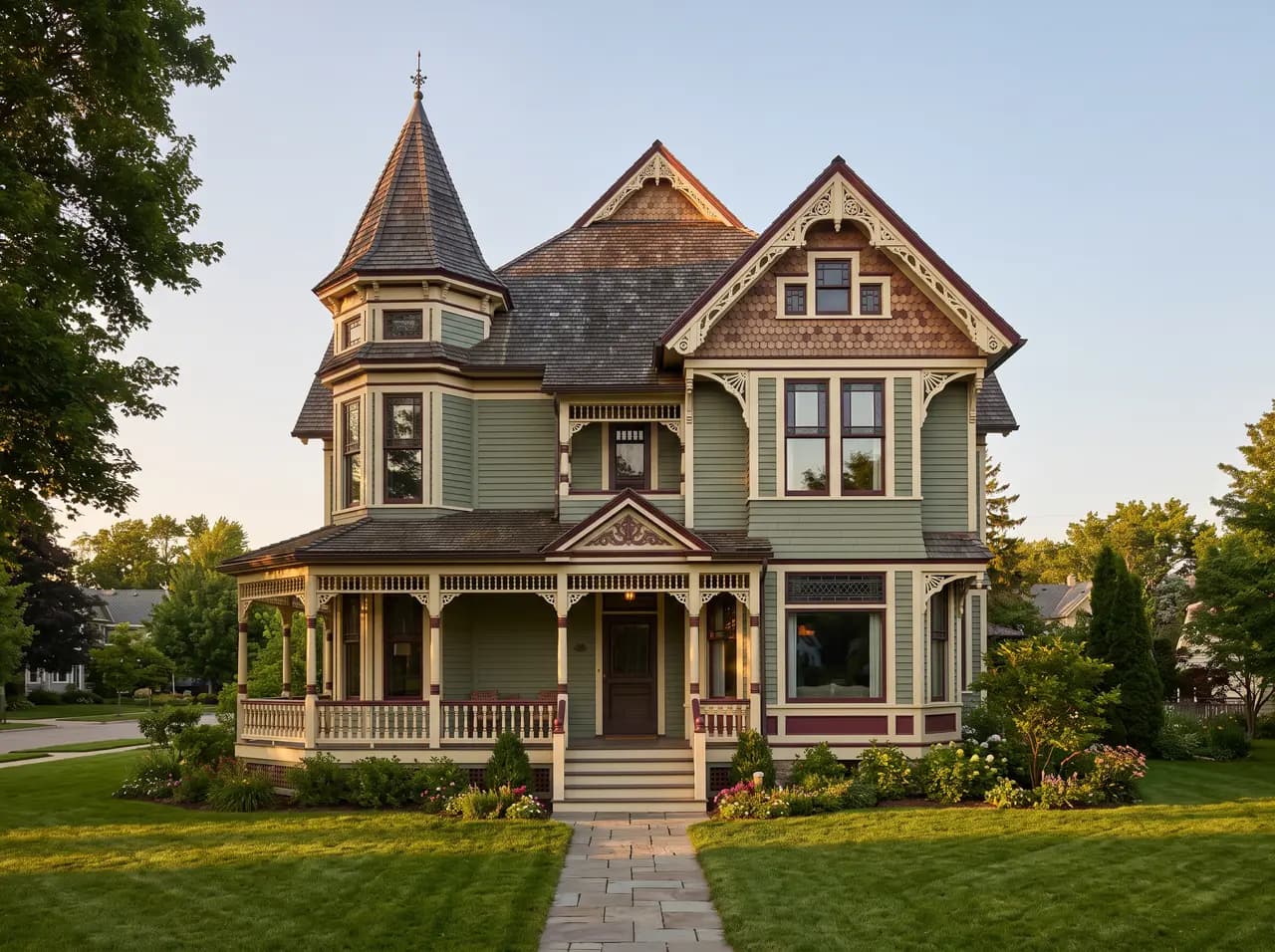
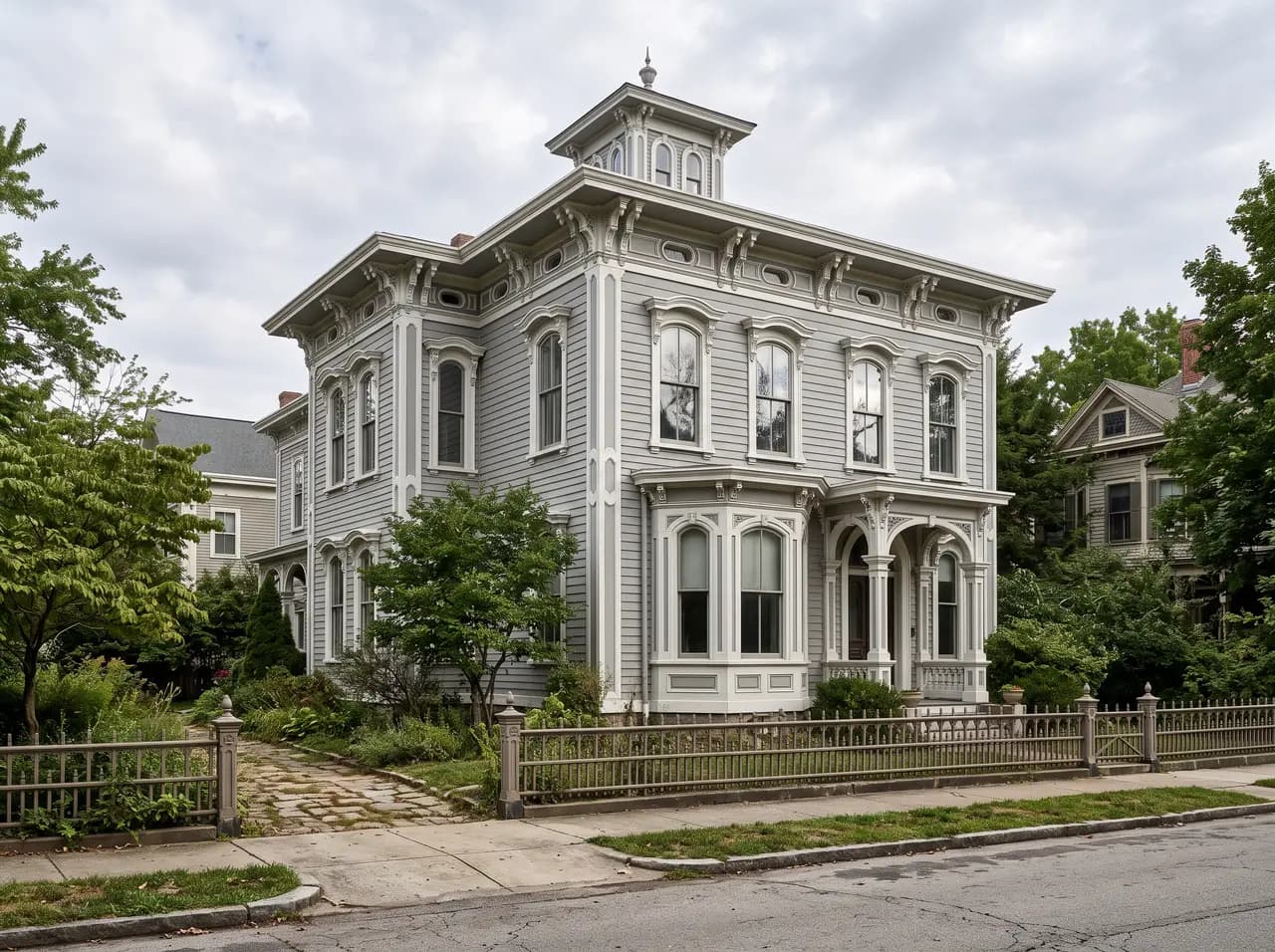
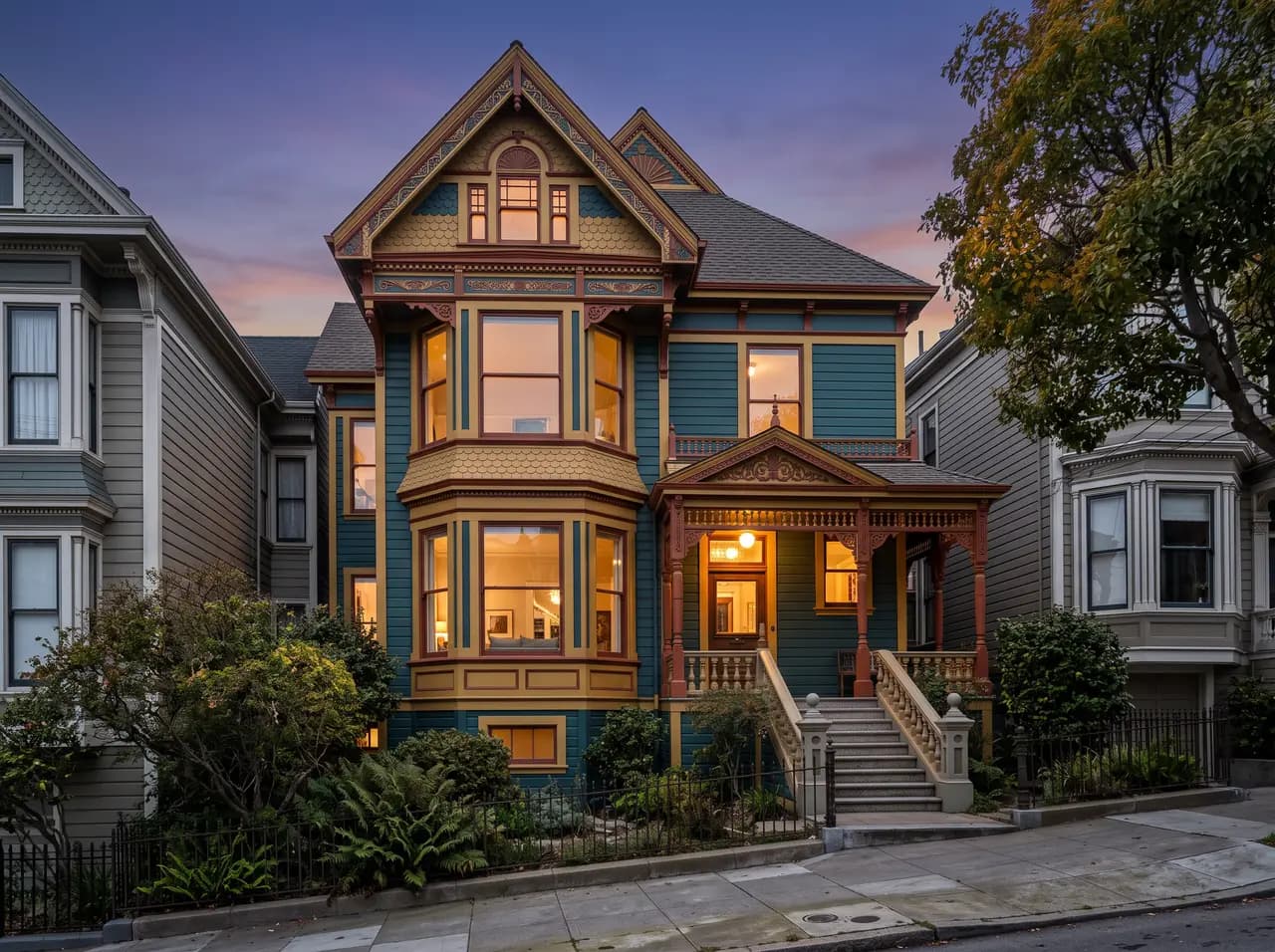
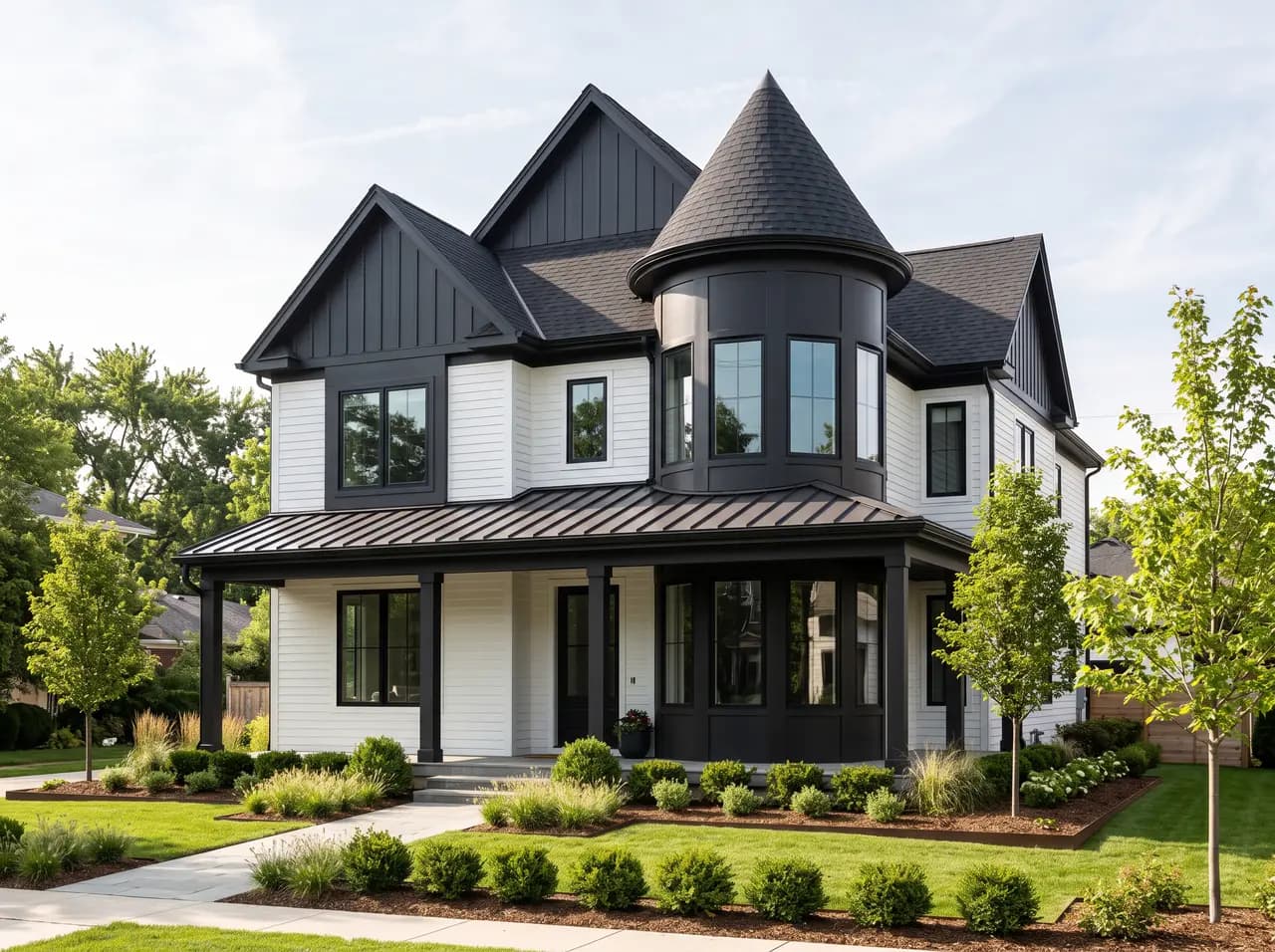
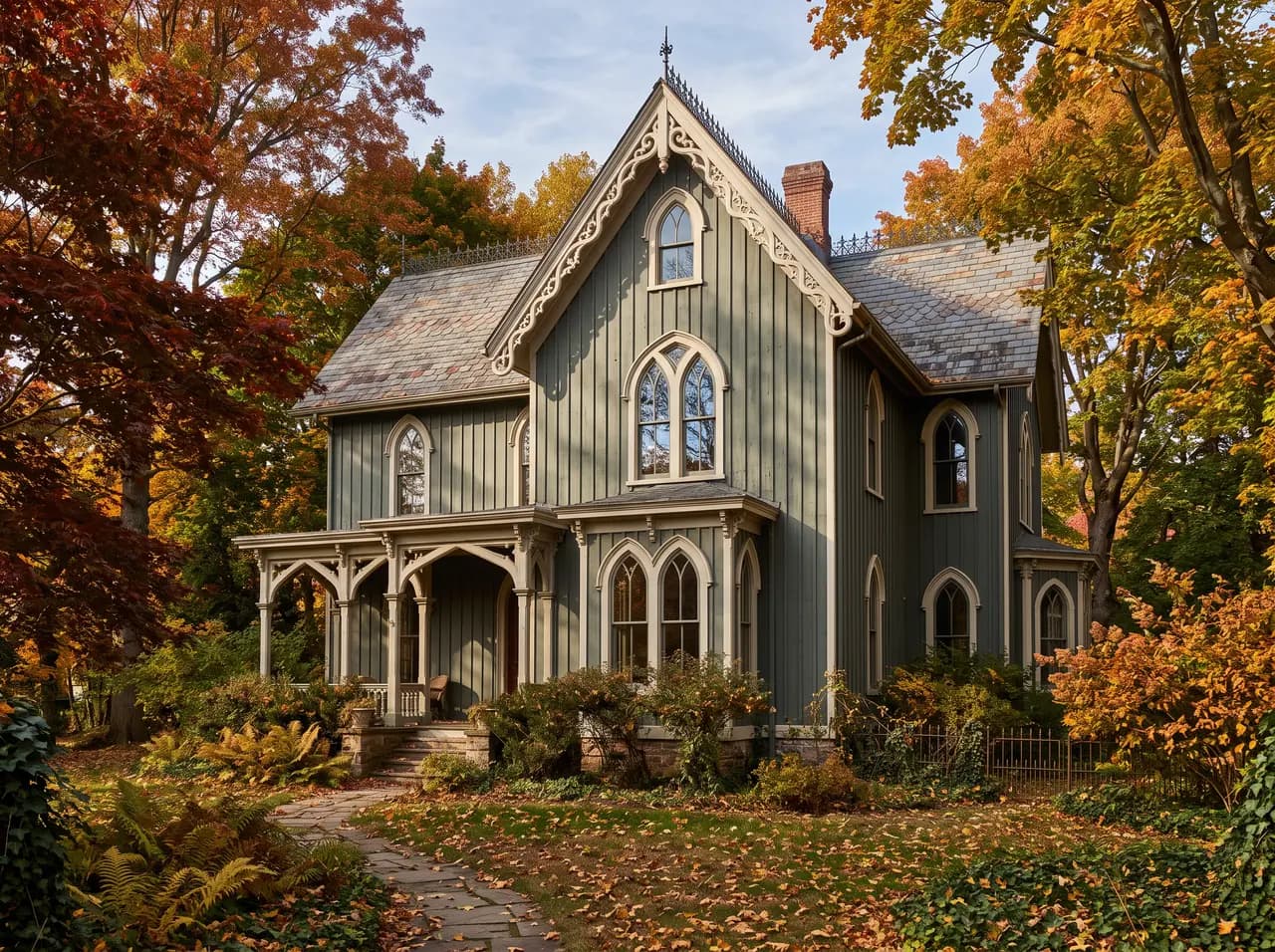
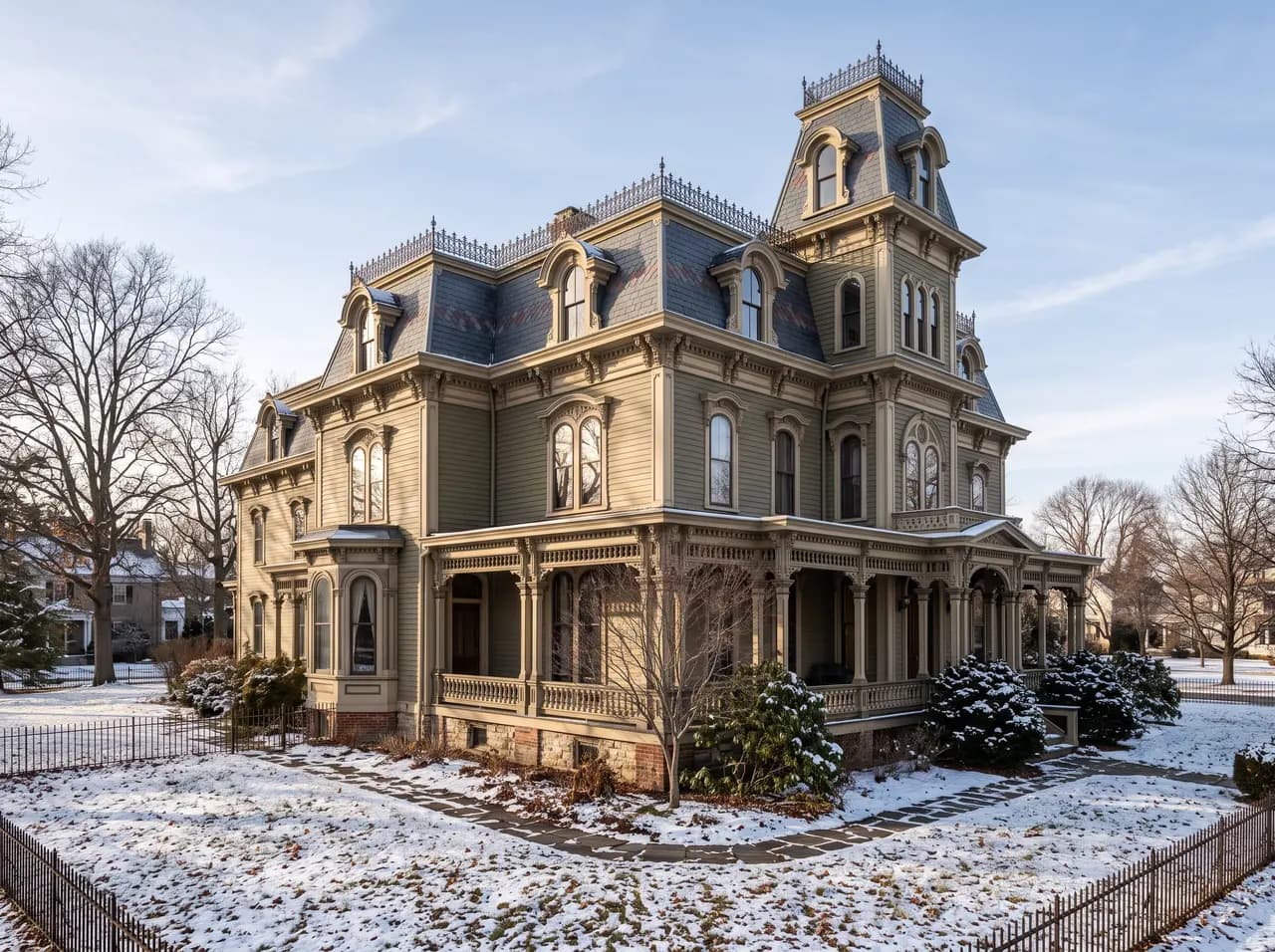
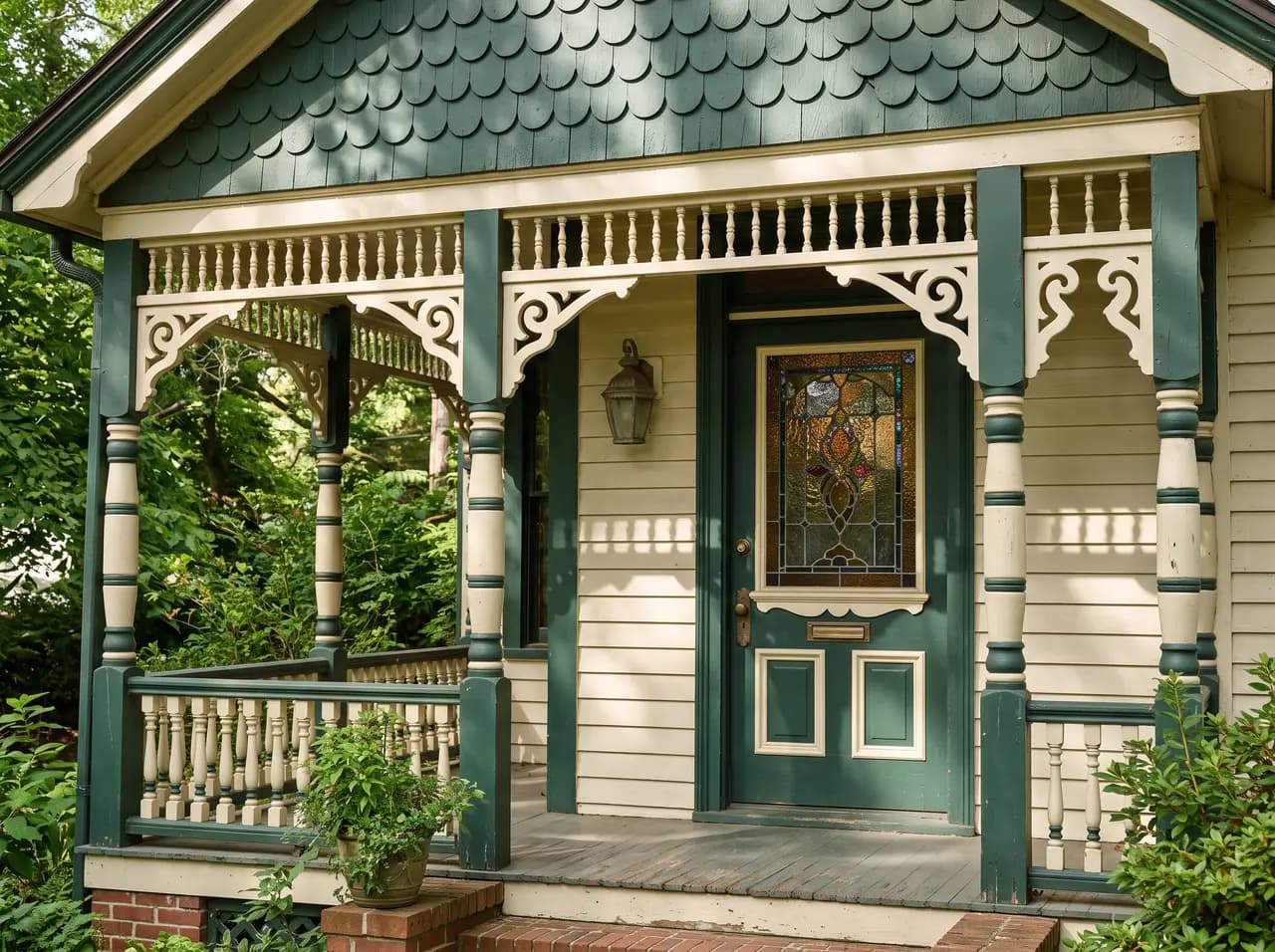
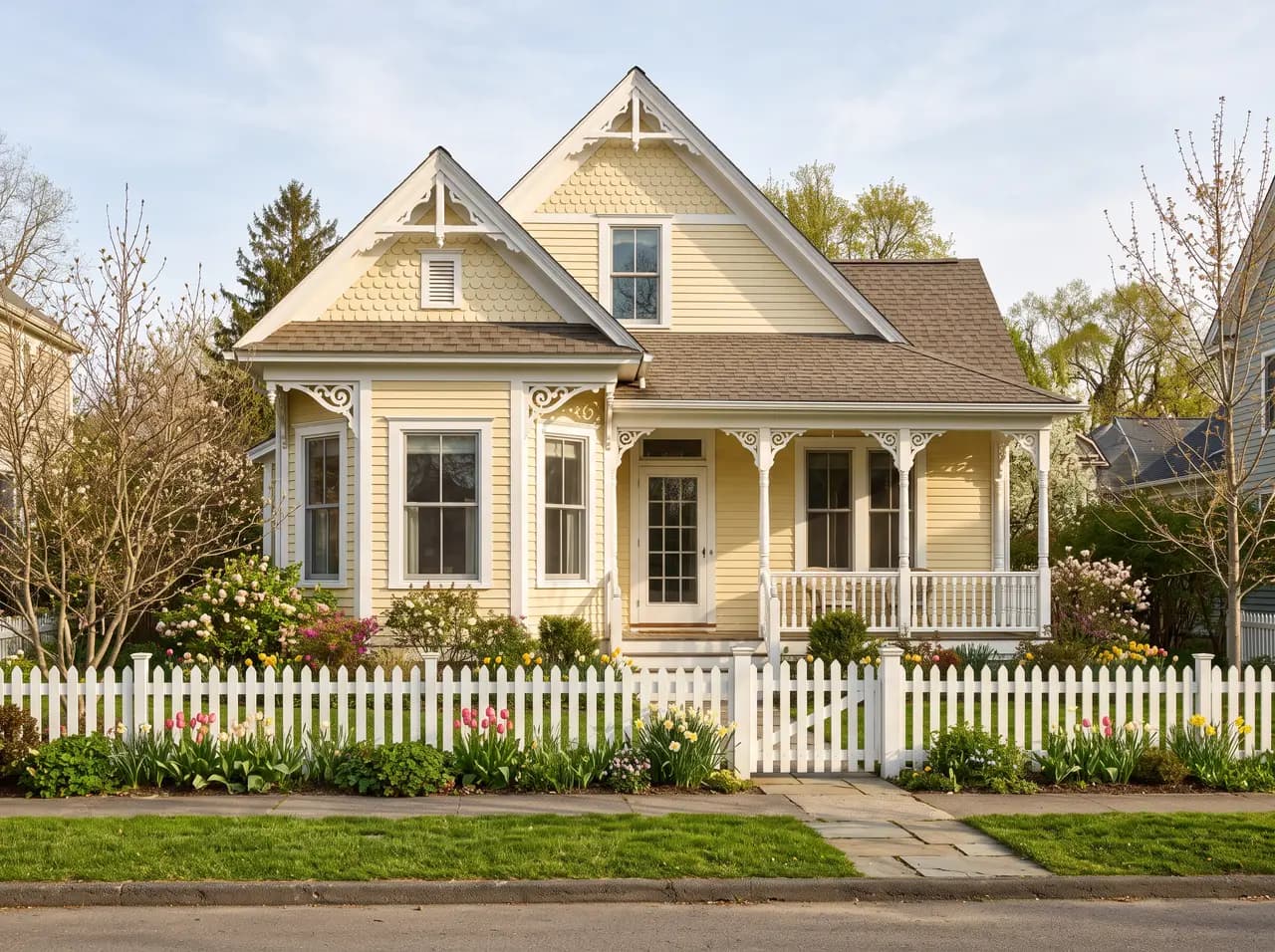
What they share is exuberance: steep roofs, tall narrow windows, bay windows, decorative brackets and spindlework, and paint schemes that pick out every detail. A modern Victorian keeps the silhouette and porch but simplifies the colour palette.
Key features of a victorian style house
Use this checklist to spot a victorian house — or to brief the look for your own.
Vertical proportions
Two or three tall stories with steep roofs.
Decorative trim
Brackets, spindlework, “gingerbread” and patterned shingles.
Bay windows
Projecting bays and sometimes a corner tower or turret.
Porches
Deep front or wraparound porches with turned posts.
Polychrome paint
Three or more colors highlighting the trim — the “painted lady” look.
A short history of the victorian house
Victorian houses were made possible by industry. Balloon framing, introduced in the 1830s, used light, mass-produced lumber and machine-made nails instead of heavy timbers, so walls could bend into bays and towers. Steam-powered scroll saws and lathes turned out brackets, spindles and decorative shingles cheaply, and railroads delivered them to towns across the country along with builders’ pattern books.
Pattern books by writers such as Andrew Jackson Downing spread Gothic revival and Italianate cottages, followed by Second Empire, Stick and Queen Anne designs. By the early 1900s tastes swung to Colonial Revival and Craftsman, and many Victorians were stripped of trim or split into apartments. The preservation movement of the 1960s and 1970s brought them back into favour, as owners restored trim and revived bold paint schemes. New Victorians are now built with fiber-cement siding and low-maintenance composite trim.
Types of victorian houses
The style has several branches. Name the one you want when you brief a designer or write a prompt.
Italianate
Square, two- or three-story houses with low hipped roofs, wide eaves on large paired brackets, tall arched windows with heavy hoods and sometimes a square cupola on top.
Second Empire
Named for Napoleon III’s France and defined by the mansard roof: a steep, often curved lower slope pierced by dormers, which gives a full extra floor of rooms under the roof.
Carpenter Gothic
A wooden take on Gothic revival with steep gables, lacy sawn bargeboards along the eaves, pointed-arch windows and board-and-batten walls, common in rural churches and cottages.
Folk Victorian
A plain farmhouse or I-house dressed with factory-made spindlework, brackets and turned porch posts. It brought Victorian decoration to modest homes along new railroad lines.
Turn your house into a Victorian
Upload a photo of your home and see it restyled as a victorian house in about 30 seconds — same footprint and windows, new roofline, materials and colours. Try several versions before you call a contractor.
Restyle my house free- 3 free credits
- No credit card
- Works on your phone
- 1Photograph your houseA straight-on phone photo of the front works best. Sketches and 3D model views work too.
- 2Choose VictorianOpen any design above with “Try this design”, or describe the details you want to keep.
- 3Compare the resultsPhotoreal options arrive in seconds. Keep the favourite and download it in high resolution.
Victorian house colour palettes
Three proven schemes for body, trim and door. Render your house in each before you buy paint.
Painted lady
Sage · Plum · Cream · Antique gold
Sage on the main body, plum on window sashes and the front door, cream on trim and brackets, and antique gold on small details like spindles.
High Victorian earth
Deep olive · Venetian red · Ochre · Dark slate
Deep olive on the siding, Venetian red on sashes and accents, ochre on trim and porch railings, and a dark slate or slate-look roof.
Quiet modern
Greige · White · Black · Charcoal
Greige body, white on all trim and porch details, black on the door, sashes and railings, and a charcoal roof so the silhouette leads.
Victorian vs Queen Anne vs Tudor
| Victorian | Queen Anne | Tudor | |
|---|---|---|---|
| Roof | Steep: gable, hip or mansard | Irregular, with tower or turret | Steep, overlapping gables |
| Materials | Painted clapboard, shingle, brick | Mixed siding, fishscale shingle | Brick, stucco, half-timbering |
| Windows | Tall narrow sashes, bay windows | Bays with stained-glass accents | Leaded casements |
| Stories | Two to three, vertical | Two to three, asymmetrical | Two, sometimes one-and-a-half |
| Signature | Brackets and sawn trim | Corner tower, wraparound porch | Half-timbered gables |
How to give your house a victorian look
Rebuild the porch properly
Porches take the most weather. Replace rotted posts, balusters and decking with matched replicas, and use rot-resistant wood or composite for floors and stair treads to keep the original profile.
Add storms, keep the sashes
Original wavy-glass sashes are part of the character. Repairing them and adding slim exterior or interior storm windows improves comfort while keeping the tall, narrow proportions.
Place colour by architecture
Give each layer a job: one colour for the body, one for trim and corner boards, and an accent for sashes, doors and small carved details. Shingled gables can take a slightly darker shade.
Bring back missing details
Ghost marks often show where brackets, cresting or gable trim were removed. Replicas in composite or wood restore the outline; preview them by uploading a photo to AI Render Studio.
Common questions
What are the main types of Victorian houses?
Italianate, Gothic revival, Second Empire, Stick, Queen Anne, Shingle and Folk Victorian.
How do I modernize a Victorian exterior?
Keep the silhouette and porch, simplify to two or three muted colors, repair rather than remove trim, and update lighting and landscaping.
Is a Queen Anne a Victorian house?
Yes — Queen Anne is the most elaborate Victorian sub-style, known for towers, wraparound porches and patterned shingles.
Do Victorian houses have lead paint?
Almost certainly somewhere. Lead-based paint was banned for US residential use in 1978, and Victorian houses have usually been painted many times before then. Layers may survive under newer paint on trim, siding and windows. Hire contractors certified under the EPA lead-safe renovation rule for sanding or scraping, and test before any work that disturbs paint.
What is a painted lady house?
Painted lady describes a Victorian or Edwardian house painted in three or more colours that pick out its trim, brackets and shingle patterns. The term became popular after a 1978 book of the same name about San Francisco’s restored row houses, such as those facing Alamo Square, and is now used for colourful Victorians anywhere.
How many colours should a Victorian house be painted?
Three to five is typical. A body colour, a trim colour and one accent cover most houses; more elaborate Queen Anne homes may add a second body colour for shingled gables and a fourth or fifth for sashes and small details. More colours suit more trim, but a simple Victorian can look busy with too many.
Compare every style in the house styles guide, or try a full facade makeover with the AI house exterior designer.