
Queen Anne Style House
Era: 1880–1910
The Queen Anne style is the most elaborate expression of Victorian architecture in America. Where other styles aim for order, Queen Anne houses celebrate complexity: asymmetrical facades, a round or polygonal corner tower, steep irregular rooflines and a deep wraparound porch.
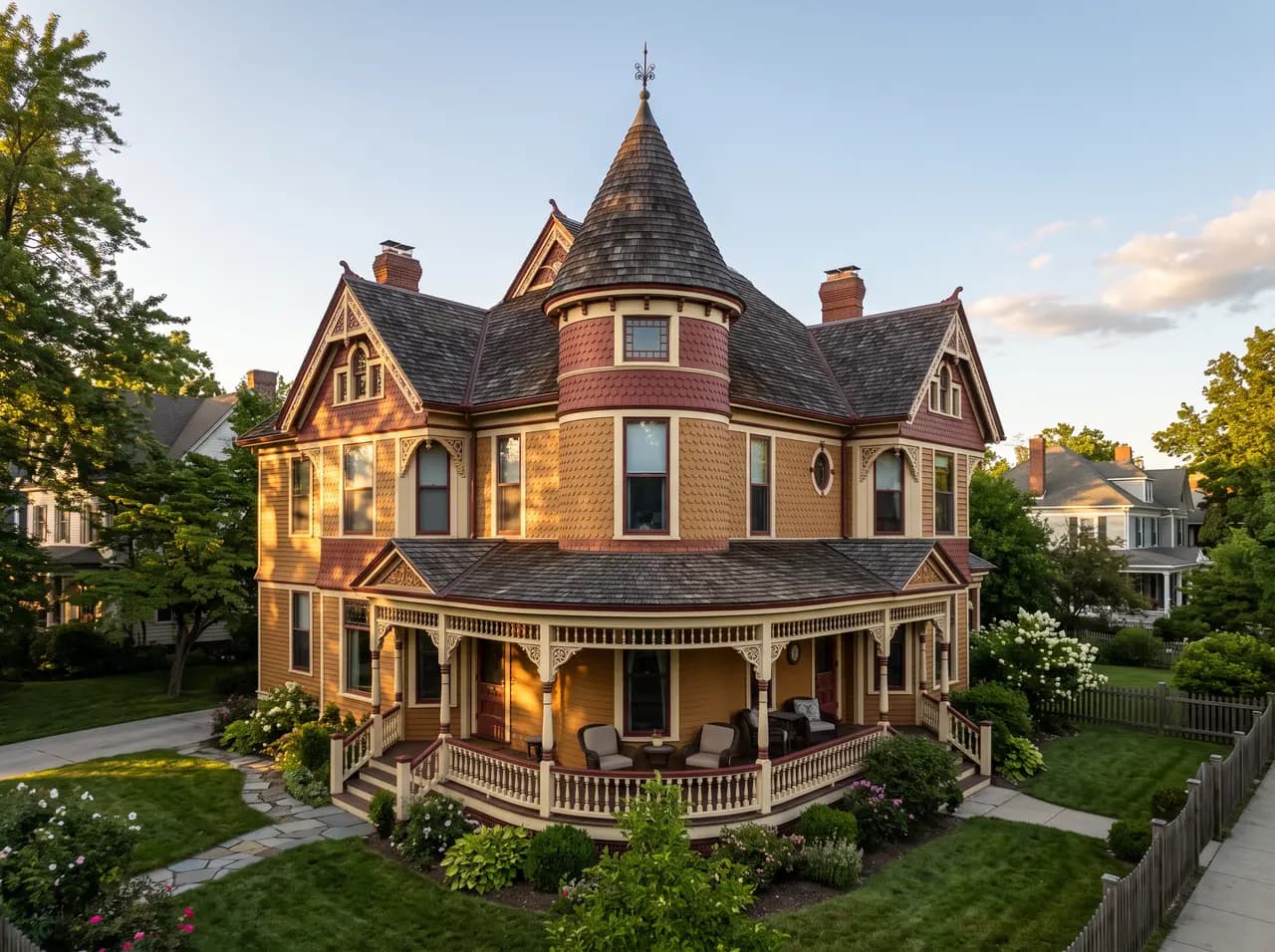
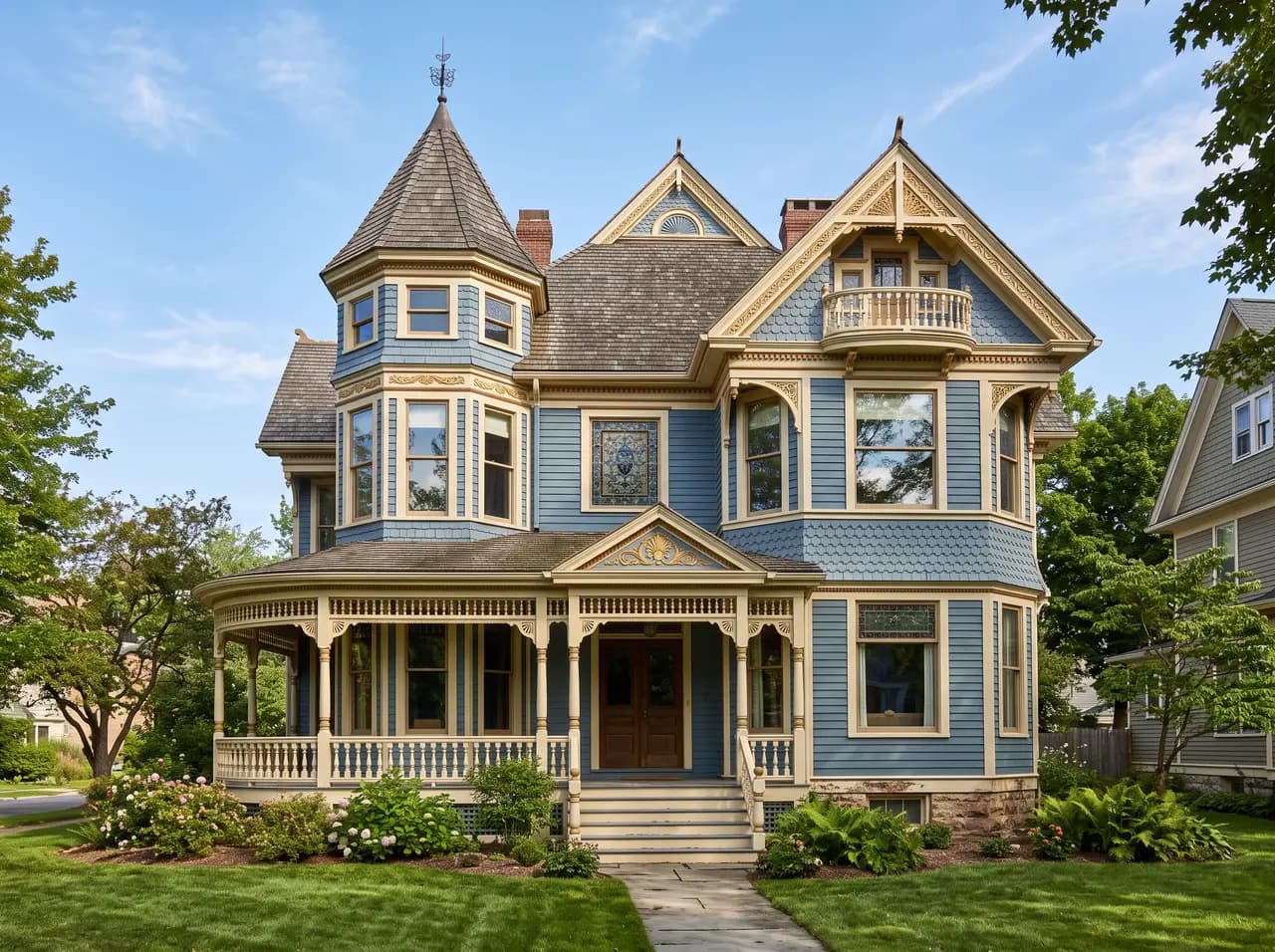
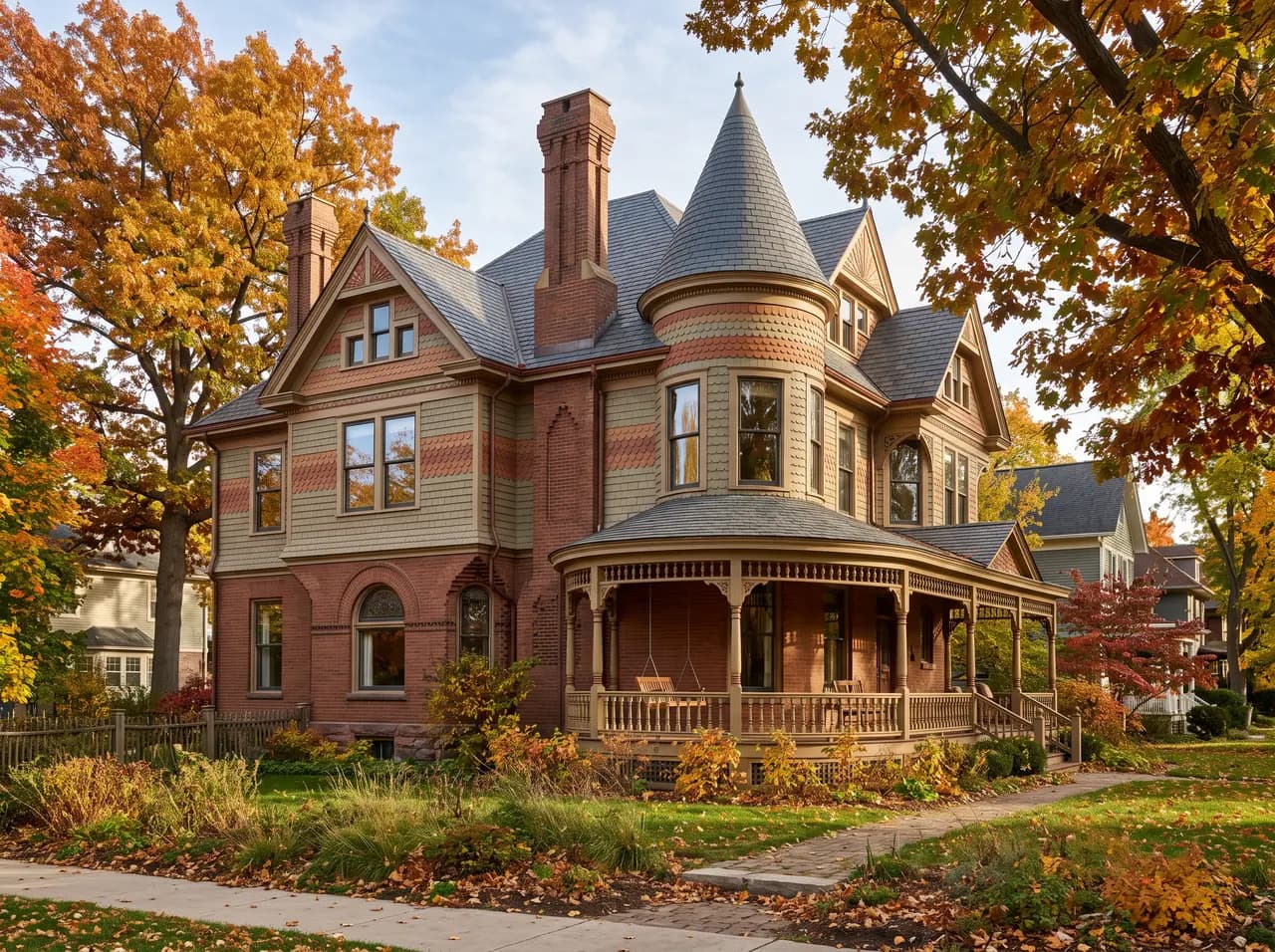
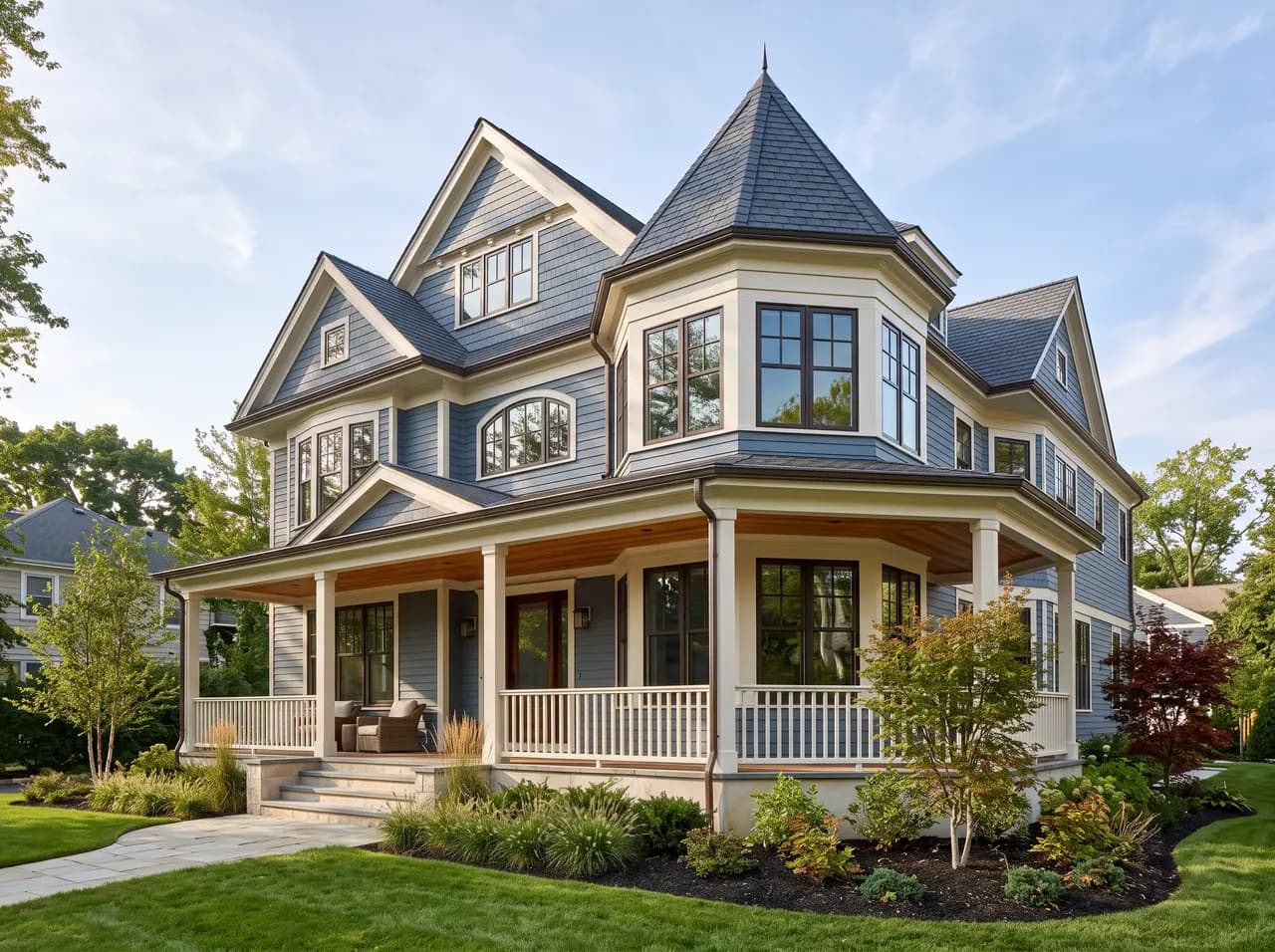
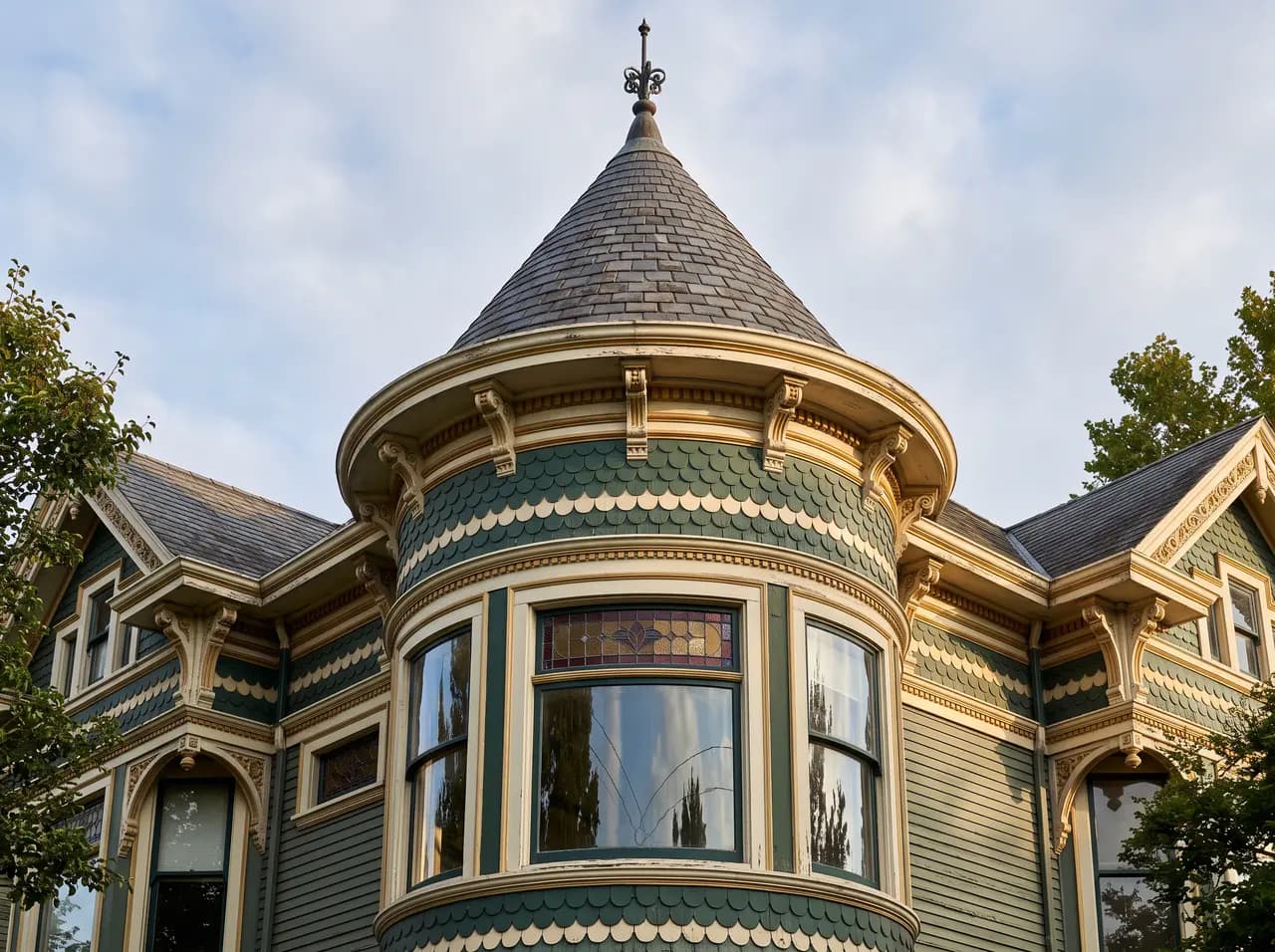
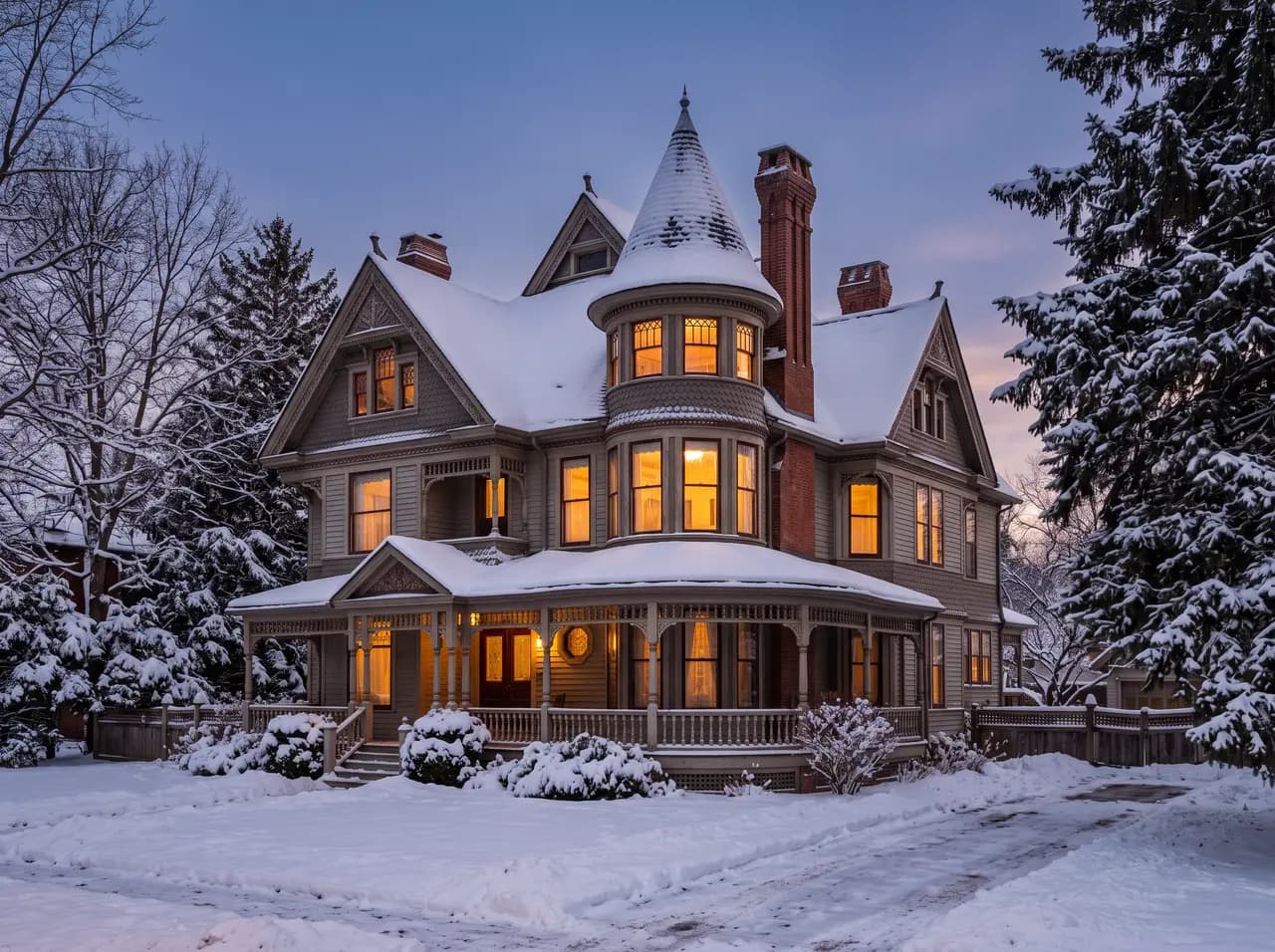
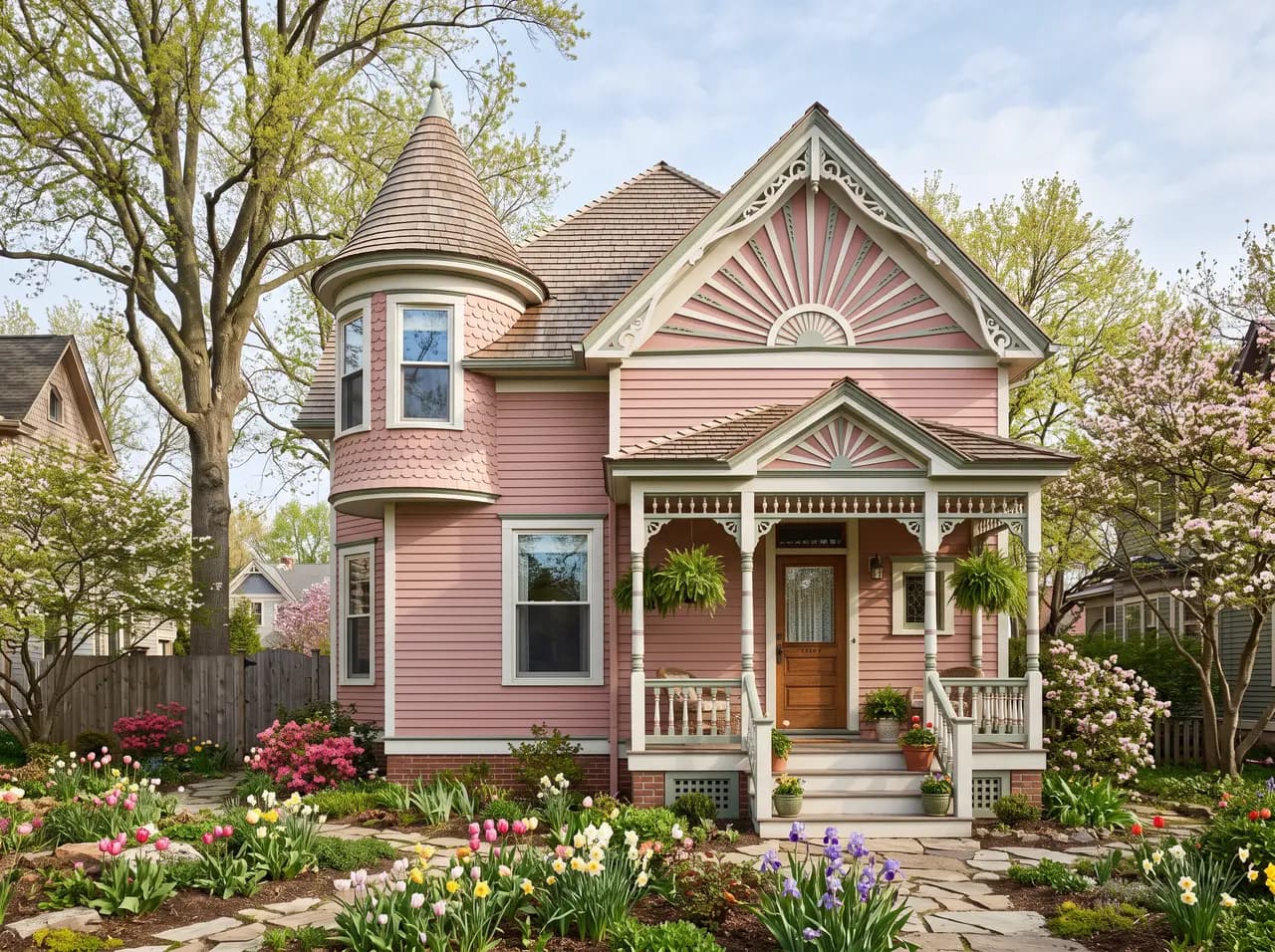
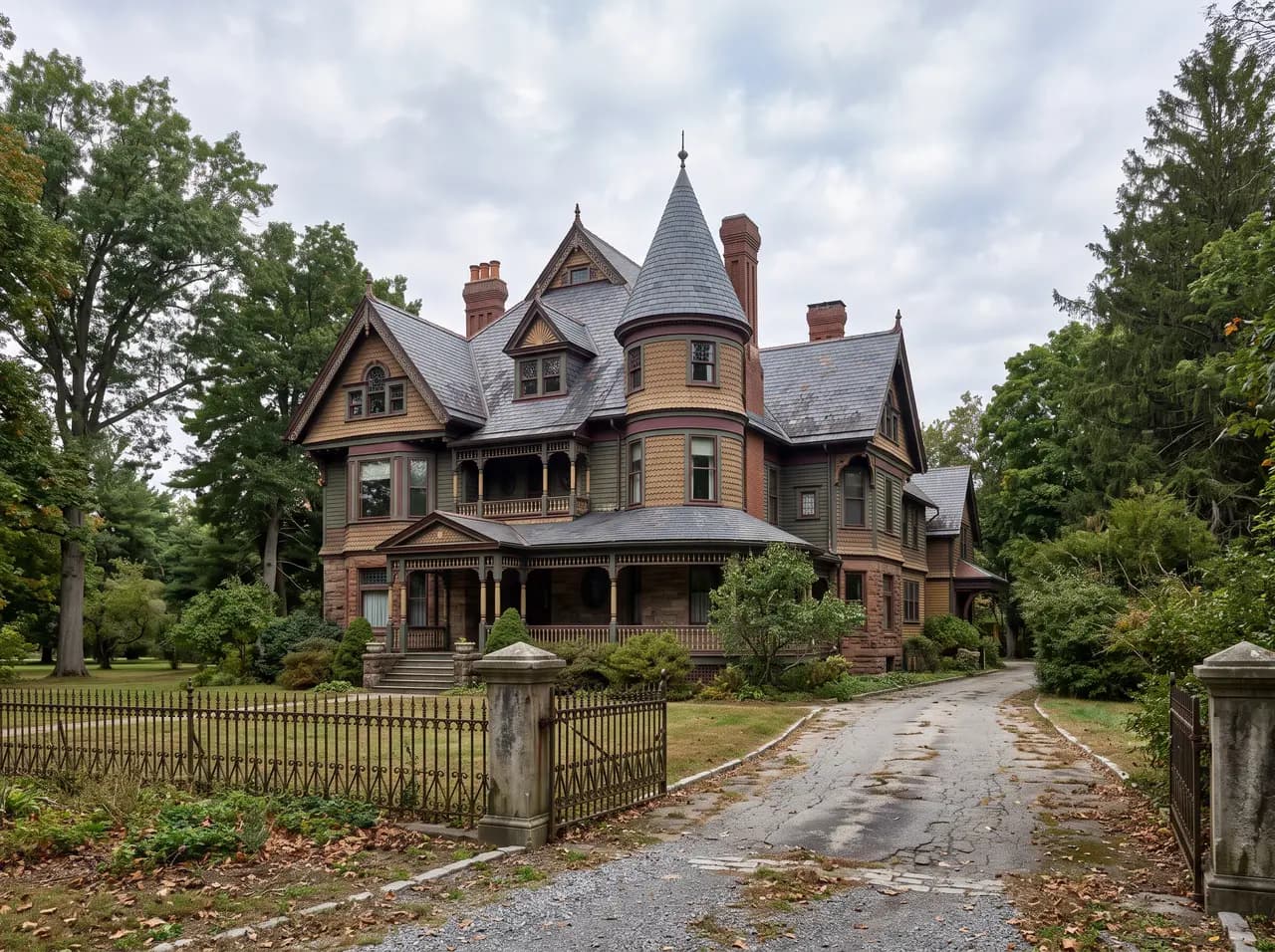
Surfaces are layered with texture — fish-scale and patterned shingles, spindlework, decorative brackets and stained glass — and painted in several colors to show it all off.
Key features of a queen anne style house
Use this checklist to spot a queen anne house — or to brief the look for your own.
Asymmetry
No two sides alike, with projecting wings and bays.
Corner tower
A round or polygonal turret with a conical roof.
Wraparound porch
With turned posts, spindlework and brackets.
Textured walls
Patterned and fish-scale shingles mixed with siding.
Rich color
Multi-color paint schemes highlighting every detail.
A short history of the queen anne house
Despite the name, the American Queen Anne style owes little to buildings from Queen Anne’s reign (1702–1714). It grew out of the work of English architect Richard Norman Shaw and his circle in the 1860s and 1870s, who mixed half-timbering, tile-hung walls and tall chimneys into picturesque country houses. Americans saw the look at the 1876 Centennial Exhibition in Philadelphia, and H. H. Richardson adapted it in early examples in Newport.
The style spread fastest through pattern books and mail-order plans, which put towers and wraparound porches within reach of ordinary builders. Balloon framing made irregular plans easy, and railroads shipped factory-made spindles, brackets and shingles nationwide. It dominated American house building from the 1880s until about 1905, when simpler Colonial Revival and Craftsman designs took over. Today’s versions keep the classic massing with fiber-cement shingles and composite trim.
Types of queen anne houses
The style has several branches. Name the one you want when you brief a designer or write a prompt.
Spindlework Queen Anne
The classic “gingerbread” version, with turned porch posts, lacy spindle friezes, sawn brackets and gable ornaments. It is the look most people picture, and the one that benefits most from a carefully planned multi-color paint scheme.
Free Classic Queen Anne
Common after 1890, this version swaps spindlework for classical columns, often grouped on raised piers, plus Palladian windows and dentil cornices. It bridges toward Colonial Revival and reads calmer and more formal from the street.
Half-timbered Queen Anne
Decorative half-timbering fills the gables or upper story, echoing the English country houses that inspired the style. Expect a heavier, more medieval character, with steep cross gables and fewer delicate porch details.
Patterned masonry Queen Anne
Built mainly in brick or stone, with patterned brickwork, terracotta panels and stone trim in place of wood ornament. Rarer and more urban, it suited larger houses and needs less exterior upkeep than wood versions.
Turn your house into a Queen Anne
Upload a photo of your home and see it restyled as a queen anne house in about 30 seconds — same footprint and windows, new roofline, materials and colours. Try several versions before you call a contractor.
Restyle my house free- 3 free credits
- No credit card
- Works on your phone
- 1Photograph your houseA straight-on phone photo of the front works best. Sketches and 3D model views work too.
- 2Choose Queen AnneOpen any design above with “Try this design”, or describe the details you want to keep.
- 3Compare the resultsPhotoreal options arrive in seconds. Keep the favourite and download it in high resolution.
Queen Anne house colour palettes
Three proven schemes for body, trim and door. Render your house in each before you buy paint.
Painted lady
Sage green · Cream · Burgundy · Antique gold
Sage covers the clapboard body, cream outlines the trim and porch rails, burgundy picks out shingled gables and the front door, and gold highlights spindles and brackets sparingly.
Autumn harvest
Olive · Terracotta · Mustard · Dark bronze
Olive on the main walls, terracotta on the fish-scale shingles, mustard on window sashes and the porch ceiling, and dark bronze on the door and roof-edge trim to ground the scheme.
Modern slate
Slate gray · Warm white · Black
Slate gray unifies siding and shingles so the shapes read clearly, warm white sharpens the trim and spindles, and black on the door and window sashes adds a contemporary edge.
Queen Anne vs Victorian vs Tudor
| Queen Anne | Victorian | Tudor | |
|---|---|---|---|
| Roof | Steep, irregular, with a turret | Varied: mansard, gable or low hip | Steep, overlapping front gables |
| Facade materials | Clapboard with patterned shingles | Wood siding, brick or stone | Brick, stucco and half-timbering |
| Windows | Bays, oriels and stained glass | Tall, narrow, often arched | Leaded casements in tall groups |
| Stories and plan | Two-and-a-half stories, rambling plan | Two to three stories, vertical | One-and-a-half to two stories |
| Signature detail | Corner tower and wraparound porch | Ornate brackets and cornices | Decorative half-timbered gables |
How to give your house a queen anne look
Edit the paint scheme
Many Queen Annes carry five or more colors. Dropping to three — body, trim and one accent — keeps the detail legible while feeling fresher, and lets the turret and shingle patterns stand out without visual noise.
Restore the porch first
The wraparound porch carries the whole facade. Repair turned posts and spindles, add a painted beadboard ceiling, and replace any solid railing with proper balusters before investing anywhere else.
Upgrade windows in kind
Replace failing sashes with wood or clad units that match the original pane pattern, and protect stained glass with exterior storm panels rather than removing it. Dark sashes add a subtle modern note.
Preview colors before painting
Multi-color schemes are hard to judge from paint chips. Upload a photo of your house to AI Render Studio to compare palettes on the real facade, then add warm porch lighting and layered planting.
Common questions
What makes a house Queen Anne?
An asymmetrical facade, corner tower, steep irregular roof, wraparound porch and highly textured surfaces with patterned shingles.
Is Queen Anne the same as Victorian?
Queen Anne is one of the Victorian styles — the most ornate and the most common in American towns.
What colors suit a Queen Anne house?
Three to five harmonious colors — for example sage body, cream trim and burgundy accents — to emphasise the detail.
Can you add a turret to an existing house?
Yes, but it is a structural addition rather than a cosmetic one. A turret needs its own foundation or framing support, a conical or polygonal roof and careful flashing where it meets the main roof. On many houses, a projecting bay window or a corner gable with patterned shingles delivers much of the Queen Anne effect with far less work.
Are Queen Anne houses expensive to maintain?
They need more upkeep than plain houses because there is simply more exterior: multiple roof planes and valleys, wood ornament, porches and several paint colors. Regular repainting, gutter and flashing checks and prompt repair of porch woodwork are the main tasks. Composite trim and fiber-cement shingles can reduce maintenance where parts must be replaced.
How do you tell an original Queen Anne from a newer Victorian-style home?
Originals usually date from about 1880 to 1910 and show balloon framing, old-growth wood siding, early factory millwork and irregular room layouts. Newer neo-Victorian houses tend to have simpler footprints, vinyl or fiber-cement siding, an attached garage and standard window sizes. Local property records and historic surveys confirm the build date.
Compare every style in the house styles guide, or try a full facade makeover with the AI house exterior designer.